3 min read
 27
 Linkedin
 Threads
 Facebook
 X

Something remarkable happened on 60 Minutes.
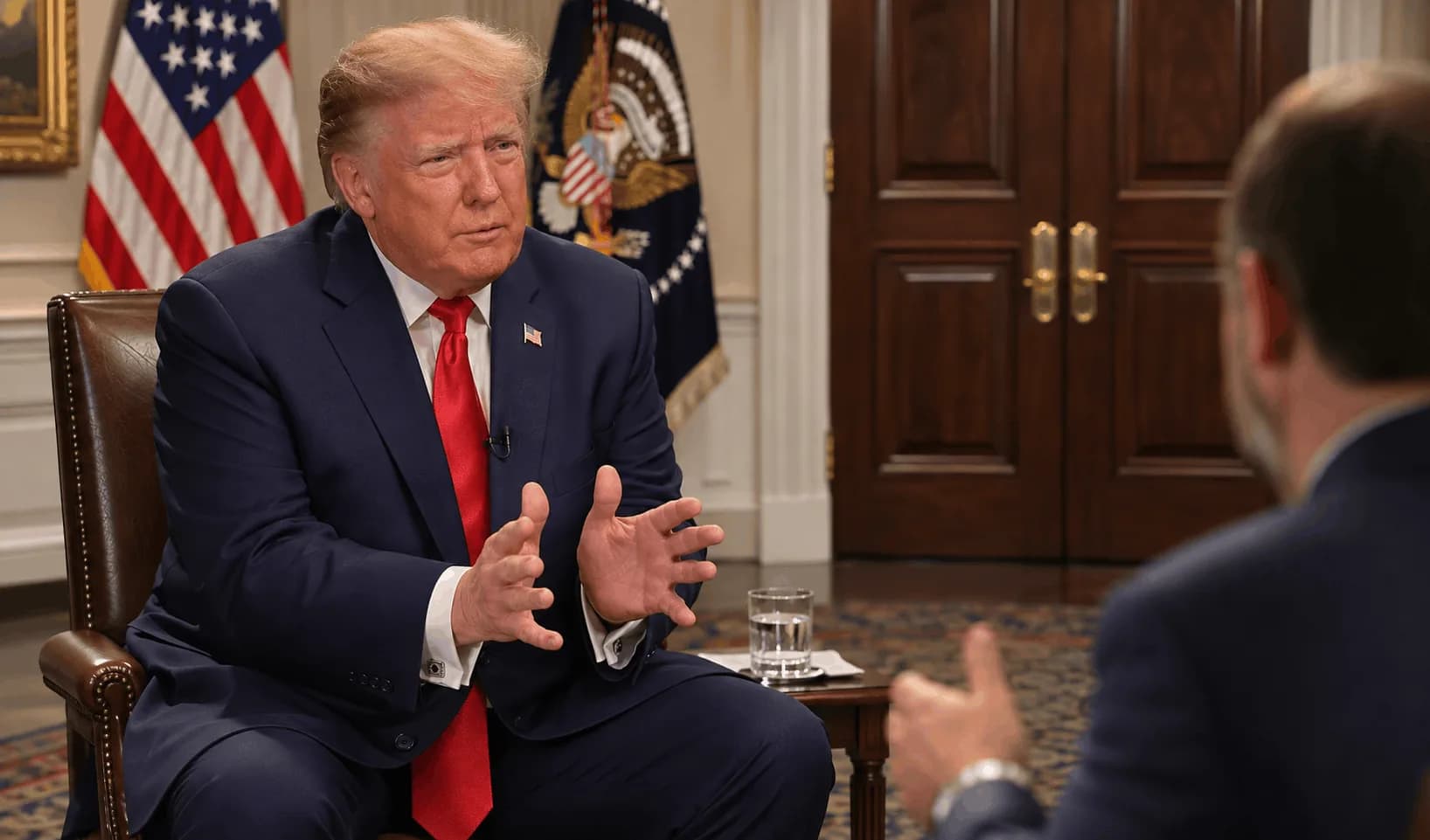
In an interview with Ross Douthat that aired Sunday, November 8, President Donald Trump appeared unusually reflective as he discussed immigration, the midterm elections, and the consequences of his administration's deportation policies.
The interview covered several subjects. But one exchange stood apart.
Trump acknowledged that immigration enforcement had produced both political benefits and costs. He defended closing the border and removing dangerous criminals while recognizing that deportations had also affected people with established jobs and families.
Then came his admission.
“I think it might be too tough, yeah.”
Trump also suggested that an immigration agreement with Democrats could be possible.
This was not a formal legislative proposal. The president offered no detailed eligibility rules, application process, or timetable.
Nevertheless, his remarks opened a significant question: Could an administration elected on a promise of stronger immigration enforcement also negotiate a legal solution for certain longtime undocumented residents?
Watch the full interview and read the transcript on CBS News.
1. Deportation Enforcement and the Christian Question
The first issue is not whether the United States has the right to enforce its immigration laws.
It does.
A sovereign nation has the responsibility to protect its borders, establish lawful immigration procedures, and remove individuals who present serious public-safety threats.
But enforcement also raises questions about proportionality, family unity, and human dignity.
There is a moral difference between deporting a violent offender and removing a father who has spent fifteen years working, paying taxes, and raising children in the United States.
Both situations may involve immigration-law violations. They do not necessarily present the same public-safety concerns.
For Christians, this distinction deserves serious reflection.
A commitment to law and order does not eliminate the responsibility to consider the human consequences of government action.
Images of children crying as a parent is detained can be deeply troubling. They also influence how Americans understand immigration enforcement.
The question is not whether immigration laws should be enforced, but whether every enforcement action is necessary, proportionate, and consistent with the country's broader interests.
Trump's interview suggests that he is reconsidering at least part of that balance.
2. What Trump Actually Said About an Immigration Agreement
Trump specifically discussed people who work in landscaping, hospitality, and other industries.
He acknowledged that some have been living in the country for years and contributing economically.
When asked about a potential agreement with Democrats, he indicated that a compromise could be achievable.
That does not establish that Trump supports a general amnesty.
Nor does it establish that his administration has decided to stop deportations of longtime residents.
What it establishes is that the president has publicly recognized a distinction between dangerous offenders and otherwise law-abiding workers who lack permanent legal status.
That distinction could become the foundation of a legislative debate.
A proposal might consider years of residence, criminal-background screening, employment history, tax compliance, identity verification, and other eligibility requirements.
Whether such a proposal would grant temporary status, permanent residency, or a path to citizenship remains unknown.
Those differences are consequential. They determine who qualifies, what obligations applicants must satisfy, and what long-term effects the legislation would have.
3. The Economic Opportunity Is Substantial
Immigration reform also has an economic dimension.
The Migration Policy Institute estimated approximately 15.75 million unauthorized immigrants living in the United States in 2024.
Many participate in the labor force, particularly in construction, agriculture, hospitality, manufacturing, and services.
A carefully designed legalization process could include application fees, identity verification, background checks, employment authorization, and tax-compliance requirements.
It could also improve labor-market transparency and make it easier for employers to verify work authorization.
However, undocumented immigrants already pay substantial taxes, including sales, property, and, in many cases, income and payroll taxes. Legalization would not suddenly create an entirely new taxpaying population.
The actual fiscal impact would depend on wages, employment, eligibility rules, administrative costs, and access to public benefits.
A serious reform proposal should calculate those costs and benefits rather than relying on political slogans.
4. Latino Immigration and the Facts Behind the Debate
Latino communities have a substantial stake in this discussion.
According to the Migration Policy Institute, approximately 82% of the unauthorized immigrant population in 2024 originated from Mexico, Central America, South America, or the Caribbean.
But the population is not exclusively Latino, and nationality alone does not establish immigration status.
Pew Research Center also found that approximately 36 million Latino Americans were eligible to vote in 2024.
Trump received 48% of Latino votes that year, a significant increase from the 36% he received in 2020.
These figures demonstrate the importance of Latino Americans in the country's political and economic life.
They do not establish that Latino voters share one opinion about immigration.
Some support stricter enforcement. Others prioritize family protections, legalization, or economic opportunity. Many support combinations of those policies.
An immigration agreement would therefore need to address the substance of the law rather than assume that one community has a uniform position.
5. The Lesson of Ronald Reagan's 1986 Immigration Reform
The United States has confronted a similar question before.
In 1986, President Ronald Reagan signed the Immigration Reform and Control Act.
The legislation combined legalization provisions with employer sanctions intended to discourage unauthorized employment.
Approximately 2.7 million undocumented immigrants ultimately received legal status under the law.
The Reagan precedent demonstrates that immigration enforcement and legalization are not necessarily mutually exclusive.
But it also illustrates the importance of implementation.
Congress must consider how to verify eligibility, enforce employment rules, address future unauthorized immigration, and prevent the same unresolved problems from recurring.
The 1986 law did not permanently settle the immigration debate.
A new agreement would need to confront those lessons directly.
6. The Constitutional and Security Questions
Any immigration reform should preserve the government's ability to conduct meaningful security screening.
That includes verifying identities, checking criminal records, investigating credible national-security threats, and ensuring that applicants meet the law's eligibility requirements.
The United States can also debate how immigration policies affect cultural integration, civic education, constitutional values, and religious freedom.
Those concerns should be evaluated through individual conduct and lawful, evidence-based security standards rather than assumptions about entire nationalities or religious communities.
Religious liberty is a foundational American principle.
A durable immigration system must protect national security while respecting that constitutional commitment.
7. The Political Test Ahead
Trump's remarks come at a difficult moment for his party.
Republicans have lost control of both chambers of Congress, and the incoming Democratic majority will have significant influence over any immigration legislation.
That makes bipartisan negotiation necessary for a major statutory agreement.
It also makes the substance of a proposal especially important.
Democrats have advocated different forms of immigration reform for decades, but disagreements over enforcement, legalization, border security, and citizenship have repeatedly prevented comprehensive legislation from becoming law.
Trump's willingness to discuss an agreement creates an opportunity to test whether those differences can be resolved.
The outcome cannot be determined from the interview alone.
The administration would need to present specific legislative language. Congress would need to negotiate it. Lawmakers would need to vote on it.
Only then could the public assess which provisions each party supported or rejected.
8. A Christian Reflection: Justice Without Losing Compassion
There is a deeper question beneath the politics.
What kind of country does America want to be?
A country that enforces its laws? Certainly.
A country that protects its citizens and removes dangerous criminals? Absolutely.
But can it also distinguish between a genuine threat and a longtime worker who has raised a family, contributed to the economy, and built a life in an American community?
Christian teaching recognizes both the importance of lawful authority and the responsibility to treat human beings with dignity.
Those principles need not contradict one another.
Compassion does not require abandoning border security. And border security does not require abandoning compassion.
The difficult work of governing is determining how both obligations can be honored.
The Opportunity Trump Has Opened
The president has not announced an immigration reform bill.
He has not established who would qualify, what legal status would be available, or whether an agreement would include citizenship.
But he has publicly acknowledged that the enforcement strategy may have been too aggressive toward some established workers.
That acknowledgment matters.
It creates an opportunity to discuss a more differentiated immigration system: one that prioritizes serious threats, maintains credible border enforcement, and examines legal options for eligible longtime residents.
Whether that opportunity produces legislation will depend on what Trump proposes and what Congress is willing to enact.
The question now is whether Washington can turn a moment of presidential reflection into a workable immigration policy—or whether another opportunity for reform will disappear into partisan conflict.