
 3 min read
 268
 Linkedin
 Threads
 Facebook
 X

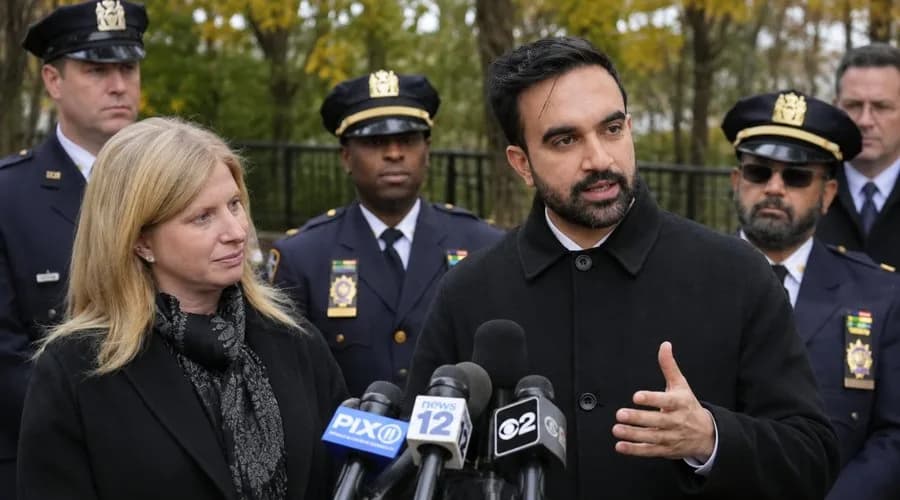
NEW YORK CITY — November 19, 2026. Two public safety officers were wounded by gunfire in the Bronx on Monday, the same day New York City Mayor Zohran Mamdani announced the elimination of one of the NYPD's specialized policing units.
The developments have intensified debate over the mayor's approach to public safety, particularly his decision to dissolve the Strategic Response Group (SRG), a unit previously responsible for crowd control, demonstrations and counterterrorism assignments.
Police unions immediately condemned the restructuring, warning that removing the specialized unit could weaken the department's ability to respond to dangerous situations.
The administration argues that its replacement system will improve public safety by separating counterterrorism operations from protest management.
Two Officers Shot During Bronx Welfare Check
The shooting occurred around 11 a.m. Monday at Co-op City, one of the largest cooperative housing communities in the United States.
Two officers from Co-op City's Department of Public Safety were conducting a welfare check on the 25th floor of a residential building when a 56-year-old man reportedly opened fire through his apartment door.
Both officers were wounded.
NYPD emergency personnel and hostage negotiators responded to the scene.
Authorities later discovered the suspect dead inside the apartment from an apparent self-inflicted gunshot wound.
Both wounded officers were expected to recover.
Photographs released by the Co-op City department showed damage to an officer's radio, illustrating how narrowly the officers escaped more serious injuries.
Importantly, the wounded officers were employed by Co-op City's independent public safety department, not the NYPD Strategic Response Group.
The shooting was not caused by the mayor's restructuring announcement.
Mamdani Eliminates the Strategic Response Group
Elsewhere in the city, Mamdani and Police Commissioner Jessica Tisch announced a major change to how New York handles demonstrations and specialized police deployments.
The administration is eliminating the NYPD Strategic Response Group and redistributing its responsibilities.
Under the plan, counterterrorism functions will move to the NYPD's existing intelligence and counterterrorism structure.
Protest response will be reorganized around three components.
A civilian-led Community Dialogue and De-escalation Division will coordinate communication with demonstrators.
A 30-officer First Amendment Support Team will receive specialized training in communication and de-escalation.
And a new Patrol Support Division will provide trained officers for crowd-management duties while maintaining regular patrol responsibilities.
The administration says the changes will not reduce the overall number of NYPD officers or increase department spending.
Police Unions Warn of Public Safety Risks
Police Benevolent Association President Patrick Hendry sharply criticized the mayor's decision.
Hendry argued that eliminating the specialized unit could endanger officers and residents, particularly when demonstrations block roads, bridges and other public infrastructure.
He accused the administration of prioritizing the demands of disruptive protesters over public safety.
Detectives' Endowment Association President Scott Munro raised similar concerns.
Munro defended the SRG's role in responding to demonstrations that turn violent or interfere with public safety operations.
He pointed to the 2024 Columbia University protests, when officers cleared an occupied university building and arrested more than 100 people.
According to Munro, the specialized capabilities used in such operations may become harder to deploy under the new structure.
He also warned that detectives could be diverted from criminal investigations to handle demonstrations.
Why Did Mamdani Remove the Unit?
The Strategic Response Group had faced years of criticism from civil-rights organizations over its handling of demonstrations.
Critics accused the unit of excessive force, aggressive crowd-control tactics and violations of protesters' rights.
Mamdani's administration says its new approach will prioritize communication, de-escalation and constitutional protections.
The changes also restrict certain crowd-control tactics, including kettling and the use of irritant gas.
Supporters believe these measures could reduce confrontations between police and demonstrators.
Police unions, however, question whether the replacement structure can respond effectively when peaceful demonstrations become dangerous.
Who Will Protect New Yorkers When Protests Turn Violent?
The controversy presents a fundamental public safety question.
New Yorkers have constitutional rights to assemble, protest and express political opinions.
They also have a right to expect police protection when demonstrations threaten public safety or interfere with emergency services.
The administration insists that trained officers will remain available for dangerous situations.
Police representatives argue that removing an established specialized unit could weaken operational readiness.
The competing claims will ultimately be tested by how the new system performs.
The shooting of two Co-op City officers serves as a separate reminder of the unpredictable dangers public safety personnel face.
The question for New York's leadership is whether the new policing structure can protect constitutional freedoms without compromising the ability of officers to respond quickly when public safety is threatened.
As the restructuring moves forward, residents, police officers and city officials will be watching its effects closely.
Stay connected with FPTN for the real news. As is.