 5 min read
 0
0
 Linkedin
 Threads
 Facebook
 X
X
When people hear about Donald Trump and education today, they usually hear about universities.
Harvard.
Columbia.
Federal grants.
Foreign students.
DEI.
Accreditation.
Lawsuits.
That is understandable. The administration has launched one of the most aggressive federal challenges to higher education in decades.
But if we stop there, we misunderstand the ambition.
The much larger question being asked in Washington is:
What if America waits far too long to start demanding excellence from its children?
Because a country does not suddenly produce great engineers, doctors, entrepreneurs, scientists and civic leaders when students arrive at college at 18.
The foundation was built years earlier.
Elementary school.
Middle school.
High school.
Family.
Discipline.
Reading.
Mathematics.
History.
And eventually, expectations.
That is where the administration's broader education agenda becomes much more interesting.
The fight with universities is only the visible part
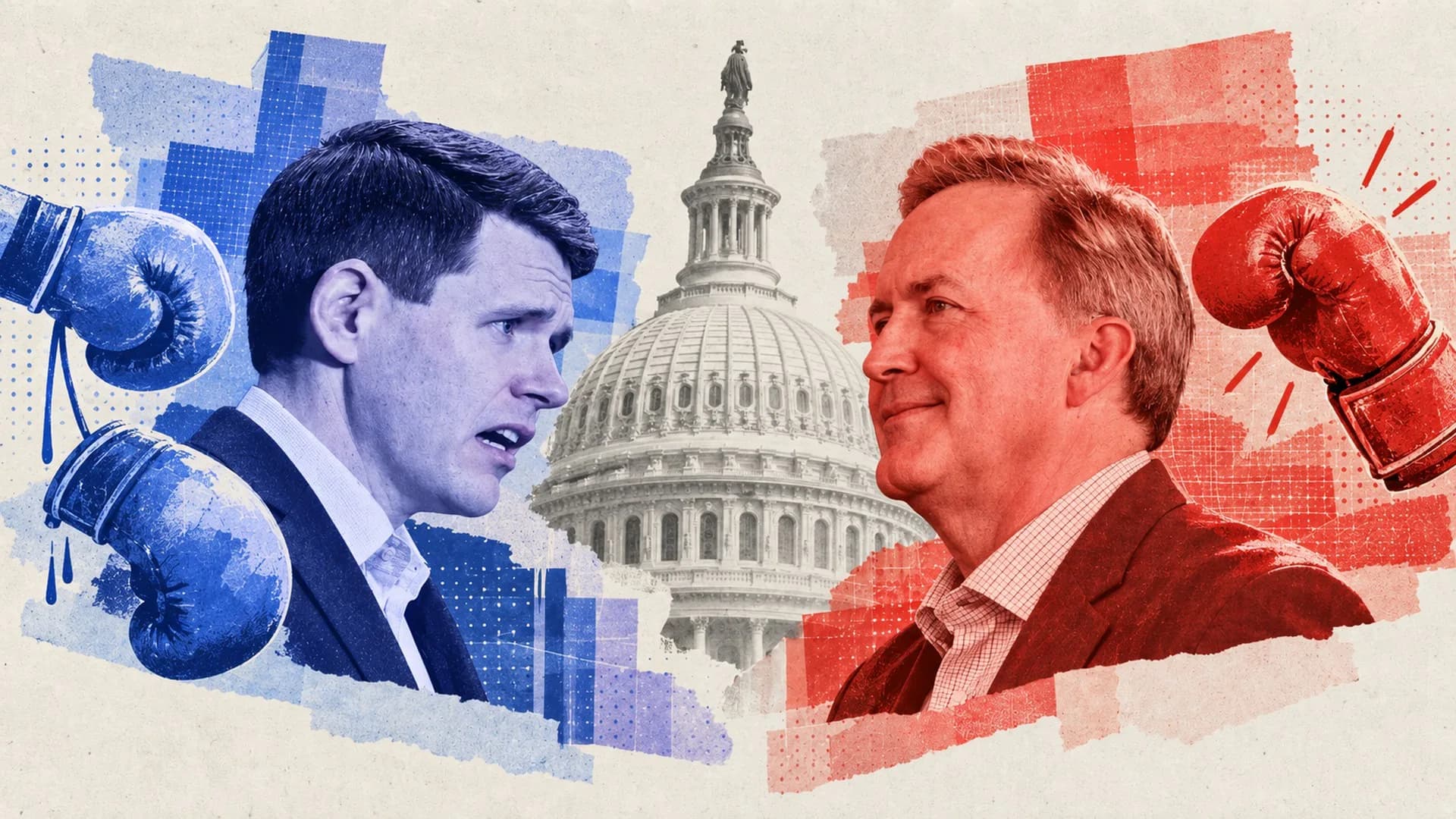
The Trump administration has spent much of its second term challenging how universities operate.
It has pursued colleges over alleged antisemitism, DEI programs, race-conscious practices, admissions transparency and foreign-student compliance. It is also rewriting accreditation and higher-education accountability rules rather than relying only on investigations of individual campuses.
The administration argues that universities receiving enormous federal benefits should be accountable for measurable student outcomes, lawful admissions practices and intellectual diversity.
Critics see something much more dangerous: the federal government using grants and regulatory authority to pressure universities politically and potentially threatening academic independence.
And the courts have not simply allowed everything to proceed.
A federal judge this month struck down an Education Department directive used to terminate more than $600 million in teacher-training grants associated with DEI initiatives, finding the policy inadequately defined and arbitrary. Another judge blocked new limits on how long foreign students could remain in the United States without seeking extensions.
So this is not a story in which Washington simply issues commands and every institution complies.
It is a constitutional, regulatory and philosophical fight that is still being litigated.
But underneath it is a philosophy that extends far beyond college.
Trump started building this argument in 2020
Near the end of his first administration, Trump created the President's Advisory 1776 Commission.
The November 2020 executive order said its purpose was to help younger Americans understand the principles of the country's founding and encourage greater state, local and parental influence over education.
Then the government changed.
On January 20, 2021, President Joe Biden revoked the executive order establishing the commission.
The philosophical difference was substantial.
The Biden administration placed greater emphasis on equity, racial disparities and federal civil-rights enforcement.
The 1776 approach emphasized founding principles, patriotic civic education and resistance to curricula its supporters believed portrayed American history primarily through oppression.
The original 1776 report was also heavily criticized by professional historians. The American Historical Association accused it of serious omissions and distortions, particularly concerning slavery and racism.
That historical debate remains legitimate.
Teaching patriotism should not require pretending America never committed serious wrongs.
Teaching slavery, segregation and injustice should not require teaching children that the American experiment itself is irredeemable.
A serious history education should be capable of doing both.
Then Trump brought 1776 back
After returning to office, Trump reestablished the 1776 Commission in January 2025 as part of an executive order dealing with K-12 education.
But this time the idea did not remain only a commission.
It began turning into programs.
The Department of Education launched the Presidential 1776 Award, a national competition testing high-school students on American founding history, the Constitution and civics.
More than 8,000 students from all 50 states and territories entered.
The finalists competed for $250,000 in scholarships, and the national final was eventually broadcast on CBS. The Education Department said approximately 1.63 million people watched the live broadcast.
That tells us something about the administration's preferred model.
Make academic achievement prestigious.
Make knowledge competitive.
Reward the best.
Put students on television because they know the Constitution rather than because they are famous on TikTok.
One can disagree with how the administration defines “patriotic education” while still recognizing that the larger ambition is unusual:
make intellectual achievement culturally visible again.
But excellence cannot begin at 18
This may be the most consequential part of the entire discussion.
America's educational problems appear years before college.
The latest National Assessment of Educational Progress showed eighth-grade reading declining again in 2024, with performance among lower-scoring students reaching some of the weakest levels recorded since the assessment began in 1992.
That is not an Ivy League problem.
That is an elementary- and middle-school problem.
By the time a student reaches a university unable to read complex material comfortably, reason mathematically or understand basic civics, the system has already spent twelve years trying to build the foundation.
College cannot magically rebuild all of it.
This explains why the Trump administration's education agenda increasingly emphasizes school choice.
In January 2025, Trump ordered federal agencies to examine how existing funds could expand educational alternatives, including charter, private and faith-based schools.
The administration has since promoted a federal scholarship tax-credit structure and greater state authority over K-12 policy.
The underlying argument is straightforward:
If the assigned school does not work for a child, why should the family's ZIP code function like a prison wall?
Critics counter that shifting public money toward private institutions can weaken public schools that still educate the overwhelming majority of American children and may increase inequality if high-quality private options are unavailable everywhere.
That is the real debate.
Texas is already testing the theory
And then there is Texas.
In 2025, lawmakers created Texas Education Freedom Accounts, appropriating $1 billion for the first year.
Families attending participating private schools can receive $10,474 per student for the 2026-27 school year. Students with qualifying disabilities can receive up to $30,000, while homeschool families can receive up to $2,000.
The demand was enormous.
More than 270,000 students applied, far exceeding the program's initial capacity. By July, nearly 73,000 accounts were receiving their first funding installments.
Houston provides an especially interesting example.
A Houston Chronicle analysis found more than 50 private schools in the area with tuition below the state's roughly $10,500 voucher amount.
Most were religious schools, and the largest group was Christian—including dozens of Catholic campuses.
For parents who previously looked at a Christian school with small classes, structured discipline, religious instruction and a strong academic culture and thought, I could never afford that, the equation has changed.
Not for everybody.
Not every applicant receives funding.
Not every private school is excellent.
And private education itself is not evidence of superior outcomes.
But thousands of families now have access to options they previously could not realistically consider.
That is a significant development.
Why business leaders should care about elementary school
There is another reason this subject reaches beyond parents.
Businesses constantly say America needs more:
Engineers.
Entrepreneurs.
Technicians.
AI researchers.
Doctors.
Advanced manufacturers.
Cybersecurity professionals.
Strong managers.
But those workers do not materialize when corporations post a job opening.
They begin as children learning multiplication.
Children being taught to read.
Children learning how to concentrate.
Children discovering that excellence produces rewards.
Children understanding that failure is something to learn from rather than something adults must always redefine as success.
The workforce crisis and the education crisis eventually become the same crisis.
A nation seeking leadership in artificial intelligence, biotechnology, aerospace, energy and advanced manufacturing cannot treat elementary education as an unrelated social program.
It is economic infrastructure.
This is the larger experiment
The attention today is understandably focused on Trump's confrontation with America's universities.
But the more consequential legacy may eventually be decided much earlier in a child's life.
The administration is attempting to connect:
parental choice, rigorous academics, civics, merit, state control and competition among schools.
There are legitimate questions about implementation.
How do we protect children with disabilities?
How do we prevent weak private schools from taking public money?
How do we ensure rural families actually have choices?
How should American history teach both national achievement and national failure?
And how far should a president be able to use federal funding to reshape education?
Those questions deserve serious answers.
But the scale of the ambition should not be missed.
The debate is moving beyond:
What should universities teach?
Toward something much larger:
What kind of student should America produce before that student ever reaches a university?
Texas is already experimenting with one answer.
Washington is trying to build another at national scale.
And if the United States intends to remain the world's leader in technology, science, business and innovation, the most important competition may not begin at Harvard, Stanford or MIT.
It begins when a six-year-old opens a book.