 5 min read
 64
64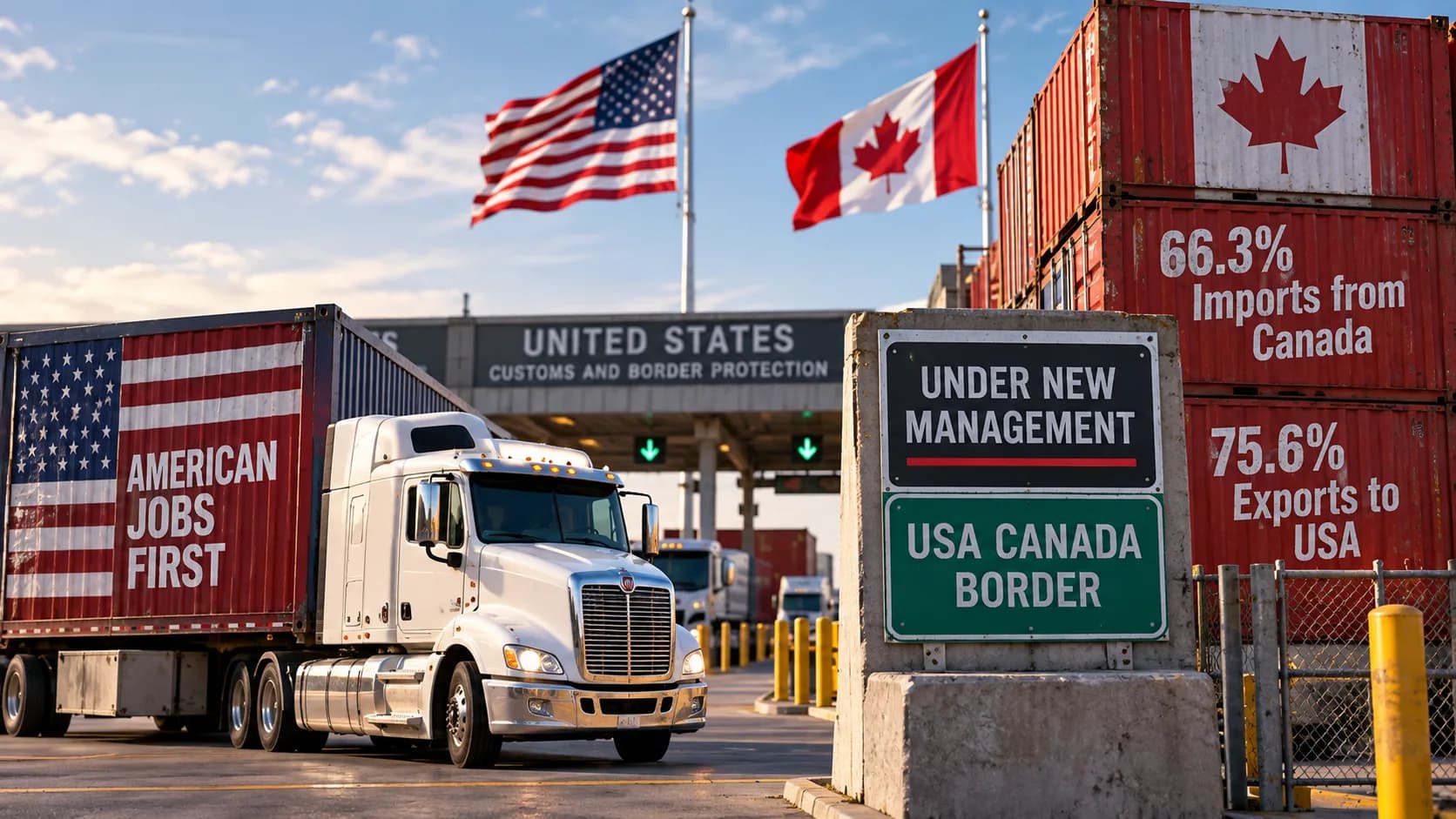
 Linkedin
 Threads
 Facebook
 X
XPresident Donald Trump opened a new front in the U.S.-Canada trade dispute Wednesday, this time focusing not on tariffs at the border but on something far less visible to most Americans: the enormous federal government procurement market.
Trump signed a presidential memorandum titled “Restoring Reciprocity in Government Procurement,” directing the Office of Management and Budget, the U.S. Trade Representative and federal acquisition officials to identify Canadian-origin products in the civilian federal procurement system that could legally be removed or made unavailable for government purchase.
The administration's message is straightforward: if American companies do not receive comparable opportunities when Canadian governments spend taxpayer money, Canadian suppliers should not automatically expect the same access when Washington does the buying.
But the actual memorandum is more targeted than an immediate blanket prohibition on Canadian goods. It instructs officials to determine which Canadian-origin items can be restricted “where warranted” and consistent with existing U.S. law. Agencies are also supposed to identify domestic alternatives where possible.
That distinction could become important as the policy is implemented.
The White House puts a $280 billion market at the center of the fight
The White House says Canadian companies currently benefit from access to more than $280 billion annually in U.S. federal procurement covered under the World Trade Organization's Agreement on Government Procurement.
The administration argues that the arrangement has become increasingly one-sided because Canada has expanded policies favoring Canadian suppliers and Canadian-made products.
The White House specifically pointed to Canada's Buy Canadian procurement framework, saying Canadian federal and provincial measures have disadvantaged American businesses seeking government contracts north of the border.
Canada openly describes its policy as an effort to strengthen domestic industry.
Beginning in December 2025, Ottawa began implementing procurement rules intended to prioritize Canadian suppliers, goods and services. For strategic federal contracts worth at least $5 million, Canadian companies can receive advantages during the bidding process, while bids can receive additional consideration based on Canadian content, research, intellectual property and other domestic economic contributions.
For certain large construction and defense procurements worth at least $25 million, Canadian rules also require Canadian-produced steel, aluminum or wood when applicable and available.
From Washington's perspective, those preferences are precisely why reciprocity has become an issue.
Canada says its system is also based on reciprocity
There is another side to the dispute.
Canada says its procurement framework does not simply exclude foreign suppliers. Its Policy on Reciprocal Procurement allows non-defense federal purchases to come from Canada or from trading-partner countries that provide Canadian businesses reciprocal access through trade agreements. Ottawa describes that system as promoting fairness between participating countries.
That means the disagreement is not really over whether government purchasing can favor domestic industries.
Both governments now openly use procurement policy as an economic tool.
The dispute is over whether the access provided by each country is genuinely equivalent.
Trump's memorandum states that Canada has imposed new barriers on American firms even while Canadian businesses continue benefiting from U.S. government purchasing opportunities. The administration has therefore ordered U.S. officials to reassess that access rather than continue treating it as automatic.
This is procurement policy being turned into trade leverage
Government contracts rarely generate the attention of tariffs, automobile factories or agricultural exports, but federal procurement represents an enormous marketplace.
Washington purchases everything from technology and machinery to construction materials, professional services and industrial equipment.
Restricting Canadian-origin products could therefore create opportunities for some American manufacturers and suppliers if agencies replace Canadian goods with domestic alternatives.
Trump's memorandum explicitly directs OMB to inform federal departments about American substitutes for Canadian-origin products when such alternatives exist.
The effect, however, will depend heavily on implementation.
The memorandum does not specify a dollar value of Canadian products that will ultimately be excluded. It also does not order every federal agency to immediately cancel existing contracts with Canadian suppliers.
Instead, federal officials must now determine which goods can legally and practically be removed from the procurement system.
That process could leave some Canadian products untouched while restricting others.
Canada has been expanding its domestic preference program
The timing is significant.
Canada lowered the threshold for one of its major Canadian-content procurement policies from $25 million to $5 million in June, bringing approximately five times as many federal procurements within the policy's scope, according to the Canadian government.
Ottawa reported in July that its Buy Canadian framework had already applied to solicitations worth more than $3 billion, with approximately $726 million in contracts awarded under the policy by late June.
Canada presents those policies as a strategy for strengthening supply chains, domestic manufacturing and small businesses.
The Trump administration views the same expansion through a different lens: increased preferential treatment of Canadian suppliers while Canadian companies continue participating extensively in U.S. government procurement.
That disagreement has now moved from diplomatic complaints into federal purchasing policy.
Trump leaves the door open to reversing the restrictions
One detail of the memorandum suggests the policy is designed partly as negotiating leverage.
Trump specifically directed the U.S. Trade Representative to continue monitoring Canada's treatment of American products and report if Canadian policy changes enough to justify restoring access for particular Canadian goods.
In other words, restrictions imposed under the memorandum do not necessarily have to be permanent.
If Canada changes its procurement rules, Washington could reconsider.
That structure fits the broader concept of reciprocity underlying the order: access to American government purchasing would depend increasingly on whether U.S. suppliers receive comparable treatment abroad.
Another step in a larger U.S.-Canada economic confrontation
The procurement action does not exist in isolation.
The White House says it is part of a broader effort to challenge Canadian trade practices, alongside tariff measures and the administration's ongoing reassessment of the U.S.-Mexico-Canada Agreement. The administration has argued that current arrangements do not provide sufficient benefits to U.S. manufacturers, farmers, workers and other businesses.
Those are administration assessments, and the economic consequences of changing procurement access will depend on which products are ultimately restricted, how quickly American suppliers can replace them and whether Canada responds with additional measures.
What changed Wednesday is the principle governing the relationship.
Instead of assuming Canadian businesses should retain broad access to America's federal purchasing system because of longstanding trade commitments, the Trump administration is making that access increasingly conditional.
The immediate order is bureaucratic: identify Canadian products, locate American alternatives and determine what can legally be removed.
The larger message is economic.
For the Trump administration, reciprocity is no longer being treated simply as a negotiating objective. It is becoming a condition for doing business with the United States government.