 5 min read
 4
4
 Linkedin
 Threads
 Facebook
 X
X
Masoud Pezeshkian came to the United Nations with photographs.
He showed dead Iranian children. He spoke of Iran’s assassinated supreme leader. He accused the United States of calling the victim a terrorist and declared that Iran had “never been an aggressor” and would not bow to American pressure.
It was powerful political theater because some of the suffering he referenced is real. Iranian civilians have died in this war, and a preliminary U.S. assessment reportedly concluded American forces were likely responsible for a strike on a school in Minab, although the school was not deliberately targeted.
But a speech can be factually selective without every image in it being false.
And that is where the story becomes much more interesting.
Because while Pezeshkian was telling the world Iran would not bend, Iranian and American negotiators were quietly discussing how Iran might reopen the Strait of Hormuz and how the United States might eventually remove its blockade.
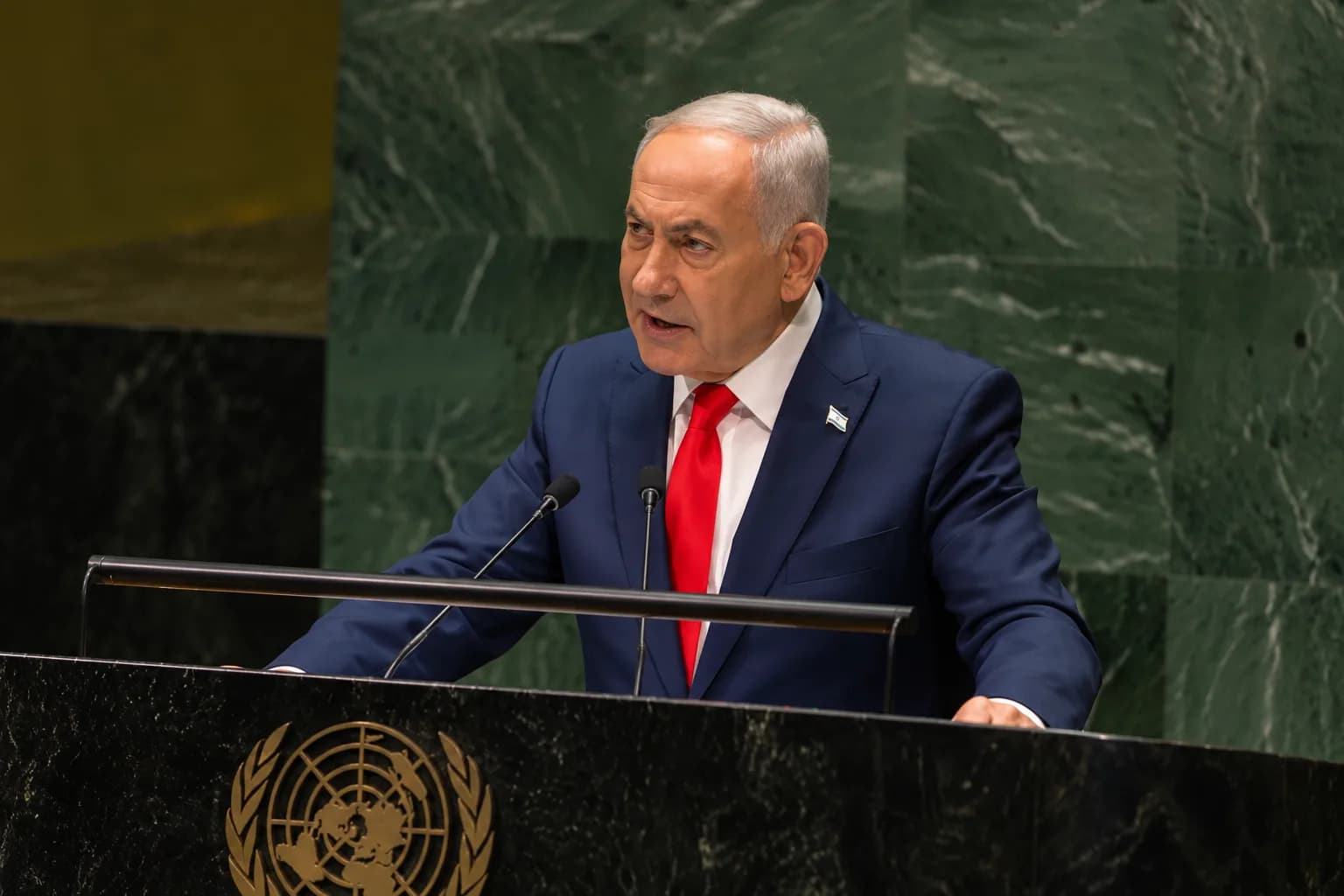
That happened after Trump stood at the same United Nations and delivered an extraordinarily stark choice to Tehran: reach an agreement or face substantially greater American military pressure.
So what should we believe?
The speech?
Or the negotiations happening behind it?
Iran’s U.N. presentation left out a very large part of the story
Pezeshkian's framing presented Iran almost entirely as the target.
But Iran's regional behavior cannot be reduced to what happened during the last seven months.
The United States has classified Iran as a State Sponsor of Terrorism since 1984. State Department reporting documents Iranian support for Hezbollah, Hamas, Palestinian Islamic Jihad, the Houthis and Iran-aligned armed groups in Iraq and Syria.
And this is not merely historical material that Washington keeps recycling.
Just two weeks ago, the Treasury Department imposed new sanctions on networks it says facilitate support for Lebanese Hezbollah and Kata'ib Hezbollah as part of what it calls Iran's global proxy network.
So when Iran's president says his country has “never been an aggressor,” the statement deserves scrutiny.
A government does not have to invade another country with conventional infantry divisions to project violence abroad.
Money matters.
Weapons matter.
Training matters.
Missiles matter.
Proxy forces matter.
That larger record was largely absent from Pezeshkian's U.N. narrative.
Then something changed away from the cameras
Reuters reported Thursday that American and Iranian negotiators are exploring a phased settlement.
The centerpiece is the Strait of Hormuz.
Iran would restore navigation through the strait. The United States would eventually lift the blockade that has effectively strangled Iranian oil exports and placed enormous pressure on Tehran's economy.
More revealing is what Iranian negotiators are reportedly considering.
Tehran had insisted on collecting transit payments from vessels using Hormuz—an idea rejected by Gulf governments.
According to Reuters' regional sources, Iran may now be willing to move that demand out of the principal agreement and place it in a separate attachment because ending the American blockade has become more urgent.
Read that again.
Publicly: We will not bend.
Privately: Perhaps this demand can be deferred.
That does not mean Iran has surrendered.
It does mean leverage is working on both sides.
Iran holds leverage because it can disrupt one of the world's most important energy corridors.
The United States holds leverage because its blockade is choking Iran's access to oil revenue.
Reuters quoted former U.S. negotiator Dennis Ross describing the blockade in unusually simple terms:
“It’s strangling them.”
That is not a Trump campaign statement. It is an assessment from a former American diplomat explaining why Tehran has returned to serious negotiation.
This is the strongest evidence for Trump’s pressure argument
Trump has argued repeatedly that Iran would not negotiate seriously while believing America was unwilling to use overwhelming power.
The evidence emerging from New York gives that argument some support.
Not because Pezeshkian suddenly likes Washington.
Not because Iran has abandoned its ideology.
And certainly not because a peace agreement has already been reached.
But because Tehran is negotiating while facing dramatically worse military and economic circumstances than it possessed before the war.
The scale of that military degradation is enormous.
CENTCOM says more than 85% of Iran's ballistic-missile, drone and naval defense-industrial base was damaged or destroyed during the major phase of Operation Epic Fury. It says 82% of Iran's air-defense missile systems were knocked out, 161 vessels across 16 classes were destroyed, and more than 90% of Iran's naval-mine inventory was eliminated. CENTCOM also said Iran's conventional air force went from flying between 30 and 100 sorties per day before the operation to essentially zero.
The White House has described the campaign in even stronger terms, saying Iran's conventional navy and air force were effectively neutralized.
That helps explain why Tehran's bargaining position today is different.
But there is an important correction to some numbers circulating online.
The “98% Iran destroyed versus 5% America damaged” formulation is not supported by the official accounting I could verify.
Iran has suffered extraordinary military destruction, but it still possesses residual missile, drone and proxy capabilities. Iranian-linked attacks have continued, including the recent strike on a commercial vessel in Hormuz.
America also did not emerge untouched.
Pentagon data and inspector-general reporting show American deaths and hundreds of wounded service members, damaged aircraft, and hundreds of damaged or destroyed structures at U.S. facilities around the Middle East. The estimated direct cost of the war had reached roughly $43.6 billion by early September.
So the accurate conclusion is more impressive—and more defensible—than a viral 98-to-5 statistic:
Iran's conventional military infrastructure was devastated on a scale far greater than America's losses, but the United States paid a real human, material and financial price for achieving that advantage.
And now Congress enters the story
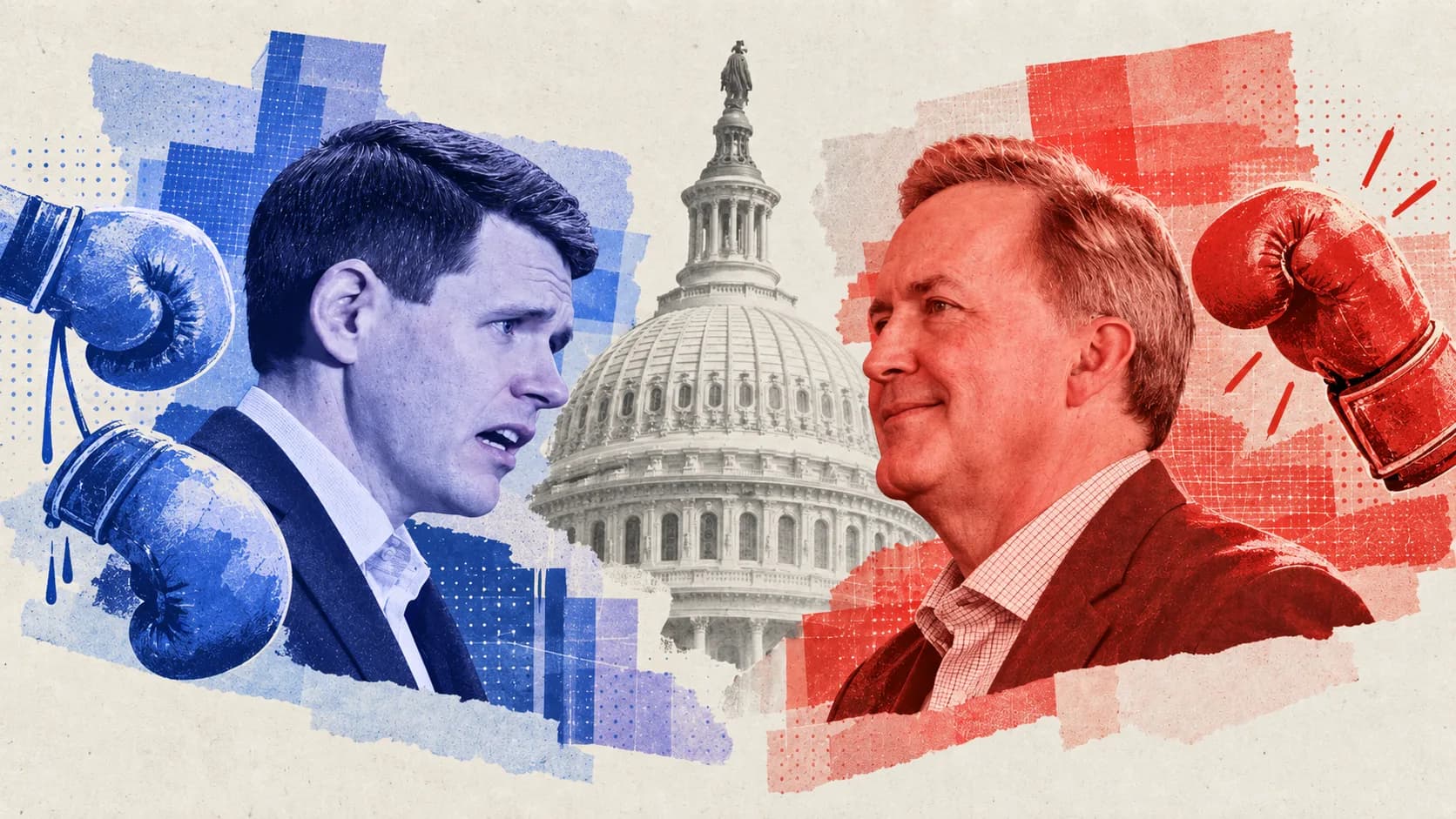
All of this is happening less than six weeks before the November midterm elections.
On Thursday, the Senate voted 50-49 against a war-powers resolution that would have restricted Trump from ordering additional strikes against Iran without congressional authorization.
The partisan pattern was unmistakable, although not absolute.
Forty-three Democratic senators supported the resolution limiting further presidential military action. Democratic Sen. John Fetterman voted against it.
Four Republicans—Rand Paul, Susan Collins, Lisa Murkowski and Thom Tillis—joined Democrats and independents in supporting the restriction.
The Washington Post explicitly described the votes as part of a Democratic strategy of repeatedly forcing war-powers votes ahead of the midterms in order to put Republican senators on the defensive over an unpopular conflict.
That does not mean Democrats voted “for Iran.”
Their stated argument is constitutional: Congress, not the president alone, has the authority to authorize prolonged war.
The administration's argument is different: restricting presidential military authority while negotiations are underway could weaken the leverage that brought Iran to the table.
That is the political dispute voters are now seeing in real time.
And what happens next will matter enormously to how the entire episode is understood.
Because this is not victory yet
Iran has not signed an agreement.
Hormuz is not fully reopened.
Missiles and drones are still flying in the region.
Oil remains expensive.
American forces remain exposed.
And Tehran is still publicly threatening escalation if U.S. military operations resume.
So declaring the conflict finished would be premature.
But neither should we pretend nothing changed.
Seven months ago, Iran possessed a substantially more capable conventional military, a functioning air-defense network, a much larger naval force and oil exports that generated crucial hard currency.
Today, much of that military apparatus has been destroyed or degraded, Iranian oil exports have been squeezed by an American blockade, and Tehran is sitting across an indirect negotiating table discussing how to reopen the Strait of Hormuz.
That is the development behind all the speeches.
Pezeshkian's presentation at the United Nations was meant to show resistance.
Trump's was meant to show consequence.
Neither speech by itself proves which strategy ultimately produces peace.
But after the speeches ended, one fact remained:
Iran came to New York saying it would never bow—and its negotiators arrived carrying a proposal.
That dear reader tell us more about the current balance of power than anything said from the U.N. podium.