 5 min read
 2
2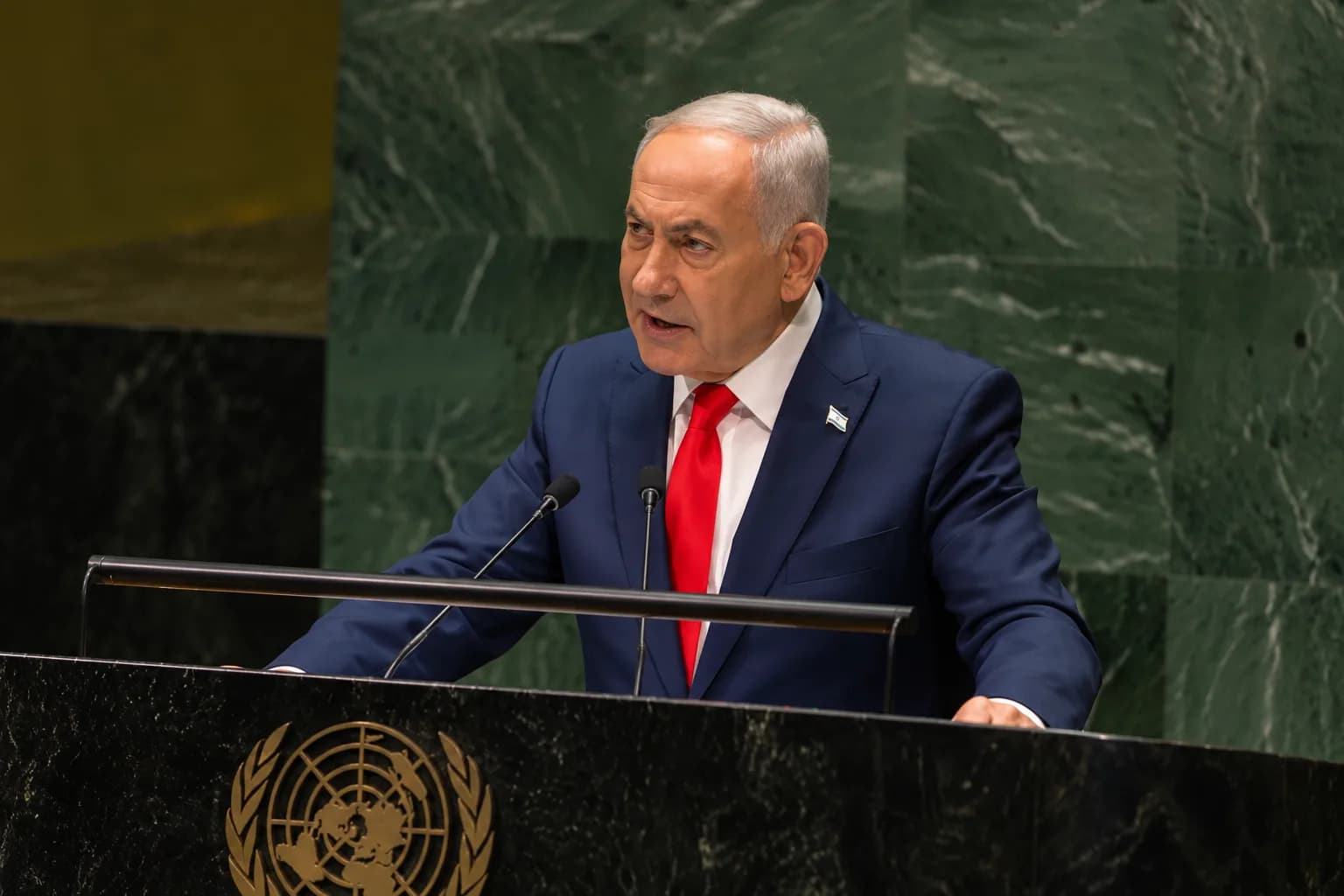
 Linkedin
 Threads
 Facebook
 X
X
The easiest story from Benjamin Netanyahu’s speech Thursday was the walkout.
It was visual. It was emotional. It fit into ten seconds of television.
Delegates stood up. Seats emptied. Netanyahu called those who left “moral cowards.” The confrontation practically edited itself into a social-media clip.
But what if the walkout is not the important story?
What if the important story is what those delegates walked out before hearing?
Because underneath Netanyahu’s combative language was an argument the world should examine separately from whatever it thinks of the Israeli prime minister personally:
Iran is not simply another government with which Israel happens to disagree.
Its government has spent decades building relationships with armed organizations throughout the Middle East, while repressing dissent inside Iran itself.
That is not Netanyahu’s invention.
It is documented.
Iran’s proxy network is real
The United States has designated Iran a State Sponsor of Terrorism since 1984. State Department reporting has documented Iranian support for Hezbollah, Hamas, Palestinian Islamic Jihad, the Houthis and Iran-aligned militias in Iraq and Syria.
And this is not ancient history.
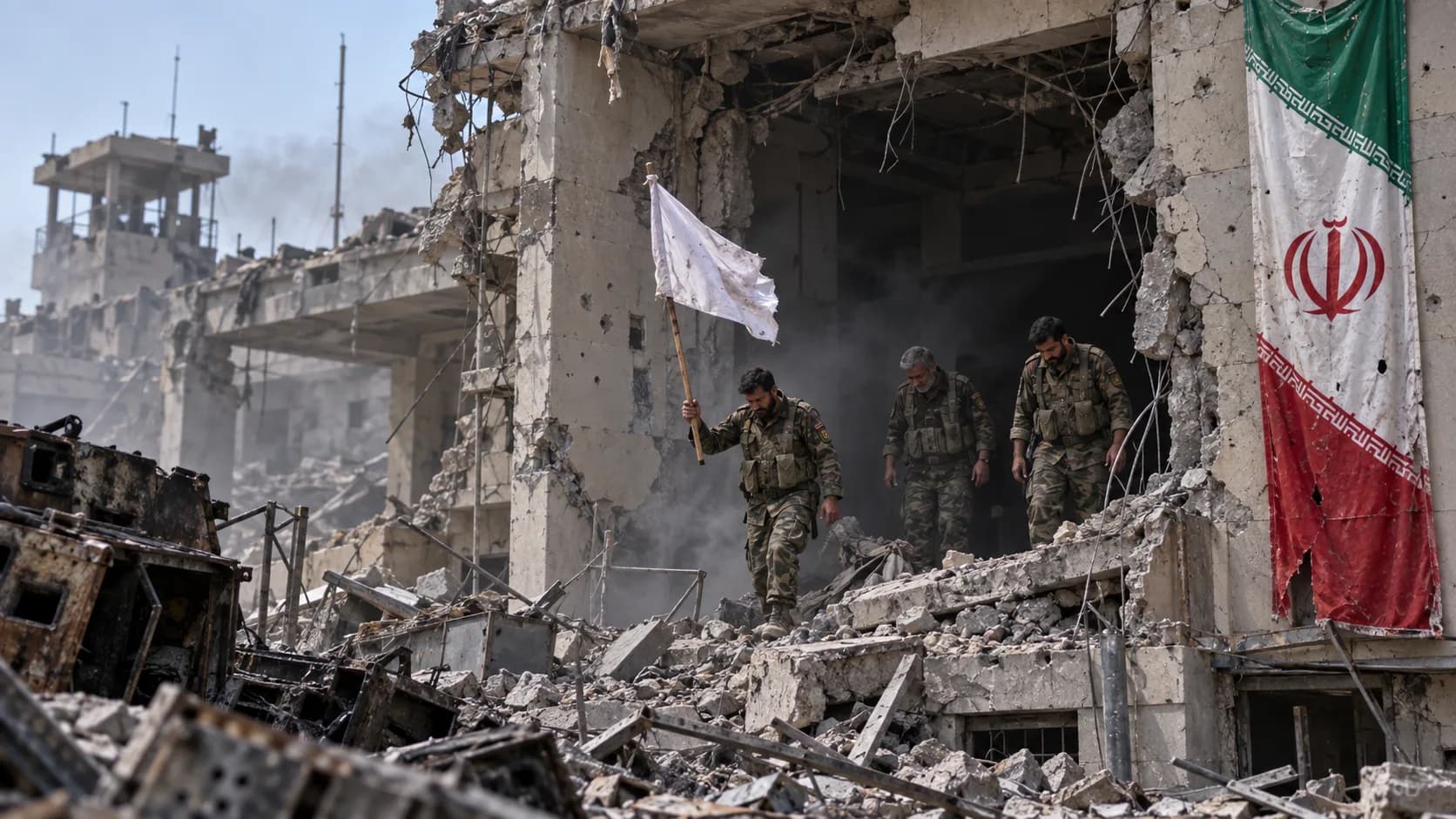
Just last month, the U.S. Treasury sanctioned a network it said was moving hundreds of millions of dollars outside the formal financial system to Hezbollah, including through cash couriers traveling between Iran, Lebanon, Turkey and the United Arab Emirates.
On September 10, Treasury announced another operation targeting networks supporting Lebanese Hezbollah and Kata’ib Hezbollah, describing them as parts of Iran’s regional proxy architecture.
Earlier this year, Treasury separately targeted organizations it said were financing Hamas’s military wing.
These are U.S. government findings backed by sanctions investigations—not Netanyahu standing at a podium asking the world to take his word for it.
That distinction matters.
You can oppose Israeli policy in Gaza.
You can criticize Netanyahu.
You can demand accountability for civilian deaths.
And simultaneously recognize that Iran has deliberately constructed and financed an armed regional network.
Those facts do not cancel each other.
And the Iranian government’s record at home cannot disappear either
There is another uncomfortable part of this story.
Iran’s government does not only project coercive power outside its borders.
United Nations human-rights mechanisms have documented allegations of arbitrary detention, enforced disappearances, torture, unfair trials, executions and violence against women and girls inside Iran. A May 2026 U.N. communication described reports of widespread arrests and disappearances connected to nationwide protests, including allegations of torture and death sentences imposed following proceedings with serious fair-trial concerns.
The U.N.’s fact-finding mission previously found that authorities intensified repression of women following the Woman, Life, Freedom movement, including surveillance, arrests and violence connected to compulsory-hijab enforcement.
That context is essential when Netanyahu predicts that Iran’s theocratic government will eventually fall.
His prediction may or may not happen. No journalist can responsibly present it as inevitable.
But the dissatisfaction and repression he is referencing are not imaginary.
October 7 cannot become a footnote
Netanyahu also returned repeatedly to October 7, 2023.
Hamas-led militants killed about 1,200 people in Israel and abducted 251, according to Israeli figures cited by AP.
Three years later, a strange distortion can occur in public debate.
The consequences of Israel’s response are discussed every day—and they should be. The Palestinian death toll reported by Gaza’s Health Ministry has surpassed 73,000, and Gaza has suffered extraordinary destruction.
But acknowledging Palestinian suffering cannot require forgetting why the war began.
Nor does describing October 7 excuse every subsequent Israeli military decision.
Both statements can be true simultaneously.
That is precisely where serious journalism should resist becoming tribal.
Then comes the most explosive claim: genocide
Netanyahu called accusations that Israel committed genocide in Gaza the “biggest lie of the century.”
That statement requires more care than either side often gives it.
There are major international bodies that have concluded genocide occurred. In September 2025, an independent U.N. Commission of Inquiry concluded that Israeli authorities and forces had committed genocide in Gaza. Israel rejected that conclusion.
But there is also an important legal fact frequently blurred in public conversation:
The International Court of Justice has not issued a final judgment finding Israel guilty of genocide.
South Africa’s case remains active. Israel filed its response in March 2026, and the court has established additional written-pleading deadlines stretching into 2027 and 2029.
Likewise, the International Criminal Court warrant concerning Netanyahu alleges war crimes and crimes against humanity. It is not a genocide conviction, and an arrest warrant is not a criminal judgment after trial.
That does not prove Netanyahu correct.
It does mean the public conversation should distinguish between an accusation, an investigative body's conclusion and a final judicial judgment.
Those are not interchangeable.
This is where public opinion becomes dangerous
Modern political warfare is no longer fought only with missiles.
It is fought with images.
A devastated building.
A grieving family.
A kidnapped civilian.
A starving child.
A diplomat leaving a room.
Each image can be real.
And each can still tell only part of the story.
The danger begins when the image becomes the entire argument.
If millions of people see only diplomats abandoning Netanyahu's speech, the subconscious message becomes simple:
The world has judged Israel. Case closed.
But the world is considerably more complicated than a television shot.
Iran’s support for armed proxies does not disappear because diplomats leave a room.
October 7 does not disappear.
Palestinian civilian deaths do not disappear either.
The allegations against Israel do not disappear.
And neither does the unresolved legal status of those allegations.
Our job should be to hold all of those facts in the same frame.
Listen before deciding
Netanyahu made extraordinary claims Thursday.
Some are factual assertions that can be tested.
Some are political arguments.
Some are predictions.
Some are disputed internationally.
They should not all be thrown into one bucket labeled truth or propaganda simply according to which side someone already supports.
But his central warning about Iran deserves more attention than the empty seats received.
Iran has funded armed organizations across the region. The U.S. government continues sanctioning those networks in 2026. The Iranian state has a documented record of repression at home. Hamas carried out the October 7 massacre. Hezbollah has received substantial Iranian support. Those are elements of the geopolitical reality regardless of whether one applauds Netanyahu.
And that is why yesterday’s most memorable image may also be its least important one.
The delegates who walked out made a political statement.
Netanyahu used the podium to make another.
But the serious question for the public is not who walked out or who applauded.
It is:
Which claims survive when the cameras are turned off and we actually examine the evidence?
That is the conversation worth having.