 3 min read
 9
9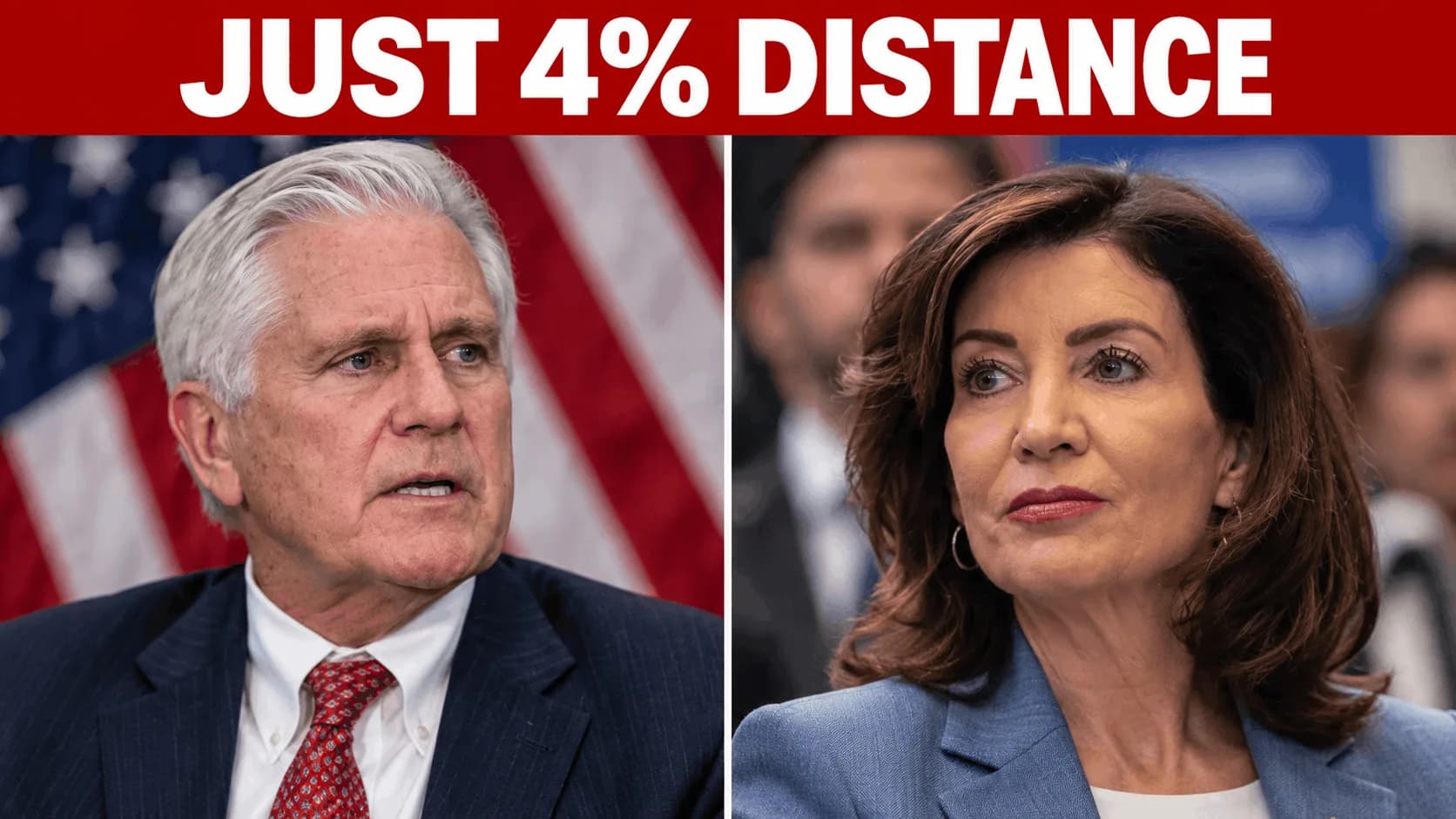
 Linkedin
 Threads
 Facebook
 X
X
Nobody should look at the New York governor’s race today and pretend Bruce Blakeman is leading.
He isn't.
But dismissing the race may be just as premature.
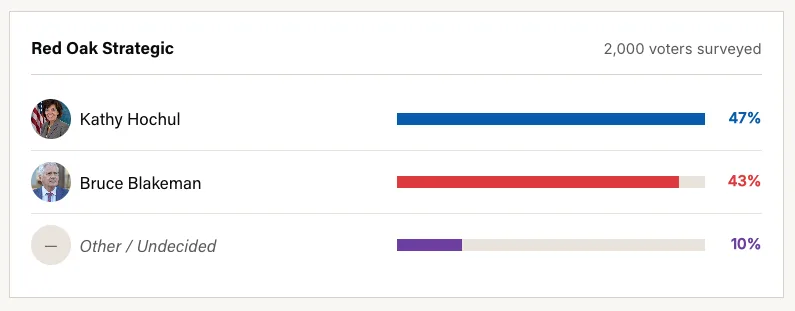
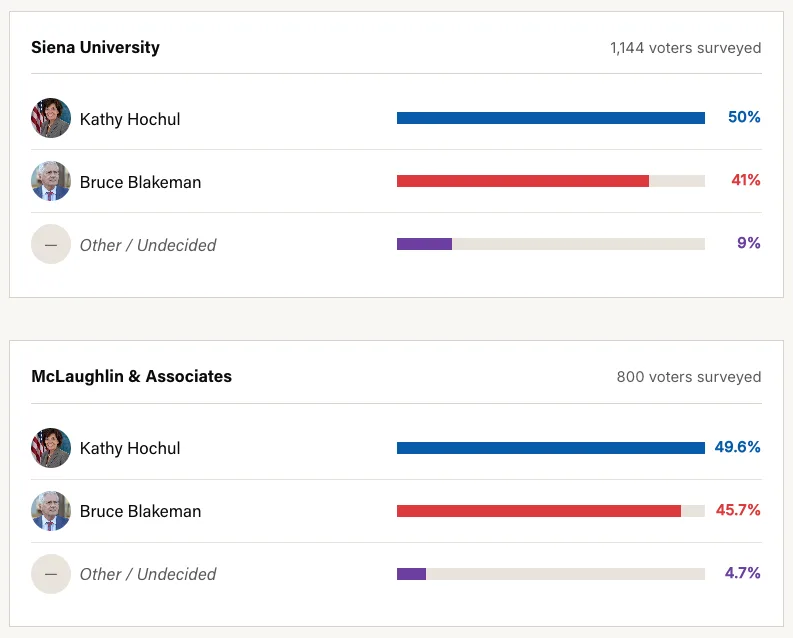
City & State’s polling page shows an extraordinary spread in recent results. Quinnipiac put Democratic Gov. Kathy Hochul ahead 58%-39%. Siena found a much tighter 50%-41% contest. And a McLaughlin & Associates survey had Hochul at 49.6% and Blakeman at 45.7%—a gap of just 3.9 percentage points.
Those polls use different methodologies and samples, and the McLaughlin result should not be treated as proof that Blakeman has suddenly erased Hochul’s advantage.
But the four-point result matters for another reason.
This is New York.
Hochul defeated Republican Lee Zeldin by only 5.7 points in 2022, dramatically closer than Andrew Cuomo's 22-point victory four years earlier.
So the more interesting question is not whether Blakeman is ahead today.
It is this:
Why is a Republican getting within striking distance at all?
The Election Is Becoming a Referendum on What New York Has Become
Blakeman is trying to turn the governor’s race into a broader argument over affordability, taxation, crime, immigration and whether New York’s political leadership has moved too far left.
His economic message centers on resisting tax increases and arguing that higher business costs eventually push employers, investment and residents elsewhere. City & State characterizes his economic position as conservative, focused on limiting taxes and protecting the state’s business climate.
Hochul offers a fundamentally different model.
Her approach combines targeted middle-class tax relief and credits with continued spending on childcare, education and social programs, while maintaining higher tax rates on top earners.
That is a legitimate ideological contest.
But another political experiment is unfolding simultaneously in New York City.
Mayor Zohran Mamdani came to office explicitly promising universal childcare, free buses, a freeze on stabilized rents and city-backed grocery stores. His administration has since secured state funding for childcare, celebrated a rent freeze approved by the Rent Guidelines Board and committed $70 million toward five municipal grocery locations.
Supporters see those policies as government finally confronting an affordability crisis.
Critics see something very different: an expanding government attempting to control prices, subsidize basic services and compete directly with private businesses inside perhaps the most famous capitalist city on Earth.
That disagreement could become one of the defining political arguments of this election.
New York City Is Still Powered by Private Enterprise
The irony is difficult to miss.
New York City remains one of the world's great centers of finance, business and private capital.
The city had roughly 4.86 million nonfarm jobs in June, including more than 521,000 jobs in financial activities and more than 804,000 in professional and business services.
Wall Street.
Banks.
Private equity.
Technology.
Real estate.
Media.
Entrepreneurship.
These industries generate enormous amounts of the wealth that make expansive public programs financially possible in the first place.
So when democratic-socialist policies become more ambitious, voters are entitled to ask a basic economic question:
At what point does government assistance begin weakening the private economy expected to finance it?
That does not mean every progressive program will fail.
Universal childcare could reduce costs for families.
A rent freeze immediately benefits tenants whose rents otherwise would have increased.
Municipal grocery stores could eventually offer cheaper staples if the model operates as promised.
But public policy should be measured by outcomes rather than campaign language.
Can the programs be funded sustainably?
Do rent controls discourage housing investment?
Can government-operated grocery stores actually compete after construction, labor and operating costs are included?
What happens to taxpayers if projected savings do not materialize?
New York may soon become one of America's largest laboratories for answering those questions.
Then There Is the Cultural Argument
Blakeman and other New York conservatives are also campaigning against cultural changes they associate with the progressive movement.
That conversation often becomes mixed with another development: the growing political visibility of Muslim New Yorkers, especially after the election of Mamdani, who is Muslim.
Those are two separate subjects and should be treated that way.
Being Muslim does not make somebody socialist, and supporting progressive economic policies does not represent Islamic law.
But the political change itself is real.
New York now has a Muslim mayor who openly identifies as a democratic socialist, while debates over Israel, antisemitism, immigration, policing and religious identity have become increasingly prominent in city politics.
Critics on the right sometimes describe that combination as an “Islamization” of New York.
A more precise description is that New York is experiencing both a religious-demographic change and a separate ideological movement toward democratic socialism, and the two sometimes intersect politically.
For voters concerned about either development, the governor’s race offers an opportunity to debate where state government should draw its own boundaries.
The Polls Are Not Telling One Story
This is where caution matters.
Blakeman supporters can point to the McLaughlin poll showing a four-point race.
They can point to Siena showing nine.
They can point to his competitiveness in parts of upstate New York, where Siena recently had Hochul ahead only 47%-44%.
City & State itself currently describes Hochul as the clear front-runner.
Therefore the most defensible conclusion is not that Blakeman is suddenly winning.
It is that the range of polling is unusually wide, and some surveys show a potentially competitive race despite New York's strong Democratic lean.
That alone makes the final month important.
Trump Is About to Enter the Race More Directly
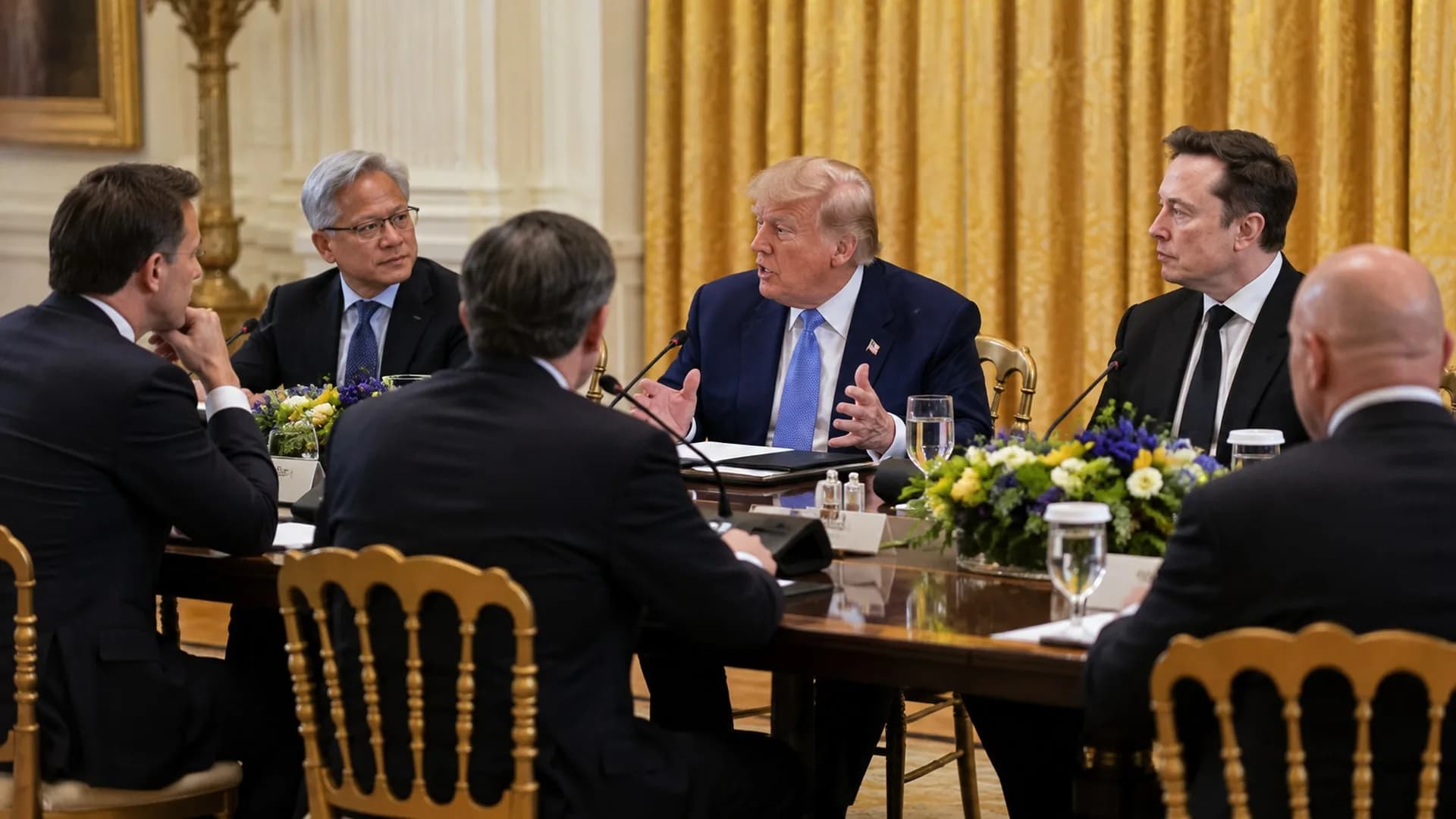
President Trump is expected to campaign with Blakeman in Syracuse on October 9, bringing national attention into the contest.
That creates both opportunity and risk.
Trump can energize Republican voters who might otherwise view the New York governor’s race as unwinnable.
But he can also mobilize Democrats who strongly oppose him.
Again, turnout becomes the question.
Can Blakeman consolidate Republicans?
Can he reach independents concerned about affordability and crime?
Can Hochul successfully separate herself from the most aggressive progressive policies emerging from New York City while maintaining Democratic enthusiasm?
Those questions matter much more than one prediction-market number.
New York Suddenly Has a Real Argument
For years, Republicans have often entered statewide New York elections facing the assumption that the result was predetermined.
That assumption is exactly what makes a four-point poll noteworthy.
Not because it proves Blakeman will win.
It does not.
But because politics changes when voters begin believing an election is worth paying attention to.
Hochul still has the advantage.
Blakeman still has substantial ground to make up.
Yet the argument beneath this race is becoming larger than either candidate.
What should government provide?
What should markets determine?
How much taxation is too much?
How should New York balance immigration with integration?
How does the state protect religious liberty without allowing religious politics to replace constitutional government?
And perhaps most importantly:
Can the world's most famous capitalist city continue moving toward increasingly socialist public policy without eventually creating an economic contradiction?
Those are no longer academic questions.
New York is testing them in real time.
And suddenly, the governor's race is giving voters two very different answers.