
 5 min read
 12
12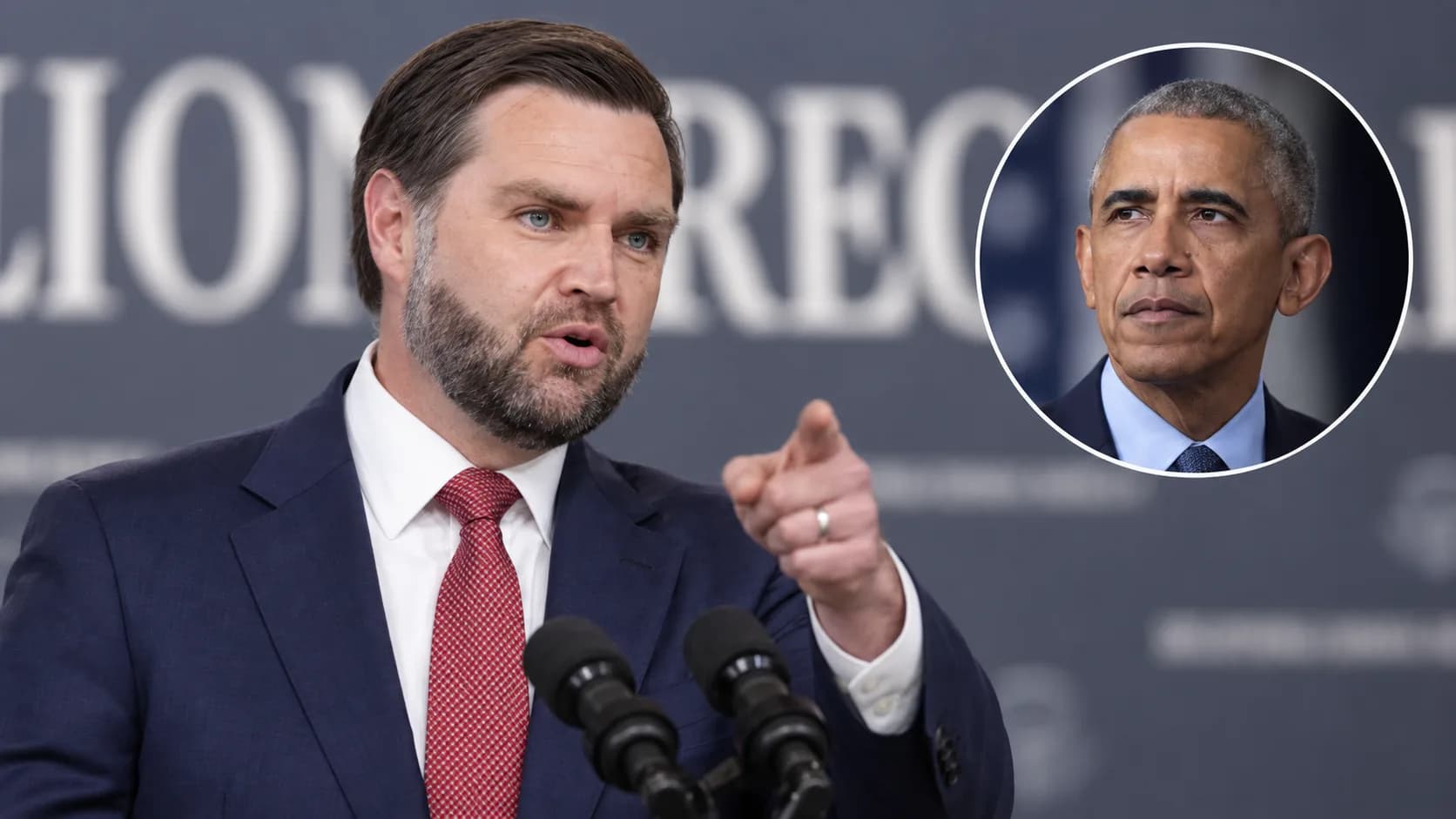
 Linkedin
 Threads
 Facebook
 X
XThere is an important distinction to make before looking at the numbers.
This is not necessarily a story about 760,000 individual Americans deliberately committing fraud.
In many cases, the person whose name appeared on an insurance plan may have been the victim.
The real problem federal investigators and regulators are describing involves a system that became vulnerable enough for dishonest brokers, agents and applicants to obtain government subsidies for people who were ineligible—or sometimes completely unaware that an insurance policy existed in their name.
That is taxpayer money leaving Washington based on information that should have been verified before the check was written.
And that is where this story becomes much bigger.
What Vance’s task force found
Vice President JD Vance, who chairs the White House Task Force to Eliminate Fraud, announced Tuesday that approximately 315,000 ACA marketplace enrollments covering about 760,000 people are being canceled.
Administration officials say the affected cases include people who did not satisfy eligibility requirements, unauthorized enrollments and cases involving identities that could not be verified.
Officials estimate that ending the associated federal subsidies will save approximately $2.2 billion. Another 419,000 enrollments will undergo additional verification rather than being automatically removed.
CMS also announced a six-month suspension on accepting new agents and brokers into the marketplace enrollment system while officials examine what they describe as disproportionate fraud originating through broker-assisted applications.
Why target brokers?
Follow the money.
Insurance agents can receive monthly commissions for every person they enroll.
CMS says that under previous marketplace rules, dishonest brokers discovered ways to enroll consumers without their knowledge, change a consumer’s insurance plan without permission, split families across multiple policies or manipulate applications to qualify people for fully subsidized coverage.
Each enrollment could generate another commission.
That creates an obvious question:
What happens when the person enrolling someone gets paid, the enrollee pays nothing, and the federal government pays the insurance company?
If verification is weak, the person writing the check may be the only participant with no idea something is wrong.
And that person is the American taxpayer.
Some people did not even know they had insurance
CMS reported earlier this year that it had already canceled unwanted coverage for approximately 250,000 consumers who had been enrolled without authorization.
Another roughly 200,000 people had their chosen insurance plans switched without their consent.
CMS also removed subsidies from hundreds of thousands of people who were simultaneously receiving Medicaid or CHIP benefits or had failed to reconcile previous tax credits.
This is why calling every questionable enrollee a “fraudster” would be inaccurate.
Imagine discovering that someone used your personal information to enroll you in an insurance policy because they could earn a commission while Washington quietly paid the premium.
Who was cheated?
You were.
And taxpayers were.
The government tested the system with fake people—and it worked
Perhaps the most troubling evidence comes not from a political speech but from the Government Accountability Office, Congress’s independent auditing agency.
GAO created fictitious applicants to test whether the federal marketplace could identify them.
For 2024, all four fake applicants received subsidized coverage.
GAO deliberately failed to provide some of the requested supporting documents, yet the coverage continued.
For 2025, the marketplace initially approved 19 of 20 fictitious applications, and 18 remained actively insured as of September 2025, costing taxpayers more than $10,000 every month in subsidies for people who literally did not exist.
GAO cautioned that a test involving 20 fictitious identities cannot tell us what percentage of all marketplace enrollments are fraudulent.
That qualification matters.
But neither should Americans ignore what the experiment demonstrated:
The system could be fooled.
These were not theoretical vulnerabilities
Federal prosecutors have already brought major criminal cases.
Earlier this year, AP of South Florida admitted involvement in an ACA enrollment fraud scheme in which vulnerable and low-income people were allegedly enrolled using falsified income and other information.
Federal prosecutors said the fraudulent applications generated approximately $141.5 million in unwarranted federal subsidies.
Its former parent company agreed separately to pay $107 million to resolve civil allegations related to fraudulent marketplace applications.
In another case, two executives were sentenced to 20 years in federal prison after prosecutors said their operation preyed on tens of thousands of vulnerable consumers and generated hundreds of millions of dollars through improper ACA enrollments.
So when Americans hear the word fraud, this is not simply a political slogan.
There have been actual criminal prosecutions.
How did the opportunity become so large?
During the pandemic era, Congress dramatically increased ACA subsidies.
For many low-income applicants, marketplace plans became available with zero monthly premium.
That helped millions of eligible people afford insurance.
But according to HHS, it also created an unusual fraud incentive: someone could be enrolled without realizing it because no monthly bill ever arrived at their home.
The government paid the insurer.
The broker received a commission.
And the supposed policyholder might never use the insurance because he or she did not know the plan existed.
HHS currently estimates that 2.6 million marketplace enrollments may still be improper, phantom or fraudulent, although that figure is an administration estimate derived partly from enrollment and claims patterns rather than 2.6 million individually proven fraud cases.
That distinction is important.
But so is the scale of the vulnerability.
This is what government accountability is supposed to do
Whatever someone thinks about the Affordable Care Act itself, this should not be complicated.
If someone legitimately qualifies for a subsidy, the system should help that person.
If someone does not qualify, taxpayer money should not be sent in their name.
If someone is enrolled without consent, the policy should be canceled and the individual protected.
If a broker falsifies someone's income to collect commissions, that broker should be investigated.
And if verification procedures make it possible to insure fictional people, those procedures need to be repaired.
This is not ultimately a Republican or Democratic principle.
It is basic stewardship.
America spends enormous amounts of money helping people who genuinely need medical care. Every dollar diverted through a phantom enrollment, falsified application or dishonest commission scheme is a dollar that cannot be used for an eligible family, a senior, a veteran or another legitimate public need.
The headline number is 760,000 people.
The more important number may be $2.2 billion.
Because behind every government subsidy is something Washington occasionally forgets:
It was somebody’s money before it became government money.