 5 min read
 3
3
 Linkedin
 Threads
 Facebook
 X
X
There is something happening inside the Republican electorate that traditional political analysis can miss.
Gasoline is an easy example.
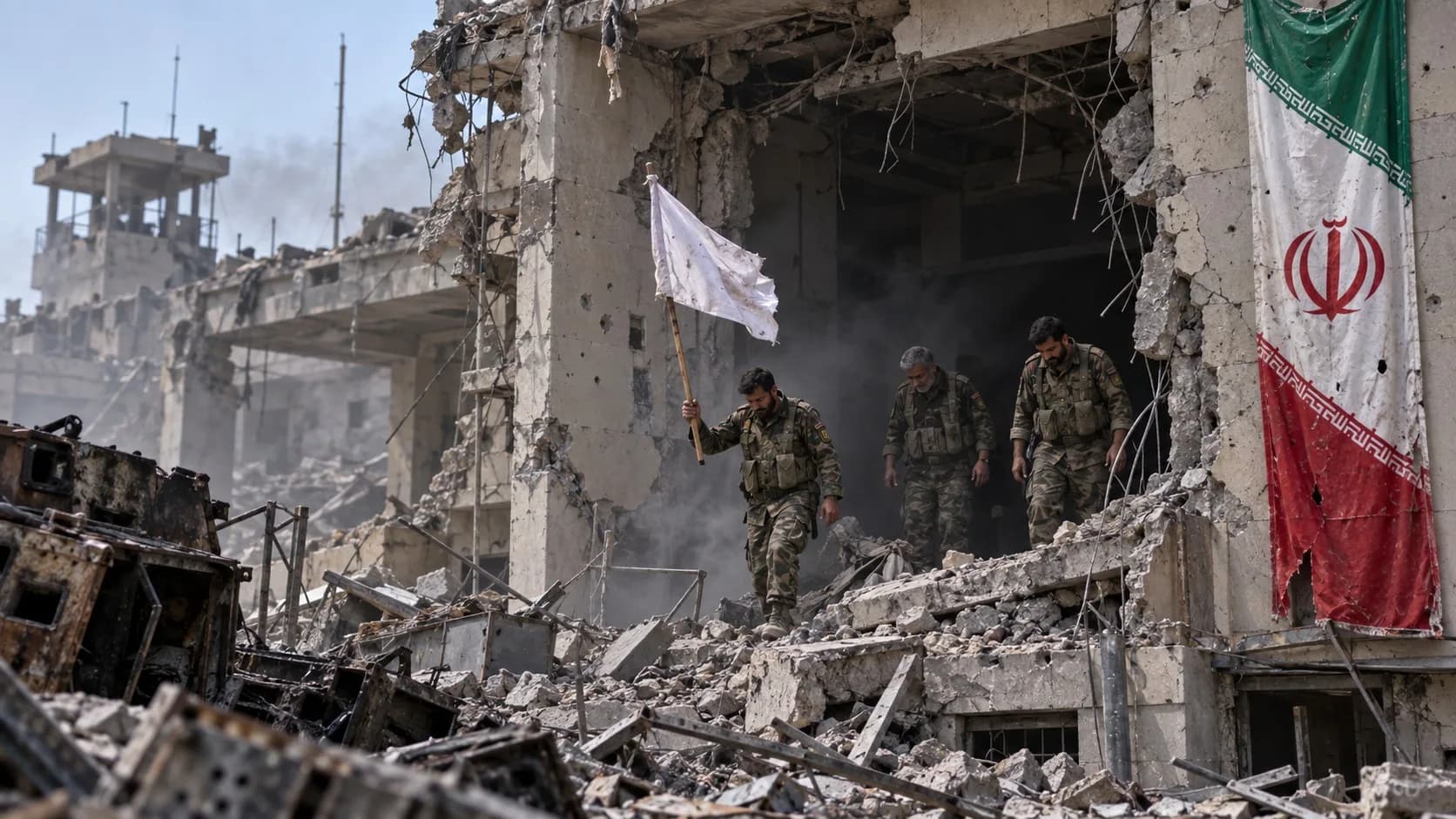
The national average has risen sharply amid the Iran conflict, and AP reporting shows voters across parties are unhappy about it. Some Republican voters interviewed by reporters have openly complained about affordability even while saying they still intend to support Republican candidates.
That sounds contradictory only if politics is understood purely as a transaction:
Gas goes up → punish the president.
But voters do not always behave that way.
Sometimes they think in terms of identity, worldview and long-term priorities.
A decorated veteran who now pastors a church in New Jersey told our reporters that he was willing to absorb higher fuel prices because he believed the broader confrontation with Iran was strategically necessary. He hoped the operation would move faster, but his position was essentially:
I will hold the line.
We are withholding his name because of his position.
One testimony cannot describe millions of voters.
But it raises an important question:
How many Republicans feel uncomfortable economically without feeling politically movable?
The GOP increasingly sees itself as working class
There is real evidence behind that shift.
A Pew Research Center survey this year found that 67% of Republicans and Republican-leaning adults describe themselves as working class, compared with 55% of Democrats and Democratic leaners. Among Republicans without a bachelor's degree, that rises to 72%. Among Republican blue-collar workers, it reaches 82%.
That does not mean the Republican Party literally represents every working-class American.
It does mean the party's identity has changed.
For decades, Democrats were culturally associated with labor, factory workers and industrial communities, while Republicans were caricatured as the party of executives and country clubs.
Today's coalition is considerably more complicated.
Republicans have become much stronger among voters without four-year degrees, particularly White working- and middle-class voters. At the same time, Democrats have made large gains among highly educated voters and upper-income professional groups.
And “working class” itself is no longer synonymous with poor or uneducated.
Pew found that half of college graduates and half of upper-income Americans also identify with the term.
That helps explain the modern Republican coalition better than old stereotypes do.
The contractor.
The small-business owner.
The veteran.
The entrepreneur.
The churchgoing family.
The engineer who distrusts institutional politics.
The factory worker.
The executive who still thinks of himself as someone who built his position rather than inherited it.
They may occupy different income brackets while sharing something culturally:
They identify with work, independence and self-determination.
But don't confuse loyalty with comfort
There is an important distinction.
Republican voters being willing to tolerate higher gasoline prices does not mean they enjoy them.
Polling this summer showed GOP strategists worried about enthusiasm among even reliable Republican voters.
More recent evidence presents a more dynamic picture.
Republican-aligned groups have poured enormous resources into battleground races and are now outspending Democrats in several key contests. The Wall Street Journal reported that GOP-aligned outside groups dramatically accelerated spending in September, including in Texas, Ohio and other Senate battlegrounds.
That does not prove Republicans will win those races.
But it does show a party attempting to convert ideological loyalty into actual turnout.
And there is another movement developing outside the traditional party structure.
FlashPoint Army Chapters is building something different
FlashPoint Army Chapters describes itself not simply as an audience but as a national network of believers.
Its public chapter platform now reports:
50 states engaged.
10,000+ Christians mobilized.
2,000+ members “on mission.”
That distinction matters.
Ten thousand registrations do not automatically mean ten thousand daily active users, and those figures come from the organization itself rather than an independent analytics audit.
But the growth model is notable.
The platform begins with Biblical Citizenship, provided through a partnership with Patriot Academy. Members can complete the course for free before progressing into what FlashPoint Army calls its “12 Missions to Save America”—practical civic activities designed to move members from education into participation.
That is different from an ordinary social network.
Facebook asks:
What do you want to post?
X asks:
What is happening?
A movement platform asks something else:
What are you going to do next?
That is the missing link organizations across politics have been trying to solve for years.
Attention is abundant.
Action is scarce.
Millions of Americans watch political videos, repost stories and argue online without ever attending a city-council meeting, contacting a representative, joining a local organization or helping register voters.
FlashPoint Army is attempting to connect those worlds.
Education.
Community.
Social interaction.
Video.
Groups.
Local chapters.
Courses.
Then missions.
The technical concept is therefore bigger than “a Christian Facebook.”
It resembles a vertical social operating system for a movement.
That is strategically interesting even outside politics.
Investors and platform builders have spent years asking whether the future of social media will remain dominated by giant horizontal networks or fragment into specialized communities built around a common identity and purpose.
FlashPoint Army is effectively testing the second model.
The age profile may matter too
Its strongest audience appears to include many Americans over 40—people who are often less interested in chasing every new social platform but significantly more reliable as voters.
That matters because turnout is not the same thing as online popularity.
A candidate can dominate TikTok and lose an election.
A movement can look quiet online and turn out enormous numbers of older voters.
The Republican coalition historically performs well among older Americans. Pew's longer-term partisan data show older voters are more Republican-oriented than the youngest cohorts.
So a platform focused on converting an older, faith-oriented audience from spectators into chapter members deserves attention.
A modern version of an older American identity
There is also something culturally familiar about today's Republican self-image.
Not identical to America 100 years ago.
Not identical to the postwar baby-boom period.
But familiar. Work. Industry. Faith. Family. Entrepreneurship. National confidence. Distrust of centralized authority.
The belief that prosperity should come through building rather than permanent dependency.
Those ideas never belonged exclusively to one party, and American history was considerably messier than nostalgia sometimes remembers.
But they increasingly form part of how Republican voters describe themselves.
The most interesting political question may therefore not be:
“Are Republicans angry about gas prices?”
Many are.
The better question is:
“Are gas prices sufficient to separate them from the larger political identity they now believe they are defending?”
So far, we do not have enough evidence to answer that nationally.
The midterms will.
Forty days can change everything
There is still plenty of volatility.
Republicans have fundraising strength and some encouraging movement in individual races. Democrats remain highly competitive in several battlegrounds, and economic dissatisfaction creates genuine risk for the governing party.
No serious analysis should convert social-media energy into guaranteed votes.
But there is a constituency that deserves more attention than it receives.
The voter who dislikes paying $4-plus for gasoline.
Who complains privately.
Who may disagree with Trump on individual decisions.
But who still believes the larger battle over culture, borders, education, foreign policy, religious liberty or the role of government matters more than one difficult season.
That voter exists.
The question is how many.
And this is where organizations such as FlashPoint Army become relevant.
Because elections are not ultimately won by the person who feels most strongly.
They are won by the people who turn feeling into participation.
That may be the most important experiment happening inside the Republican coalition right now:
Can a highly invested, faith-oriented audience become a disciplined civic network?
If the answer is yes, that would matter far beyond one election.
It would mean the Republican movement is developing something every political organization wants and very few actually achieve:
a community that does not merely consume politics—but organizes around it.