
 3 min read
 18
 Linkedin
 Threads
 Facebook
 X

November 27, 2026 | FPTN Political Analysis
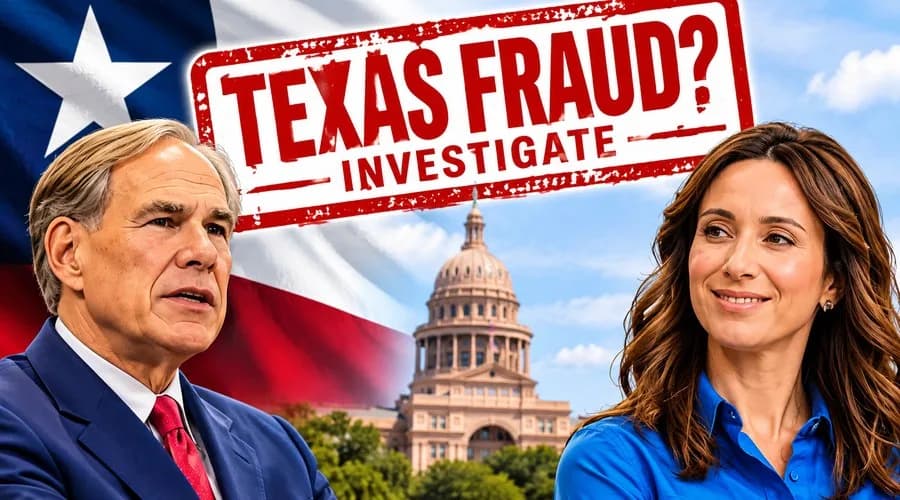
Texas Democratic Governor-elect Gina Hinojosa is preparing to reverse one of Republican Governor Greg Abbott's most controversial security measures before she officially takes office on January 19, 2027.
In a November 14 interview with The Washington Post, Hinojosa confirmed her intention to remove the state-level terrorism designation imposed on the Council on American-Islamic Relations, commonly known as CAIR.
Her announcement, highlighted Friday by Conservative Brief, offers an early indication of how dramatically Texas government policies could change following the Democratic victories in the November midterm elections.
The incoming governor has also pledged to declare a cost-of-living emergency and freeze residential electricity rates, potentially setting the stage for significant legal and legislative disputes.
What Abbott's Terrorism Designation Actually Means
On November 18, 2025, Governor Abbott designated CAIR and the Muslim Brotherhood as foreign terrorist organizations and transnational criminal organizations under Texas law.
According to Abbott's office, the proclamation authorized additional enforcement measures and restrictions on the acquisition of real estate by the designated organizations.
Abbott presented the decision as part of his administration's efforts to combat extremism and protect Texans from potential security threats.
Hinojosa's proposed reversal specifically concerns CAIR. It should not be interpreted as confirmation that she intends to remove every designation contained in Abbott's proclamation.
Texas' designation is also distinct from the federal government's official classification of foreign terrorist organizations.
The History Behind Abbott's Decision
One of the most significant historical cases underlying the controversy involves the Holy Land Foundation, formerly based in Richardson, Texas.
In 2008, federal prosecutors secured convictions against the foundation and five of its leaders for providing financial support to Hamas.
The case involved approximately $12.4 million in material support.
Among those convicted was Ghassan Elashi, whom Abbott identified as a founding board member of CAIR's Texas branch.
CAIR was identified as an unindicted co-conspirator during the proceedings but was not criminally charged in that prosecution. The organization denies supporting terrorism and has challenged Abbott's designation in federal court.
These historical developments help explain Abbott's stated security concerns, while the ongoing legal challenges underscore the importance of distinguishing documented criminal conduct from allegations against organizations and their members.
Any decision to retain or remove a terrorism designation should be supported by a transparent evaluation of evidence, applicable law, and public safety considerations.
Can Hinojosa Remove the Designation Without Legislative Approval?
Texas law grants the governor considerable authority over certain national security-related property restrictions, but that authority comes with procedural requirements.
Under Section 5.254 of the Texas Property Code, the governor must consult the director of the Department of Public Safety and the Homeland Security Council before imposing or removing an applicable designation.
Rescinding Abbott's designation would not repeal the underlying legislation or prevent federal authorities from investigating suspected criminal activity.
Another significant development occurred on November 16, when Texas Attorney General Ken Paxton withdrew a separate lawsuit seeking to prohibit CAIR from operating in Texas.
The incoming administration will therefore inherit an already evolving legal situation.
Government-Controlled Electricity Prices: Another Major Policy Shift
Hinojosa's economic agenda presents an additional departure from traditional Republican governance in Texas.
She has promised to freeze residential electricity rates immediately upon taking office, arguing that households should not subsidize the infrastructure required by large corporations and energy-intensive data centers.
Her proposal has generated considerable debate about gubernatorial authority and the future of Texas' competitive electricity market.
Energy specialists have questioned whether the governor possesses the legal authority to impose a comprehensive rate freeze through executive action alone. Some suggest that narrower interventions involving regulated electricity delivery charges could be possible.
From a free-market perspective, prolonged price controls could discourage infrastructure investment at a time when Texas requires additional electricity generation to accommodate population growth, manufacturing, and artificial intelligence development.
Requiring large industrial consumers to bear the infrastructure costs they generate represents another potential approach to protecting residential customers without undermining market competition.
A Defining Test for the Future of Texas
Hinojosa will enter office with Democrats controlling the Texas House, while Republicans retain control of the state Senate. This divided legislative environment will require negotiation on significant policy changes.
From a conservative policy perspective, Texas' economic competitiveness, individual liberty, constitutional protections, and public safety remain essential considerations as the state transitions to new leadership.
Security decisions should be based on credible intelligence and documented conduct rather than political affiliation or religious identity. Economic reforms should address household affordability without sacrificing the investment necessary to sustain long-term prosperity.
The incoming administration will ultimately be judged not by the promises it makes, but by its ability to protect Texans, respect constitutional freedoms, and maintain the economic strength that has distinguished the Lone Star State.
Get the full story. As is.