
 2 min read
 1
1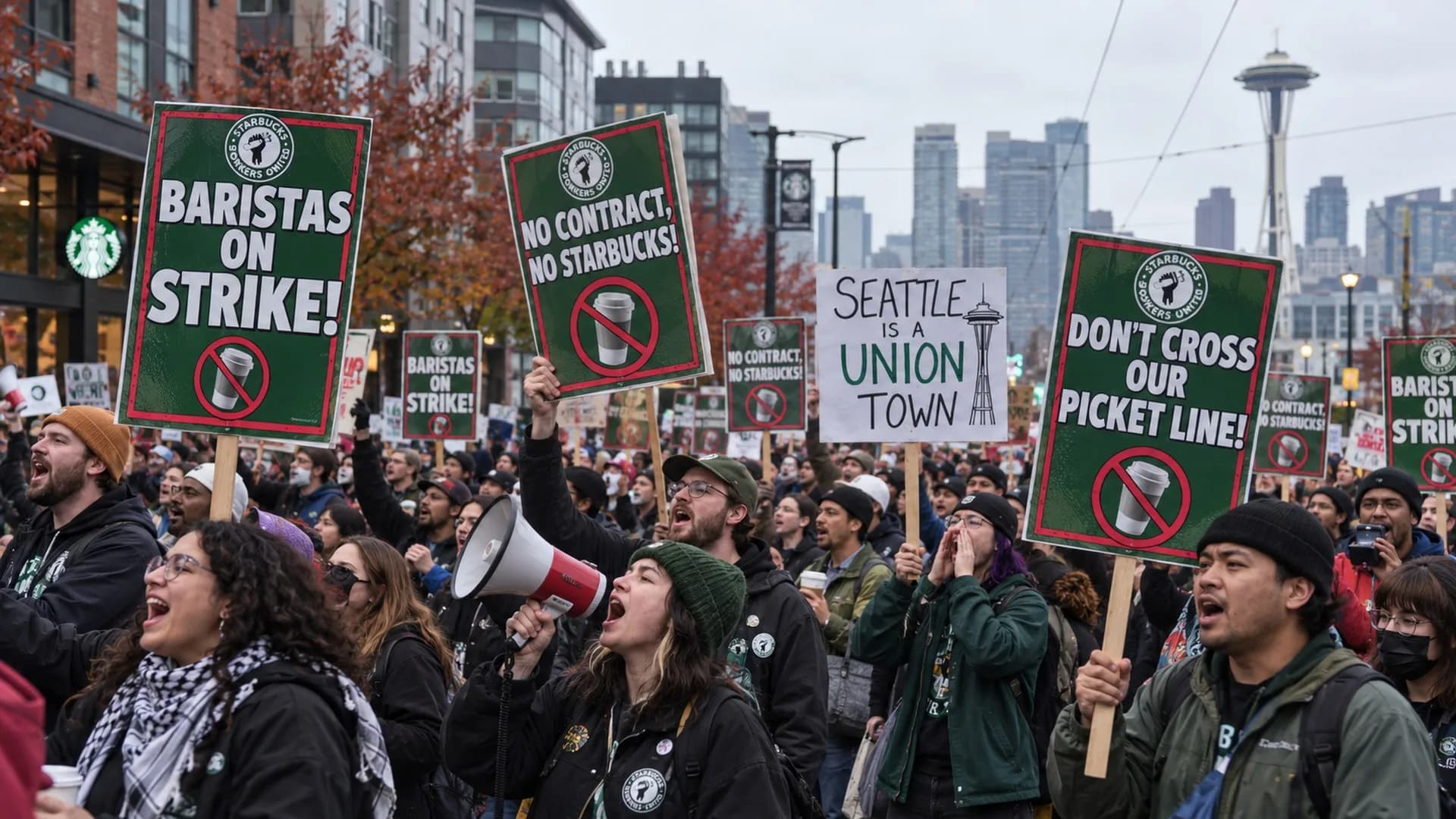
 Linkedin
 Threads
 Facebook
 X
X
Seattle has found another way to fight the cost-of-living crisis.
Raise the minimum wage again.
Beginning January 1, the city's minimum wage will climb from $21.30 to $22.14 an hour, applying to employers large and small. A full-time worker earning the minimum would make slightly more than $46,000 a year before taxes.
For someone struggling to pay rent, that extra money matters. That should not be dismissed.
But there is a bigger economic question hiding underneath the celebration:
Why does someone need $22 an hour simply to remain afloat?
If government continually increases wages while housing, food, transportation, taxes and operating expenses continue climbing, are we solving affordability—or chasing it?
That distinction matters enormously.
Seattle’s problem is bigger than wages
Seattle is expensive.
Zillow currently places the typical Seattle home value above $830,000, while asking rents remain above the national average.
That means even a large wage increase can disappear surprisingly quickly.
A worker receives more money.
The restaurant employing that worker faces higher payroll costs.
Prices rise where businesses can pass those costs along.
Some companies automate.
Some reduce hours.
Some stop expanding.
Some move.
Some close.
That does not mean every minimum-wage increase destroys jobs. Research on minimum wages is much more complicated than that, and supporters correctly note that higher pay can improve income and retention for workers who remain employed.
But Seattle itself provides evidence of the tradeoff.
A peer-reviewed study examining the city's earlier minimum-wage policy found statistically significant changes in business formation, including increased establishment entry in nearby lower-wage areas relative to Seattle in hospitality and retail.
Fox reports that 450 Seattle restaurants closed during the first half of 2025, while restaurant and retail transactions weakened in several business districts. Those closures cannot honestly be blamed on wages alone—downtown Seattle has also dealt with remote work, high vacancies, property crime and other economic pressures—but restaurant owners have repeatedly identified labor costs as one part of the equation.
That is the point policymakers too often avoid.
Businesses do not pay wages from political speeches. They pay them from revenue.
Paying people well is not the problem
America should want workers to earn more.
The false choice is pretending that employers must either support low wages or support government-mandated wages.
Look at Texas.
The statewide minimum wage remains far below Seattle's, yet Buc-ee's currently advertises front-line jobs paying roughly $17 to $20 an hour, with medical coverage, paid time off and a 401(k) match. Some career-track positions pay significantly more.
Why?
Because successful businesses can choose to pay more when productivity, recruiting and retention justify it.
That produces a fundamentally different relationship.
The employee thinks: This company values me.
The company thinks: This employee creates value.
That is healthier than a permanent political war where workers are told entrepreneurs are exploiting them and entrepreneurs are taught to see labor only as an unavoidable expense.
A functioning economy needs both.
Capital without workers produces nothing.
Workers without sustainable businesses eventually have nowhere to work.
There is another uncomfortable workplace problem
Money alone does not create commitment.
Gallup's latest U.S. workplace data found that only 31% of American employees were engaged at work during the first half of 2026, while 18% were actively disengaged.
That does not mean American workers are lazy.
It means America has a workplace-culture problem.
Millions of employees do not feel connected to their companies, while millions of employers complain that workers do not feel invested in outcomes.
Simply changing $20 to $22 does not repair that relationship.
A healthier model would connect higher compensation with better management, training, productivity, advancement, profit sharing where practical and a realistic path toward the worker's own version of the American Dream.
Pay the employee better when the company can produce more.
Give the worker a reason to care whether the customer returns.
And give entrepreneurs a reason to expand rather than fear the next mandated cost increase.
Then look at California
Seattle is today's headline, but California demonstrates the broader affordability problem dramatically.
California currently imposes individual state income-tax rates reaching 13.3%, an average combined state and local sales-tax rate near 9%, and one of America's highest gasoline taxes.
On September 30, AAA reported regular gasoline averaging approximately $6.39 in California versus $3.93 in Texas.
Housing is even more revealing.
Zillow's August figures put the typical Los Angeles home around $958,000.
Houston?
About $305,000.
That is more than three times the price.
Is the Los Angeles house built with three times better lumber?
Of course not.
Land values, demand, zoning, permitting, construction rules and housing scarcity all matter. California's own nonpartisan Legislative Analyst's Office has concluded that the state's severe housing shortage—especially in desirable coastal areas—is the biggest underlying driver of its extraordinary housing costs.
That leads to the question politicians should be asking before celebrating another wage mandate:
Why not attack the cost itself?
Build more housing.
Reduce unnecessary barriers to construction.
Examine energy costs.
Simplify taxes.
Lower the cost of operating small businesses.
Encourage competition.
Then a worker's existing dollar becomes more valuable without requiring every employer to continually chase a government-adjusted wage floor.
Raising wages can help. It cannot substitute for affordability.
There is a legitimate philosophical divide here.
One approach says government should continually raise mandated compensation until wages catch up with expensive cities.
Another argues government should focus more aggressively on making those cities cheaper to live and operate in.
Neither question should be reduced to slogans.
A worker earning $15 an hour in a place where a modest home costs $250,000 may ultimately have more economic mobility than someone earning $27 an hour where housing approaches $1 million.
The number on the paycheck is not the American Dream.
Purchasing power is.
Can you pay your mortgage?
Can you raise your children?
Can you afford transportation?
Can you take a reasonable vacation?
Can you save?
Can you eventually own something?
Can an entrepreneur hire the next person without wondering whether that employee will cost more than the position can economically produce?
Those are the measurements that matter.
Seattle's $22.14 minimum wage will undoubtedly help some people.
But if living costs continue climbing faster than families can escape them, Seattle will eventually be back having the same debate at $24, then $26, then $30.
And perhaps by then someone will finally ask the question that should have come first:
Instead of constantly forcing wages upward to chase the cost of living, why aren't we bringing the cost of living down?