 5 min read
 2
2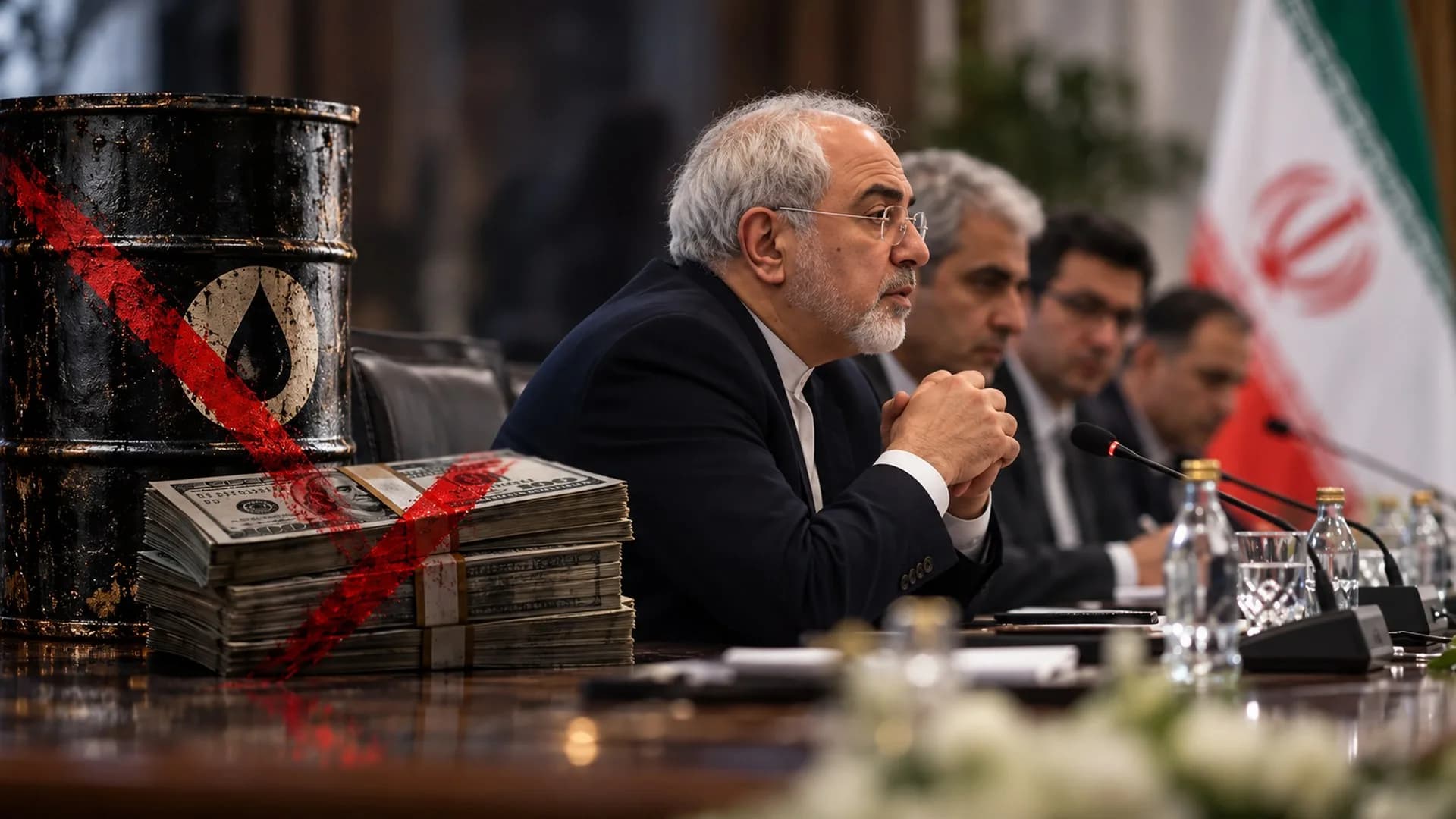
 Linkedin
 Threads
 Facebook
 X
X
For several days, Tehran insisted that President Donald Trump's public rejection was not enough.
Iran wanted the answer delivered formally.
Now it has one.
Iranian government spokeswoman Fatemeh Mohajerani said Wednesday that Foreign Minister Abbas Araghchi presented the official American response to President Masoud Pezeshkian during a cabinet meeting in Tehran. The exact American terms have not been publicly released, but CBS reports that the disagreement remains centered on how any ceasefire, sanctions changes and reopening of the Strait of Hormuz would be sequenced.
That distinction matters.
The United States has not publicly announced that negotiations are over.
But the seven-day plan Iran originally placed on the table—the proposal we examined in our previous reporting—was already rejected by Trump.
Iran wanted the United States to halt the fighting, ease the naval blockade, provide sanctions relief and restore access to frozen funds as Tehran gradually reopened Hormuz and returned to negotiations.
Trump's answer to those terms was no.
Not necessarily no negotiations.
No to that deal.
And Tehran now has to decide what it is prepared to give up if it wants another one.
The seven-day plan did not survive first contact with Washington
Iran presented the plan through Qatari intermediaries.
Its basic architecture was straightforward: a seven-day ceasefire would create enough confidence for a phased reopening of the Strait of Hormuz, while Washington moved toward concessions derived from an earlier June memorandum that ultimately collapsed.
Trump publicly rejected it Saturday.
His explanation was equally direct: Iran wanted an agreement, but not one acceptable to the United States under current conditions. CBS reported Trump saying the proposal resembled something Washington might have accepted a year earlier, before seven months of war changed the strategic balance.
That is the most important development.
Negotiations are no longer taking place in the conditions that existed before the war.
Every week that passes changes what each side can demand.
And the most visible changes right now are economic.
Iran's clock is getting expensive
The Iranian rial crossed another historic threshold this week, trading at more than 2.5 million rials to one U.S. dollar on the free market. CBS and AP have also reported annual inflation above 60%, sharply higher food prices and growing disruption to ordinary commerce.
The pain is reaching much further than financial markets.
AP reported Wednesday that Iranian pharmacies are struggling with shortages and steep price increases as sanctions, the naval blockade and damage from the war complicate access to imported pharmaceutical ingredients. Some medicine prices have risen several-fold.
That does not prove the Iranian government is about to collapse.
But it does establish something much more important for negotiations:
the cost of waiting is increasing.
Iran's economy traditionally depends heavily on oil exports for access to foreign currency.
Reuters reported earlier this month that the American naval blockade had accomplished something years of sanctions never completely managed: for roughly seven weeks, meaningful fresh Iranian crude exports had failed to transit Hormuz, and new Iranian cargoes were not reaching China—Tehran's only major remaining oil customer.
Iran can issue military communiqués.
Currency markets issue their own.
Then there is China
This may be the part of the story that deserves the closest attention.
President Xi Jinping did not publicly join Trump's war against Iran.
China has not abandoned Tehran.
Chinese-linked companies have even been accused by U.S. officials and reporting organizations of supplying dual-use technology that helps Iranian military capabilities, and Washington sanctioned additional entities this week, including companies connected to Hong Kong and Beijing.
But after Xi's state visit to Washington, something remarkable appeared in the White House account of their discussions.
Trump and Xi agreed that Iran cannot possess a nuclear weapon and that no country or institution should be allowed to impose tolls on international waterways.
For Tehran, the second point is particularly significant.
Iran has attempted to turn control of Hormuz into negotiating leverage.
China depends heavily on the same international energy routes.
Its economic interest is not permanent chaos in the Gulf. It is predictable trade.
Does that mean Trump and Xi secretly agreed that Washington and Beijing will jointly control the Strait?
There is currently no public evidence of such an agreement.
But there does not need to be one for China's position to matter.
Beijing has now publicly placed itself on the side of free passage rather than Iranian tolls.
That narrows Tehran's diplomatic room.
Russia is in a different position
Russia remains close to Iran politically.
The countries signed a strategic partnership last year and have exchanged military equipment and technical assistance. Russian Foreign Minister Sergei Lavrov met Araghchi in New York last week and called for a diplomatic end to the conflict.
But their partnership contains no mutual-defense clause.
Moscow is not publicly guaranteeing Iran's defense, nor is Russia running the current negotiations between Tehran and Washington.
Russia therefore matters.
But it cannot simply replace China's economic role, reopen Iranian sea lanes or make the rial recover by declaration.
That leaves Iran with powerful partners—but not an obvious rescue mechanism.
Washington is tightening pressure while negotiating
Look at what happened on the same day Iran waited for America's answer.
The Treasury Department announced new sanctions against ten individuals and entities accused of helping Iran procure military equipment.
The administration calls the broader effort Operation Economic Outcast, and Treasury Secretary Scott Bessent says its objective is to isolate networks sustaining Iran's government and military apparatus.
Washington is also targeting networks accused of financing Hezbollah and other Iran-aligned organizations. But claims that Iran has simply stopped financing its regional partners would go beyond the evidence: Reuters reported this month that Tehran continued promising funding and weapons to Houthi forces, while a Senate Democratic investigation released this week described cryptocurrency as an important remaining financial channel for Iran and affiliated groups.
So Iran's regional network has not disappeared.
Neither has its ability to inflict damage.
Three commercial tankers were reportedly struck in Hormuz Tuesday, and Iranian-backed forces continue operating around the region.
This is why “Iran has already surrendered” would be the wrong conclusion.
But Iran is negotiating under much greater pressure than it was months ago.
That is the real development.
And what happens to the American economy if Hormuz opens?
There is another side to this negotiation that matters directly to Americans.
The war has helped push oil prices toward roughly $90-$100 per barrel and contributed to pressure in the bond market. The U.S. 10-year Treasury yield recently reached levels not seen in more than two decades before easing slightly after encouraging inflation data.
Hormuz matters because before the war, roughly one-fifth of global oil and liquefied-natural-gas flows passed through the waterway.
A secure reopening would therefore remove one of the largest geopolitical risk premiums hanging over global energy markets.
That does not guarantee cheap gasoline or falling inflation.
Oil prices depend on global supply, production decisions, inventories and demand.
But removing the threat hanging over one of the world's most important energy arteries would ordinarily reduce pressure on shipping, insurance and crude markets.
And that is why Washington also has an incentive to reach an agreement.
Trump can pressure Tehran.
Tehran can pressure global energy markets.
Neither side operates without costs.
The next proposal will tell us much more
Iran says America is trapped.
The Revolutionary Guard says Washington must eventually admit defeat.
At the same time, Iran requested negotiations, submitted a seven-day plan, waited publicly for the official U.S. response and is now discussing Washington's counterposition in Tehran.
Those facts can coexist with Iranian military resistance.
But they also tell us where the next stage of this conflict is moving.
Back to the negotiating table.
The question is no longer whether Tehran wants a deal.
It clearly wants one under certain terms.
The question is what price Iran is ultimately willing to accept to obtain it.
Trump has kept additional military action on the table. Mediators are still circulating proposals. Iran retains weapons, proxies and the ability to disrupt shipping. And neither Washington nor Tehran has announced a final settlement.
So talk of unconditional surrender is premature.
But the seven-day offer has already revealed something important.
Iran tried to trade seven days for relief.
Washington rejected the original bargain.
Now Tehran has the official American response in its hands.
What it sends back may tell us more about the real balance of power than another thousand speeches about victory.