
 2 min read
 4
4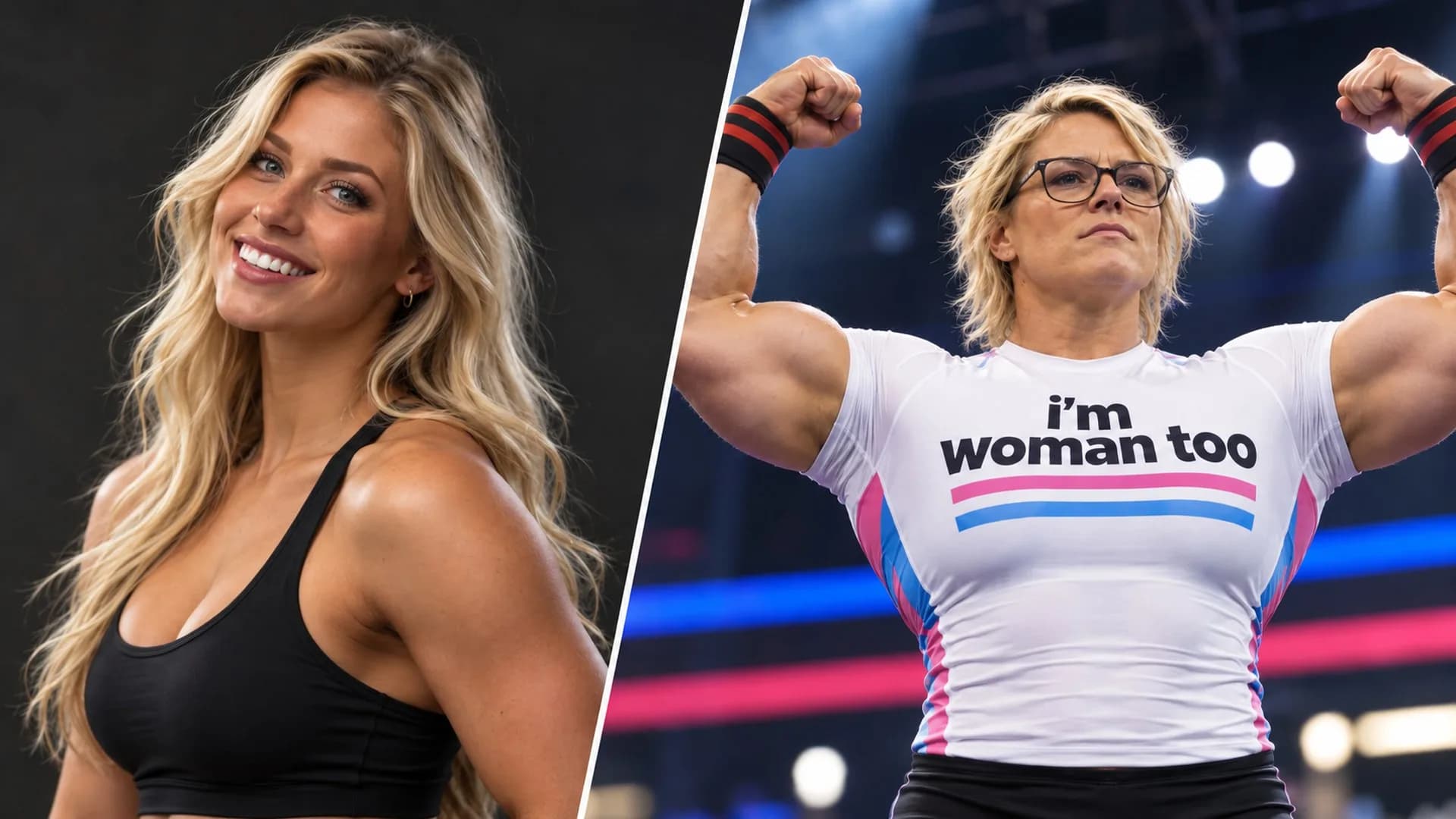
 Linkedin
 Threads
 Facebook
 X
X
President Donald Trump is asking Congress to “save college sports,” but the headline does not fully capture the argument taking place underneath it.
The White House on Monday urged lawmakers to pass the Protect College Sports Act, arguing that years of litigation, NIL money, transfer rules and revenue-sharing disputes have produced an unstable system threatening scholarships, Olympic sports and smaller athletic programs.
One day later, the Senate passed the bipartisan legislation 77-22, sending the fight toward the House. The bill is led by Republican Sen. Ted Cruz of Texas and Democratic Sen. Maria Cantwell of Washington, an important detail because this particular legislation is not simply a Republican-versus-Democrat culture-war bill. It creates national rules around athlete compensation, transfers, revenue sharing, medical protections and the NCAA's regulatory authority.
But the White House deliberately included something else in its case for Trump's college-sports record.
Women's sports.
And that opens the bigger conversation.
Why create a women's category at all?
Strip away the politics for a moment.
Why do basketball, swimming, track, volleyball and dozens of other sports maintain separate men's and women's competitions?
It is not because one sex deserves more dignity than another.
It is because biological differences that become pronounced after puberty produce meaningful performance differences in many sports.
That point is not particularly controversial scientifically.
Research examining athletic performance finds that male puberty produces differences in muscle mass, skeletal structure, hemoglobin, cardiovascular capacity and strength that can generate substantial performance advantages, although the size of that advantage varies greatly by sport. One review estimated post-puberty male performance advantages ranging roughly from 10% to considerably more in some strength-dependent events.
This is where America's transgender-sports debate becomes much more complicated than the slogans used by either political camp.
A transgender woman may sincerely identify and live as a woman.
But gender identity and the physiological consequences of male puberty are not the same question when deciding athletic classifications.
Hormone therapy changes the body. Research has documented reductions in testosterone, lean muscle mass and some measures of strength after gender-affirming treatment.
But scientists continue debating how much previously acquired athletic advantage remains, for how long, and how significantly it matters across different sports. A 2025 endocrinology review concluded that hormone treatment produces meaningful physiological changes while also finding that the available athletic-performance evidence remains insufficient and sport-specific.
That nuance matters.
The scientific argument is stronger when it is precise rather than political.
It is not necessary to deny the identity or humanity of transgender athletes to recognize that sex-linked physical differences can matter in competitive sports.
And once that is acknowledged, another question follows:
If biological sex is irrelevant to the competitive category, why did women's sports require a separate category in the first place?
Title IX was built around opportunity
Title IX transformed American athletics by requiring federally funded schools to provide equal athletic opportunity based on sex.
The Department of Education still describes Title IX athletics enforcement in those terms: schools must provide equitable opportunities, scholarships and competitive access for male and female students.
That history explains why transgender participation became such an explosive issue.
During the Biden administration, federal policy expanded Title IX nondiscrimination protections to include gender identity. But an important distinction frequently gets lost in political retellings: the administration's 2024 final Title IX regulation did not itself finalize the separate proposed rule governing transgender participation in school sports. That athletics regulation remained unresolved.
The Trump administration subsequently reversed that direction.
In February 2025, Trump signed an executive order directing federal agencies to interpret Title IX athletic protections on the basis of sex and to challenge policies allowing athletes born male to compete in female categories.
The NCAA responded the next day.
Its current policy allows eligible athletes regardless of sex or gender identity to compete on men's teams, while NCAA women's competition is restricted to athletes assigned female at birth. Transgender women may practice with women's teams under certain circumstances but cannot compete in NCAA women's championships or receive scholarships designated for female athletes.
So this debate is no longer theoretical.
The governing rules have already changed.
The new college-sports bill is broader than transgender athletics
This is where the White House announcement requires careful reading.
The Protect College Sports Act is not principally transgender legislation.
Its biggest provisions concern NIL deals, athlete compensation, revenue sharing, transfers, scholarships, healthcare and whether the NCAA can impose nationwide rules without constantly being dragged through antitrust litigation.
The Congressional Budget Office says the legislation would establish federal requirements surrounding NIL contracts and compensation and extend limits created through the House v. NCAA settlement.
It would also protect women's and Olympic programs from being eliminated in some circumstances—an increasingly important issue as football and basketball consume larger amounts of athletic-department revenue.
On transgender participation specifically, the bill's sponsors say it does not modify Title IX and does not preempt the state laws currently restricting participation in women's sports on the basis of biological sex.
That may explain why Trump is treating this as part of a broader project rather than another stand-alone executive action.
The question is no longer simply who may enter a women's race.
It is what American college athletics will look like ten years from now.
Money may ultimately be the larger threat
There is an irony here.
While transgender participation has generated enormous cultural attention, college athletics faces another threat capable of eliminating women's opportunities much more quietly: economics.
Revenue-sharing agreements, NIL payments and escalating football costs are forcing athletic departments to reconsider where their money goes.
A university may field 20 sports.
Only two or three may generate substantial revenue.
What happens when athletes in those profitable programs receive tens of millions of dollars while swimming, gymnastics, wrestling, track and other programs still require funding?
That is one reason the Protect College Sports Act has support extending well beyond Republicans. Major conferences, universities, professional sports organizations and athlete groups have supported versions of the legislation, while opponents—including labor organizations and civil-rights groups—argue that it gives the NCAA excessive authority and could restrict athletes' earning power.
This is not a simple political fight.
It is a structural one.
College athletics spent decades pretending athletes were amateurs while billions of dollars flowed through television contracts, coaches' salaries and athletic departments.
Then NIL shattered that model.
Now Washington is trying to construct whatever comes next.
But the women's category still requires an answer
The financial issues may be complicated.
The philosophical question is surprisingly simple.
Women's sports exist because male and female bodies are not interchangeable in athletic competition.
That does not mean every male defeats every female.
Obviously not.
Elite female athletes outperform almost the entire population.
The relevant comparison is between similarly trained elite athletes. In many sports, the physiological changes caused by male puberty produce measurable competitive differences. That is precisely why separate categories developed.
America can simultaneously make room in society and athletics for transgender people while asking where competitive categories should be drawn.
Those goals are not automatically enemies.
There can be recreational opportunities, mixed competition, open categories or other structures depending on the sport.
But elite women's competition exists for a specific reason: to create a competitive category in which female athletes are not required to overcome the average performance advantages associated with male puberty.
That is the issue politics too often turns into an insult contest.
Trump is now asking Congress to stabilize college sports.
Congress will debate money, transfers, scholarships and NCAA power.
But underneath those negotiations sits a principle that Title IX introduced more than half a century ago:
Women deserved an athletic category in which they had a genuine opportunity to compete, win, earn scholarships and become champions.
The difficult question for modern America is not whether transgender athletes deserve dignity.
They do.
The question is whether protecting that dignity requires eliminating the biological distinction upon which women's competitive sports were built.
Those are two different questions.
And any serious attempt to save college sports eventually has to answer both.