

 3 min read
 5
 Linkedin
 Threads
 Facebook
 X

Humanity has reached Mercury again.
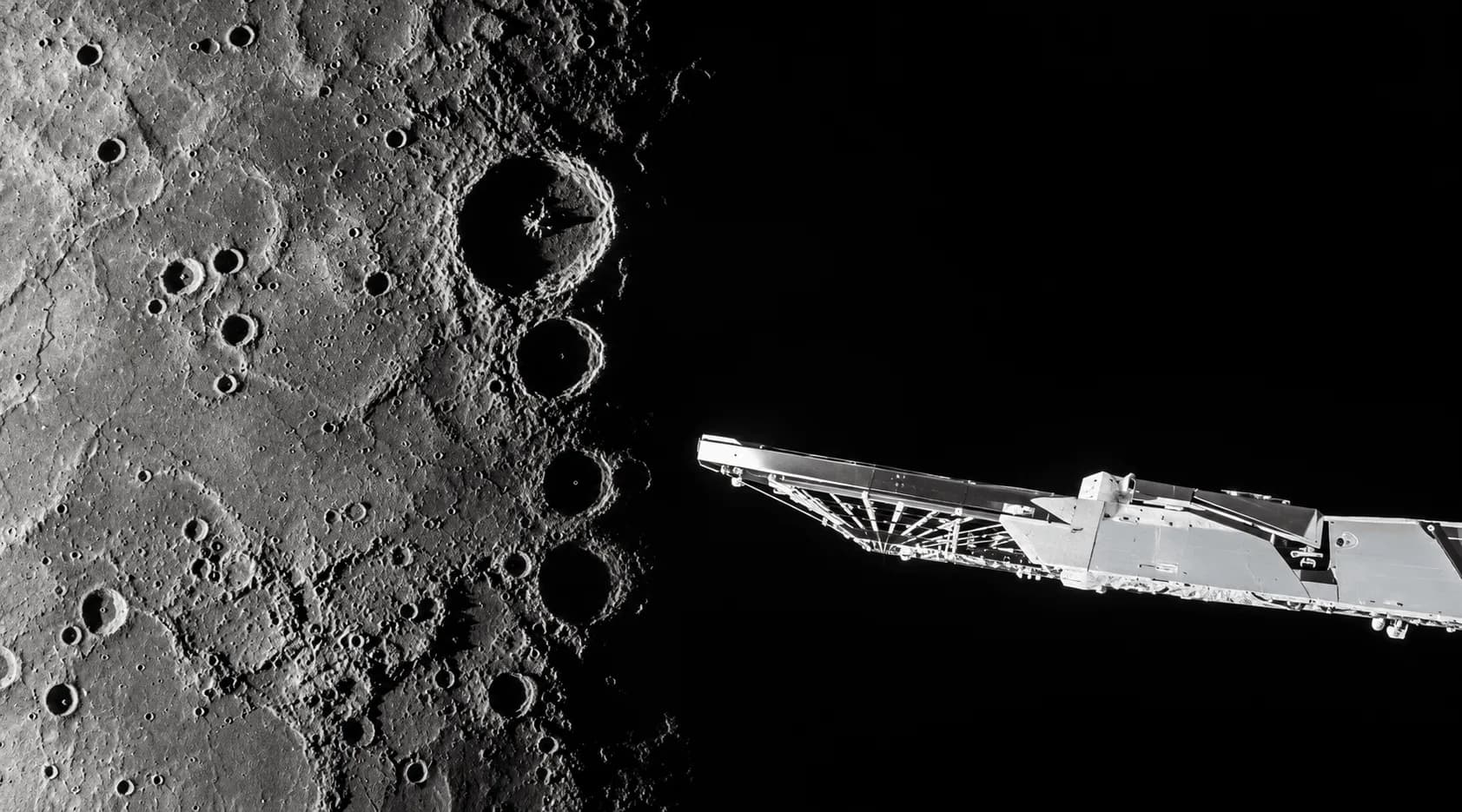
Two robotic explorers successfully entered orbit around the smallest planet in our solar system, completing an extraordinary eight-year journey through space.
The mission, known as BepiColombo, is a collaboration between the European Space Agency (ESA) and the Japan Aerospace Exploration Agency (JAXA).
It marks the first time a spacecraft has entered orbit around Mercury since NASA's MESSENGER mission ended in 2015.
The approximately $2 billion project represents one of the most technically demanding planetary missions ever attempted.
And despite Mercury being relatively close to Earth compared with the outer planets, reaching it required more than six billion miles of travel and years of precise navigation.
The spacecraft have arrived, but the scientific discoveries are only beginning.
Why Did It Take Eight Years to Reach Mercury?
Mercury is the closest planet to the Sun, orbiting approximately 36 million miles from our star on average.
At first glance, reaching Mercury might seem easier than traveling to distant destinations such as Jupiter or Saturn.
The reality is surprisingly different.
A spacecraft traveling toward the Sun accelerates under the Sun's powerful gravitational pull. To enter orbit around Mercury rather than race past it, the spacecraft must shed enormous amounts of orbital energy.
That makes Mercury one of the most challenging destinations for a robotic orbiter.
BepiColombo launched from Europe's Spaceport in French Guiana aboard an Ariane 5 rocket on October 20, 2018.
Rather than taking a direct route, mission planners designed a complicated journey using the gravitational influence of several planets to gradually adjust its trajectory and speed.
The spacecraft completed one flyby of Earth, two of Venus, and six of Mercury before finally entering orbit.
These maneuvers allowed engineers to conserve fuel while guiding the spacecraft toward its destination.
According to the Associated Press, the journey covered more than 6 billion miles.
The result demonstrates an extraordinary achievement in navigation, propulsion, and long-term engineering.
Two Spacecraft, Two Different Missions
What makes BepiColombo particularly significant is that it is not simply one spacecraft studying another planet.
It consists of two scientific orbiters designed to investigate different aspects of Mercury simultaneously.
The European Space Agency's Mercury Planetary Orbiter will concentrate primarily on the planet itself.
Its instruments will examine Mercury's surface, mineral composition, geological features, internal structure, and magnetic environment.
Japan's spacecraft, named Mio, will focus on Mercury's surrounding space environment, including its magnetic field and interactions with particles flowing outward from the Sun.
The two orbiters are scheduled to separate on December 9–10, allowing them to operate from different altitudes.
This arrangement creates a scientific advantage.
Rather than relying on measurements from one position, researchers will be able to compare observations gathered simultaneously from two spacecraft.
For example, scientists may be able to distinguish changes occurring in Mercury's magnetic environment from changes caused by the solar wind.
ESA expects routine science operations to begin in April 2027, after the spacecraft complete separation, orbital adjustments, and instrument testing.
The Planet With a Massive Iron Heart
One of Mercury's most intriguing mysteries lies beneath its surface.
Although the planet is only slightly larger than Earth's Moon, it possesses an unusually large metallic core relative to its overall size.
Scientists have long debated why Mercury contains such a high proportion of metal.
One possibility involves violent collisions during the early history of the solar system that stripped away portions of the planet's outer rocky layers.
Other theories suggest that the conditions under which Mercury formed naturally produced a different balance of metal and rock.
BepiColombo may help distinguish between these explanations.
By studying Mercury's gravity, magnetic field, surface composition, and internal structure, researchers hope to develop a clearer understanding of how the planet evolved.
This research has implications beyond Mercury.
Planetary scientists use information from nearby worlds to test theories about how planets form throughout the universe.
Understanding Mercury could also improve interpretations of rocky planets discovered around distant stars.
Ice on a Planet That Reaches 800 Degrees
Mercury presents one of the most remarkable environmental contrasts in the solar system.
Temperatures on its sunlit surface can exceed 800 degrees Fahrenheit.
Yet scientists have identified evidence of water ice inside permanently shadowed craters near its poles.
How can ice survive on a planet so close to the Sun?
The answer lies partly in Mercury's extremely small axial tilt.
Certain deep polar craters contain regions that never receive direct sunlight, creating extraordinarily cold environments despite the intense solar heating experienced elsewhere.
NASA's MESSENGER mission provided important evidence supporting the presence of frozen water in these locations.
BepiColombo will investigate Mercury's surface and near-polar regions with advanced instruments, helping scientists better understand the distribution of materials and the planet's geological history.
Researchers also want to examine mysterious shallow depressions known as hollows, which may form when volatile materials escape from exposed rocks.
These features suggest that Mercury remains more geologically interesting than its heavily cratered appearance might initially indicate.
America's Historic Role in Exploring Mercury
Although BepiColombo is led by European and Japanese space agencies, the mission builds upon decades of American scientific exploration.
NASA's Mariner 10 became the first spacecraft to visit Mercury in 1974, making three flybys during the 1970s.
The mission helped reveal the planet's heavily cratered surface and unexpected magnetic field.
Years later, NASA's MESSENGER spacecraft entered orbit around Mercury in 2011.
Over four years, it mapped the planet, investigated its composition, and transformed scientific understanding of its history.
MESSENGER ended its mission in April 2015 after exhausting its fuel and impacting Mercury's surface.
BepiColombo now continues that scientific legacy with more advanced technology and the advantage of two complementary spacecraft.
The mission is named for Giuseppe “Bepi” Colombo, an Italian mathematician whose research contributed to the orbital mechanics used during Mariner 10's historic Mercury flybys.
His work illustrates how scientific discoveries can influence space exploration across generations.
The Engineering Challenge of Surviving Mercury
Arriving at Mercury is only part of the achievement.
Operating scientific equipment so close to the Sun presents extraordinary challenges.
Spacecraft must withstand intense solar radiation, reflected heat from Mercury's surface, and extreme temperature conditions.
Without sophisticated thermal protection, sensitive electronics and scientific instruments could become damaged or unusable.
BepiColombo incorporates specialized insulation, protective shielding, radiators, and carefully designed thermal-management systems.
These technologies allow instruments to function in conditions far beyond those experienced by most satellites orbiting Earth.
The mission also demonstrates why space exploration remains a powerful driver of advanced engineering.
Extreme environments force engineers to develop systems that are efficient, durable, and capable of operating autonomously over long periods.
The resulting expertise can contribute to broader advances in spacecraft design, scientific instrumentation, materials engineering, and robotics.
For the United States and its international partners, continued investment in these capabilities supports a highly skilled technological workforce and the scientific foundations of future exploration.
What Happens Next?
The spacecraft's successful orbital capture is the beginning of a carefully planned sequence.
In December, the European and Japanese orbiters are expected to separate and begin operating independently.
ESA's spacecraft will continue adjusting its orbit before reaching its planned scientific position in March 2027.
Both spacecraft are scheduled to begin their main scientific investigations in April.
Scientists hope the mission will operate for at least one Earth year, equivalent to approximately four Mercury years.
During that period, the orbiters will examine Mercury's surface, interior, magnetic environment, and interactions with the Sun.
Researchers expect the combined observations to provide a more complete understanding of the planet than previous missions could achieve.
A New Chapter in Understanding Our Solar System
BepiColombo's arrival is a reminder of what human ingenuity can accomplish through scientific curiosity, international cooperation, and extraordinary persistence.
For eight years, engineers guided two spacecraft across billions of miles, using the gravitational influence of planets to reach one of the most difficult destinations in the solar system.
Now those spacecraft are preparing to investigate a world that still holds fundamental mysteries.
The discoveries could help scientists explain Mercury's enormous metallic core, understand its magnetic field, and reconstruct events from the earliest history of our planetary neighborhood.
They may also improve our understanding of how rocky planets form, including worlds beyond our solar system.
Mercury may be the smallest planet, but the scientific questions surrounding it are enormous. After more than a decade without an orbiting visitor, humanity has returned with technology capable of revealing an entirely new chapter of its history—and perhaps a deeper understanding of how our own world came to exist.