3 min read
 11
 Linkedin
 Threads
 Facebook
 X

Supreme Court Delivers an 8–1 Victory
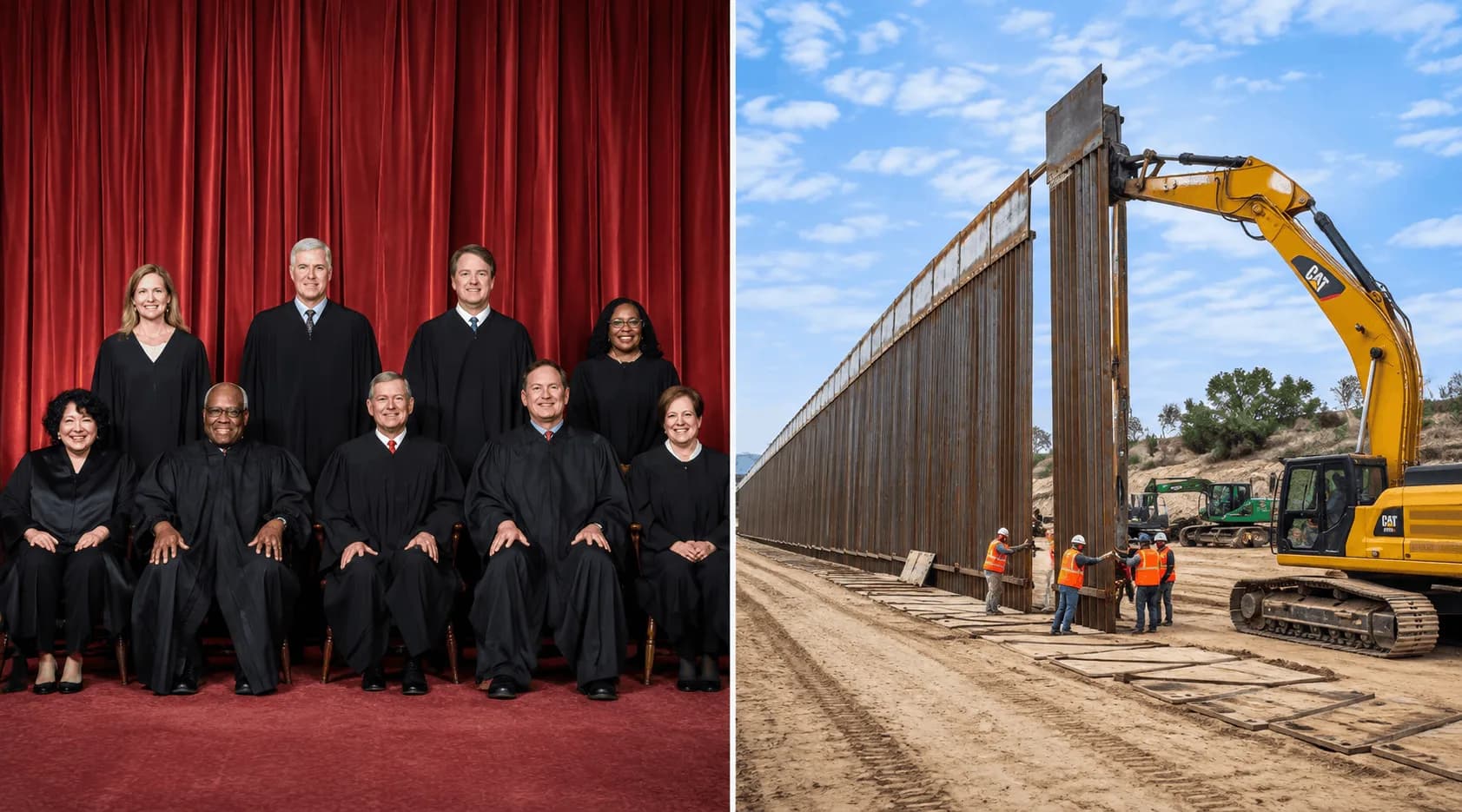
WASHINGTON — On November 9, the United States Supreme Court cleared the way for President Trump's administration to resume construction of border barriers in the Big Bend region of West Texas, including portions of Big Bend National Park.
The ruling temporarily suspended an October order by U.S. District Judge Kathleen Cardone that had halted construction over concerns about the federal government's authority to waive environmental protections.
Justice Ketanji Brown Jackson was the only recorded dissenter.
The Supreme Court concluded that Congress had established a strong preference for expeditious border construction under the applicable federal statute.
This is a major legal victory for Trump's border-security agenda, although the underlying litigation remains unresolved.
Trump Makes It Clear: No Amnesty
The decision arrived on the same day Trump clarified his immigration position following his 60 Minutes interview.
On November 8, Trump acknowledged that his deportation policies may have been too aggressive toward some established immigrant workers and expressed openness to negotiating with Democrats.
But on November 9, the president emphasized that his enforcement policy remained intact.
“There's no amnesty, no anything.”
Trump said his administration would continue prioritizing dangerous criminals while examining the circumstances of undocumented immigrants who have established jobs and pay taxes.
He also confirmed his willingness to negotiate an immigration agreement, provided it does not include amnesty.
🚨 MASSIVE WIN: The Supreme Court ruled 8-1 to let President Trump RESUME building the border wall in Big Bend, Texas! Ketanji Brown Jackson was the ONLY dissent. Shocker. Activist judges CANNOT stop us. FINISH THE WALL! 🇺🇸🔥 https://t.co/nBuqPUtVtk
— Ryan Fournier (@RyanAFournier) November 9, 2026
Border Security and Immigration Reform Are Not Opposites
These two developments reveal a coherent policy direction worth examining.
The first priority is controlling unauthorized entry.
The second is determining whether Congress can establish lawful solutions for certain people already living in the United States.
Those objectives are not inherently contradictory.
A country can maintain a secure border while debating how to address its existing undocumented population.
The Big Bend ruling allows the administration to proceed with a major infrastructure project intended to strengthen border enforcement.
Meanwhile, Trump's comments leave open the possibility of a future immigration agreement with eligibility requirements, background checks, and legal safeguards.
No such agreement has yet been finalized.
A Victory With National Implications
The administration's plans involve hundreds of miles of barriers, roads, and supporting infrastructure in the Big Bend sector.
The region covers a remote stretch of the U.S.–Mexico border where difficult terrain creates distinct enforcement challenges.
The Supreme Court's decision does not settle every legal question surrounding construction. Environmental and statutory disputes remain before the courts.
Nevertheless, the immediate consequence is unmistakable: the administration can resume work while the case proceeds.
America's Immigration Future
Trump's latest statements offer a clear distinction between immigration enforcement and immigration reform.
Border security is intended to prevent future unauthorized crossings.
Deportation enforcement addresses violations of existing law, with the administration emphasizing serious criminal offenders.
Potential immigration reform would require Congress to determine whether particular longtime residents qualify for a new legal process.
None of those policies requires abandoning the others.
The Supreme Court has allowed construction to move forward. Trump has rejected amnesty while leaving the door open to negotiations.
Together, the developments demonstrate that America can pursue stronger border enforcement without ruling out a future debate over lawful immigration solutions.
Secure the border. Enforce the law. Then negotiate from a position of control.