3 min read
 7
 Linkedin
 Threads
 Facebook
 X

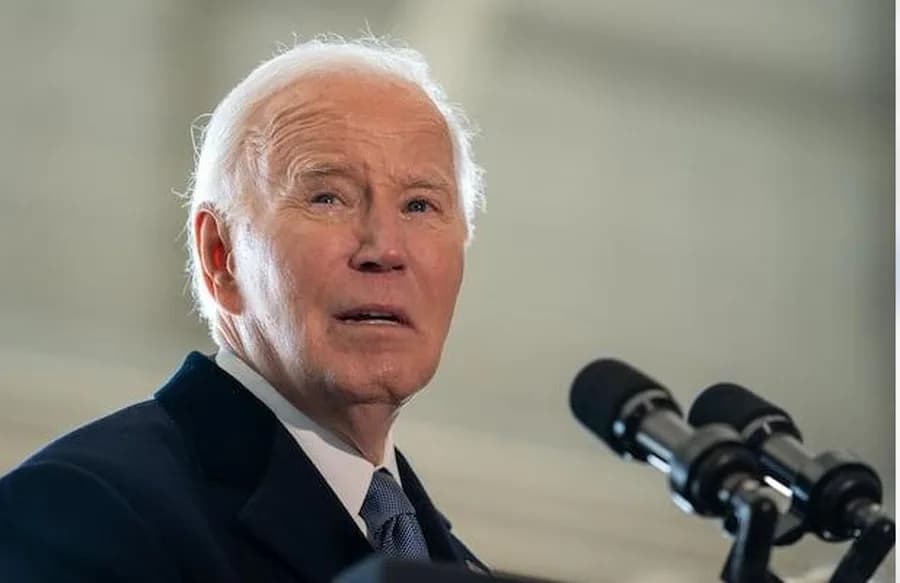
Former President Joe Biden has announced that his cancer diagnosis will prevent him from participating in as many promotional appearances as originally planned for his upcoming presidential memoir, Promise Me, America.
The book is scheduled for release on November 17, 2026.
In a lengthy statement published November 8 on his official X account, Biden described the challenges of his presidency, the decisions he made, and his confidence in the American people.
He also addressed his cancer treatment, saying his doctors remain encouraged by his response.
“Some days are better than others. It hasn't stopped me. But sometimes it slows me down.”
He explained that he would not be able to participate in as many conversations about the book as he had hoped.
His announcement deserves compassion. Cancer is a serious illness, and Biden and his family have every reason to prioritize his treatment.
But the publication of a presidential memoir also raises questions about historical accountability—particularly when the former president's administration was already the subject of an investigation into the use of mechanical signatures.
A Presidential Memoir Without an Extensive Public Tour
Biden's forthcoming memoir promises to examine his four years in office, including the COVID-19 pandemic, foreign policy, domestic legislation, and his controversial decision to seek reelection before withdrawing from the 2024 presidential race.
Those are consequential subjects.
They also concern a presidency in which Biden's public appearances, verbal mistakes, and physical movements repeatedly generated questions about his ability to perform the responsibilities of office.
His June 2024 presidential debate intensified those concerns and ultimately preceded his withdrawal from the election.
Now, as the former president prepares to publish his account of those years, his ability to participate in extensive public discussions is limited.
The explanation he has provided is his cancer diagnosis.
That explanation is medically plausible and should not be dismissed without evidence.
Nevertheless, a memoir about presidential decision-making invites questions that cannot be answered by a written narrative alone.
Who helped prepare the manuscript? Which accounts are supported by contemporaneous records? Which decisions can be independently corroborated?
And will Biden eventually participate in substantive interviews addressing the most controversial episodes of his administration?
The Autopen Controversy Has Not Disappeared
The issue of presidential authorization became a national controversy in 2025.
President Donald Trump ordered a review of certain Biden administration actions after questioning whether aides had used an autopen to execute presidential documents without Biden's knowledge or authorization.
An autopen is a mechanical device that reproduces a person's signature.
Its use is not inherently illegal.
The Justice Department has previously concluded that a president may authorize a subordinate to affix the president's signature to legislation under appropriate circumstances.
The constitutional question is whether the president personally made and authorized the underlying decision.
In June 2025, Trump directed officials to investigate whether Biden's aides had concealed concerns about his cognitive abilities while exercising presidential authority in his name.
The inquiry specifically addressed executive orders, memoranda, and clemency decisions.
The controversy intensified when Axios reported that internal administration emails revealed concerns among senior Biden officials about the procedures used for pardons and autopen signatures near the end of his presidency.
Those reports provided a legitimate basis for examining the administration's decision-making procedures.
But they did not establish that Biden's aides secretly made presidential decisions without his approval.
In March 2026, federal prosecutors closed a criminal investigation into the autopen matter after failing to identify a sufficient legal basis to proceed.
The distinction matters: questions about administrative procedures can remain worthy of historical scrutiny even when a criminal investigation produces no charges.
The Question Is Not Whether Biden Can Hold a Pen
The release of a presidential memoir creates an opportunity to examine a broader question.
What does it mean when a former president publishes a detailed account of decisions made during an administration whose internal processes have been publicly disputed?
Writing a memoir does not necessarily mean personally typing or handwriting every page.
Presidential memoirs commonly involve editors, researchers, fact-checkers, and other collaborators.
The use of those professionals does not make a memoir fraudulent.
Likewise, an autopen signature does not establish that the person whose signature appears on a document lacked knowledge of its contents.
But neither should a presidential memoir be treated as independent proof that every decision described in it occurred exactly as the author remembers.
Historical accounts are strengthened by documents, contemporaneous notes, testimony, and records of presidential authorization.
The appropriate question is therefore not whether Biden physically wrote every sentence.
It is whether the book's most consequential claims can be supported by evidence beyond the memoir itself.
What About the Videos Americans Saw?
Millions of Americans watched Biden appear confused during certain public events.
Videos showed moments when he hesitated, appeared uncertain about where to walk, or required assistance navigating a stage.
Those images became central to the political debate over his age and fitness for another term.
Some incidents had straightforward explanations. Others intensified public concern.
But video clips alone cannot establish a diagnosis of dementia.
Nor does Biden's prostate cancer diagnosis establish that he was cognitively incapable of making decisions during his presidency.
These are separate medical questions.
The historical issue is whether Biden's administration accurately represented his ability to carry out presidential duties and whether official records support the decisions attributed to him.
That is a legitimate subject for investigative journalism.
The Memoir Should Answer Questions, Not Just Tell a Story
Presidential memoirs have an unusual place in American history.
They allow former presidents to explain their decisions in their own words, often after years of criticism.
But they are also personal accounts written by people with strong interests in how their administrations are remembered.
Biden's book arrives after extensive controversy surrounding his age, his withdrawal from the 2024 election, and his administration's late-term clemency decisions.
Readers should therefore distinguish between the former president's recollections and independently established facts.
Particular attention should be paid to how the book addresses his decision to run for reelection, the extent of his involvement in late-term pardons, and the procedures used to authorize important presidential actions.
Those subjects deserve documentary evidence.
Compassion Does Not Cancel Accountability
There is no contradiction between wishing Joe Biden well in his cancer treatment and examining his record as president.
His diagnosis deserves compassion.
His presidency deserves scrutiny.
The American people are entitled to understand how consequential decisions were made, who advised the president, and whether proper authorization procedures were followed.
That standard should apply to every administration, regardless of political affiliation.
Biden says he hopes the words in his memoir will speak for themselves.
They may provide important historical insight.
But when a book concerns decisions affecting millions of Americans, the words on the page should be examined alongside the records of what actually happened.
The autopen controversy raised questions about presidential authorization. The memoir offers Biden an opportunity to explain his decision-making in detail.
Whether it provides convincing answers will depend on the evidence it presents.
The central question is not whether Joe Biden can write a book. It is whether his account of the presidency can withstand independent examination.