 5 min read
 1
1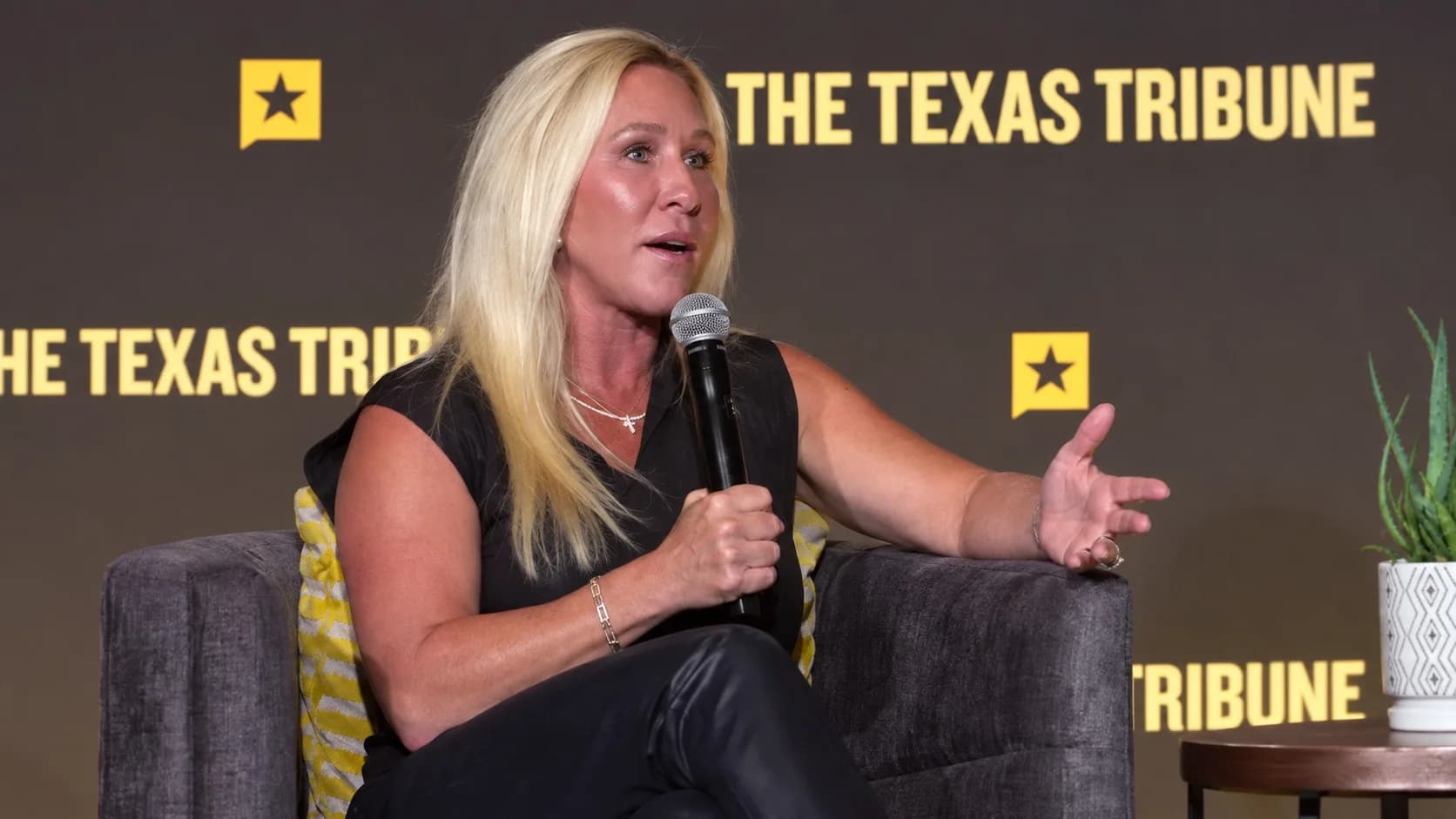
 Linkedin
 Threads
 Facebook
 X
X
Marjorie Taylor Greene once built much of her national identity around Donald Trump.
She won election as one of his loudest congressional defenders. She fought Republican leaders she considered insufficiently loyal to the America First movement. She became one of the most recognizable figures in MAGA politics.
Now she is telling Texans that the movement is dead.
Speaking Thursday at the Texas Tribune Festival in Austin, Greene said the larger MAGA coalition had become a “cult.” She argued that Republicans unwilling to hold Trump accountable were “liars” and “hypocrites,” and said Trump had betrayed campaign promises through his Iran policy. The Texas Tribune
Those are not minor policy disagreements.
They are a direct attack on the political movement that created much of Greene’s own national prominence.
And that is why Republicans are asking a fair question:
Why bring this message to Texas right now?
The location matters
Greene represented Georgia, not Texas.
She resigned from Congress earlier this year after her relationship with Trump deteriorated dramatically. Trump himself eventually labeled her a “traitor,” while Greene described herself this week as “politically homeless.”
Yet her appearance came in Austin while Texas is approaching an extremely competitive U.S. Senate election.
Democratic nominee James Talarico appeared at the same Texas Tribune Festival Thursday, using his appearance to challenge Republican nominee Ken Paxton publicly and continue building his statewide profile.
There is no evidence that Greene and Talarico coordinated their appearances or messages.
They were invited separately to a large political journalism festival featuring politicians from both parties.
But political effects do not require coordination.
When a nationally recognized former Republican arrives in Texas and tells an audience that MAGA is dead, that Republican voters are behaving like cult members and that Trump has betrayed them, her words inevitably enter the broader political environment surrounding Texas Republicans.
That is simply reality.
Criticism is legitimate. Timing is also legitimate to examine.
Greene has every right to disagree with Trump.
Republicans do not become immune from criticism because they share a party label.
She has specifically argued that Trump's military action against Iran violated what she understood America First to mean: less intervention abroad and fewer costly foreign wars. She says she still believes in an America First philosophy even though she no longer identifies with the broader MAGA coalition.
That is her stated position.
But political speech can be both sincere and politically consequential.
Greene knows how headlines work.
She spent years mastering television, social media and political confrontation.
Calling MAGA “dead” is not the language of a quiet policy disagreement.
Calling Trump supporters “liars,” “hypocrites” and members of a “cult” is not simply explaining differences over foreign policy.
It is designed—or at minimum guaranteed—to provoke.
Republicans therefore do not need to speculate about her private motives to examine what her words accomplish publicly.
Who benefits from Republican civil war?
That is the question worth asking.
Texas Republicans are already dealing with a Senate race Paxton himself has described as “razor thin.” Republican-aligned groups have dramatically increased spending in Texas, while Democratic groups and Talarico continue competing aggressively for the seat. Houston Chronicle
In that environment, every Republican internal fight creates another storyline that competes with the party’s campaign message.
Greene may believe that is necessary.
Her critics inside the Republican coalition may see something else: a former MAGA celebrity using the political platform built during her alliance with Trump to attack the same movement once she is no longer inside it.
That is where accusations of opportunism come from.
It is not necessary to declare that motive as fact.
The sequence is visible enough for readers to judge.
Greene rose nationally as an aggressive Trump ally.
Her relationship with Trump collapsed.
She left Congress.
And now she is touring national political forums explaining why the movement she once championed is supposedly broken.
Republicans are entitled to ask whether that represents principled evolution, personal grievance, political reinvention—or some combination of all three.
There is also an uncomfortable contradiction
Greene says she remains committed to America First.
Yet she now rejects much of the coalition most closely associated with that political project.
That creates an obvious philosophical question:
Can someone separate America First from MAGA after spending years presenting the two as almost inseparable?
Greene believes the answer is yes.
Many Trump-aligned Republicans clearly disagree.
That disagreement is now bigger than one personality.
It touches the future definition of the Republican Party itself.
Is MAGA principally loyalty to Trump?
Is it a policy program involving borders, trade, industrial policy and reduced foreign intervention?
Can Trump alter individual policies without abandoning the movement?
And who gets to decide when a president has crossed that line?
Those are substantive debates Republicans will continue having.
But the middle of an election cycle makes the consequences sharper.
Republicans should watch the substance—not just the spectacle
The simplest reaction would be anger.
But the more useful response is to examine Greene’s assertions individually.
If she says Trump violated a campaign promise, compare the promise with the policy.
If she says Iran policy contradicts America First, examine the competing definitions of America First.
If she says Republicans privately disagree with Trump, distinguish what she personally witnessed from what she assumes.
And when she declares an entire movement “dead,” compare that statement with actual Republican voter behavior, fundraising, turnout and organization.
That is more informative than simply trading insults.
But Greene should expect scrutiny too.
She cannot spend years helping construct a movement, benefit enormously from its attention and then attack its supporters in sweeping terms without being asked what changed—and why her message is being delivered now, in the middle of competitive elections.
That is the larger story from Austin.
Marjorie Taylor Greene is no longer simply criticizing Donald Trump.
She is attempting to redefine what America First means without him.
Whether Republican voters accept that distinction is not for Greene, Trump or any columnist to decide.
The voters will.