3 min read
 100
100
 Linkedin
 Threads
 Facebook
 X
X
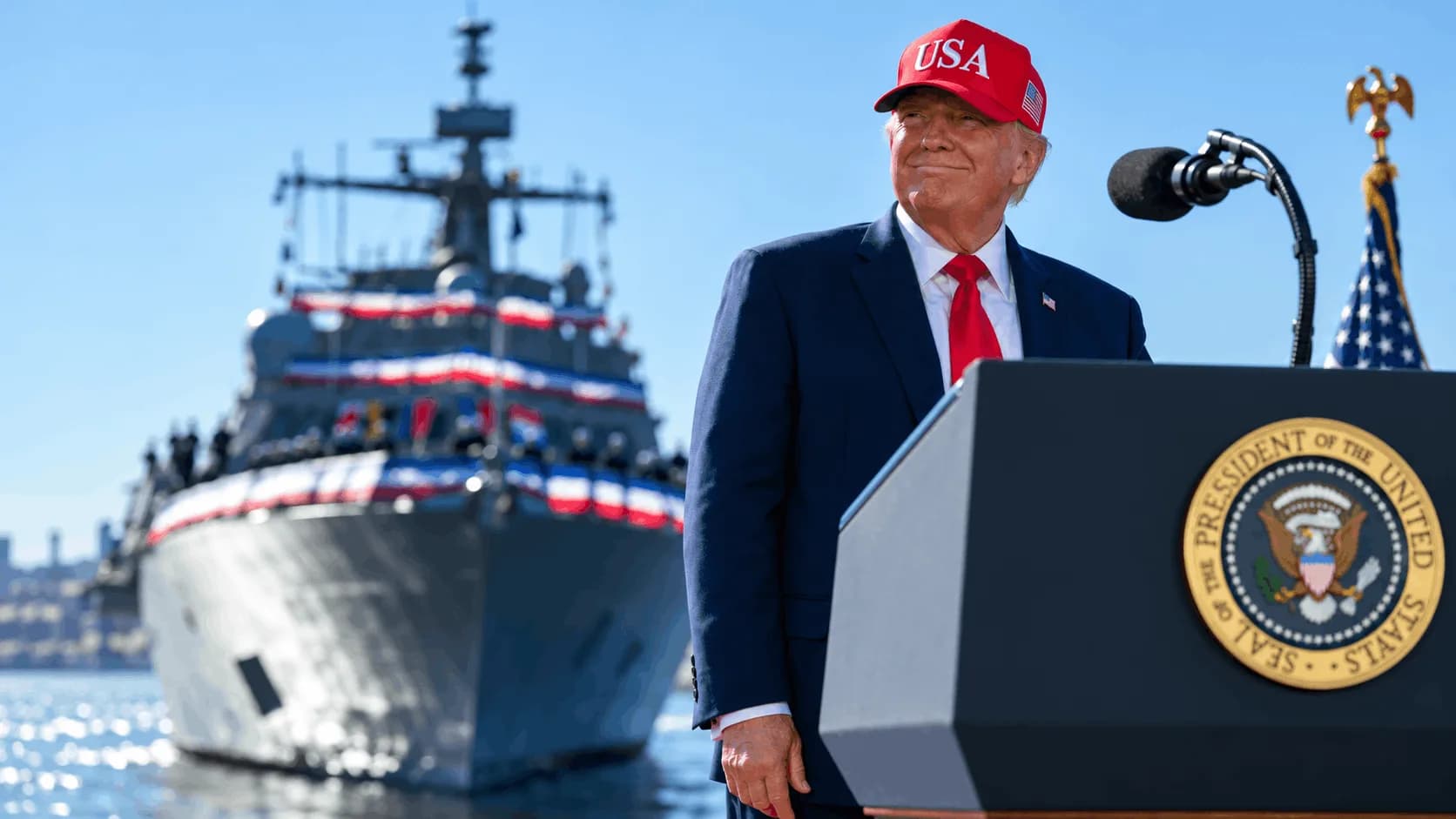
President Donald Trump has made a difficult decision involving someone who has stood beside him for years.
Kimberly Guilfoyle, the first woman to serve as United States ambassador to Greece, has been asked to resign following allegations that she sought $100,000 from a political donor to pay a personal credit card bill in exchange for access to senior administration officials.
On Tuesday, October 13, newly appointed White House Press Secretary Katie Zacharia confirmed the decision.
"She has been a wonderful asset to the team, and we wish her well."
Those words matter.
Those are Trump words. He did not publicly declare Guilfoyle guilty of corruption. The White House did not announce a criminal finding. Instead, the administration requested her resignation while questions surrounding her conduct remain unresolved.
The distinction is important because a president must make decisions about the credibility and effectiveness of his administration, sometimes before the legal or investigative process reaches a conclusion.
An individual can be a longtime ally, a capable public servant, and a valuable political asset while still becoming the center of a controversy that demands an administrative response.
Asking someone to step aside is not the same as declaring that person guilty.
What the Wall Street Journal Reported—and What Remains Disputed
The controversy intensified following an October 8 report from The Wall Street Journal.
The newspaper described messages allegedly exchanged between Guilfoyle and Eric Deters, a Republican donor, former congressional candidate, and businessman who previously paid Guilfoyle for speaking engagements.
According to the reporting, Guilfoyle requested a $100,000 payment toward an American Express account shortly before her Senate confirmation hearing in July 2025.
Deters alleged that the arrangement involved promises of access to senior Trump administration officials.
He has also said he previously paid Guilfoyle approximately $300,000 while seeking assistance involving federal tax and legal matters.
The Journal examined messages and documents, and other news organizations subsequently obtained related material. These allegations therefore cannot be dismissed as merely an unsupported verbal accusation.
But evidence presented by an interested party still requires scrutiny.
Guilfoyle's attorneys, David Schwartz and Jesse Binnall, dispute the authenticity of the messages and deny wrongdoing. They contend that the disputed financial requests involved compensation for professional services performed before her ambassadorial nomination.
Deters reportedly refused the $100,000 request. No completed payment of that amount has been established.
That leaves important questions.
What services were actually performed? What payments were contractually owed? Can the original communications be independently authenticated? The request actually happened, or is a stunt?
These are matters for documentary examination, testimony, and investigators—not conclusions that should be reached solely through headlines.
What About the Donor's Own Interests?
One of the most interesting aspects of the controversy is the position occupied by Deters himself.
He was not simply a stranger who unexpectedly received a request for money.
He was a political supporter with an existing business relationship who acknowledges seeking help involving influential government officials.
That raises an important question about the relationship itself.
When a political donor pays a public figure for professional services while simultaneously seeking access to powerful officials, where does legitimate business end and the possibility of improper influence begin?
That question applies to both participants.
It does not establish that Deters fabricated his account or acted as part of a political operation. There is no verified evidence supporting such an accusation.
But his financial arrangements, expectations, correspondence, and reasons for publicizing the dispute deserve the same examination as Guilfoyle's conduct.
Washington operates through relationships involving political fundraising, professional services, friendship, and access.
The danger emerges when those relationships become so intertwined that neither side can easily demonstrate where one obligation ends and another begins.
That may ultimately be one of the most consequential lessons of this controversy.
Marco Rubio Refused to Treat a Newspaper as a Courtroom
Secretary of State Marco Rubio offered one of the clearest statements about how public officials should approach serious accusations.
During his visit to Greece, reporters pressed him about the allegations.
Rubio declined to accept the claims as established facts simply because they had appeared in a newspaper.
He emphasized that a published allegation is not automatically the truth, adding that it was not his practice to make judgments on claims he could not confirm.
That position should not be confused with indifference to misconduct.
Rubio had previously described Guilfoyle as a strong ambassador and praised the work being conducted by the American Embassy in Athens.
The State Department's inspector general is now examining the allegations, according to officials cited by the Associated Press, although the precise status of any formal investigation remains unclear.
There is an important principle here.
Journalists investigate and publish. Government investigators establish facts through evidence. Administrative officials make personnel decisions. Courts adjudicate legal violations.
These responsibilities can overlap, but they are not interchangeable.
The Wall Street Journal has every right to investigate an ambassador. It does not have the authority to render the final verdict on her guilt.
Democrats In Washington Are Looking for Facts or Political Ammunition?
Congressional Democrats moved quickly to demand accountability.
Representative Gregory Meeks, the ranking Democrat on the House Foreign Affairs Committee, requested an inspector general investigation and called for Guilfoyle to testify under oath.
Senator Jeanne Shaheen and other Democratic lawmakers raised concerns about reports that Guilfoyle promoted the commercial interests of a Greek company and allowed a registered lobbyist to participate in official diplomatic meetings.
Congress has a legitimate responsibility to oversee diplomatic conduct, regardless of which political party controls the White House.
But responsible oversight must distinguish between investigating allegations and treating them as proven misconduct.
An inquiry should establish what happened, not merely furnish another opportunity for political confrontation.
The same standard should apply to allegations involving Republican and Democratic administrations alike.
Americans deserve congressional committees willing to obtain records, examine witnesses, and establish findings—not simply repeat a newspaper's most damaging claims at a press conference.
The Work Kimberly Guilfoyle Actually Did in Greece
One dimension receiving considerably less attention is Guilfoyle's diplomatic record.
Before becoming ambassador, she worked as a California prosecutor, established a national television career, and served in senior political fundraising roles supporting Trump's presidential campaigns.
She formally assumed the ambassadorship in November 2025, becoming the first woman to hold the position.
Her tenure coincided with important developments in American energy diplomacy.
Greece has become a strategic entry point for American liquefied natural gas exports into southeastern and central Europe.
The Vertical Corridor project, involving regional infrastructure connecting Greece with countries farther north, is intended to diversify European energy supplies and reduce reliance on Russian gas.
Guilfoyle participated in high-level engagements surrounding that strategy, including meetings with Greek Prime Minister Kyriakos Mitsotakis and senior American energy officials.
Greek Energy Minister Stavros Papastavrou publicly credited the ambassador with contributing to energy cooperation and agreements.
Those developments belong in any serious assessment of her service.
The existence of unresolved misconduct allegations does not automatically erase legitimate diplomatic accomplishments.
Nor do those accomplishments eliminate the obligation to investigate potential ethics violations.
Both parts of her record matter.
Kimberly Guilfoyle's Response Reveals Another Side of the Story
Perhaps the most revealing development came after the White House announcement.
Guilfoyle issued a public statement expressing gratitude to President Trump and Secretary Rubio for the opportunity to represent the United States.
She highlighted the energy, investment, and security initiatives advanced during her service and described the ambassadorship as a defining honor of her professional life.
She also directly rejected the allegations, declaring them false and promising to vigorously defend her reputation.
But what she did not do was equally notable.
She did not publicly turn against Trump. No. She did not accuse Rubio of betrayal. She did not portray her departure as a reason to abandon the administration's agenda.
Instead, she reaffirmed her support for the president and the America First movement.
That is a significant response from someone confronting the possible end of a prestigious diplomatic appointment under intense national scrutiny.
Whether her account will withstand further investigation remains unresolved.
But her public response demonstrates that political disagreement, disappointment, and personal loyalty do not necessarily have to end in retaliation.
The Difficult Decisions That Come With Leadership
Trump faces a responsibility that extends beyond his personal relationships.
As president, he must consider the effectiveness of his diplomatic appointments, the credibility of American representation overseas, and the consequences of prolonged controversy for his administration.
Sometimes preserving those responsibilities requires separating a valued associate from an official position while leaving unresolved allegations to the appropriate investigative process.
That decision does not establish innocence or guilt.
It reflects the distinction between the requirements of public office and the legal standard for proving wrongdoing.
Meanwhile, Guilfoyle retains the right to defend herself, challenge disputed evidence, and demand a fair examination of the accusations.
And the journalists who broke the story remain responsible for ensuring that their reporting accurately distinguishes verified facts from allegations supplied by interested sources.
The real test of integrity is not whether Washington can produce another scandal. It is whether the institutions involved can establish the truth without surrendering fairness to political convenience
Guilfoyle may be leaving Greece, but her professional career, achievements, and public reputation should not be reduced to a single unresolved controversy based on a former donor’s disputed claim that she asked him to pay her credit card bill—an allegation that lawyers disputed its authenticity, particularly when, by his own account, he never made the payment and and the available reporting from WSJ does not demonstrate that a recorded telephone conversation exists.
Trump has made his personnel decision. Rubio has defended the importance of verification. Guilfoyle has defended her name. Now the evidence—NOT the headlines, the political committees, or the ambitions of anyone involved—must determine what actually happened.