


 3 min read
 7
7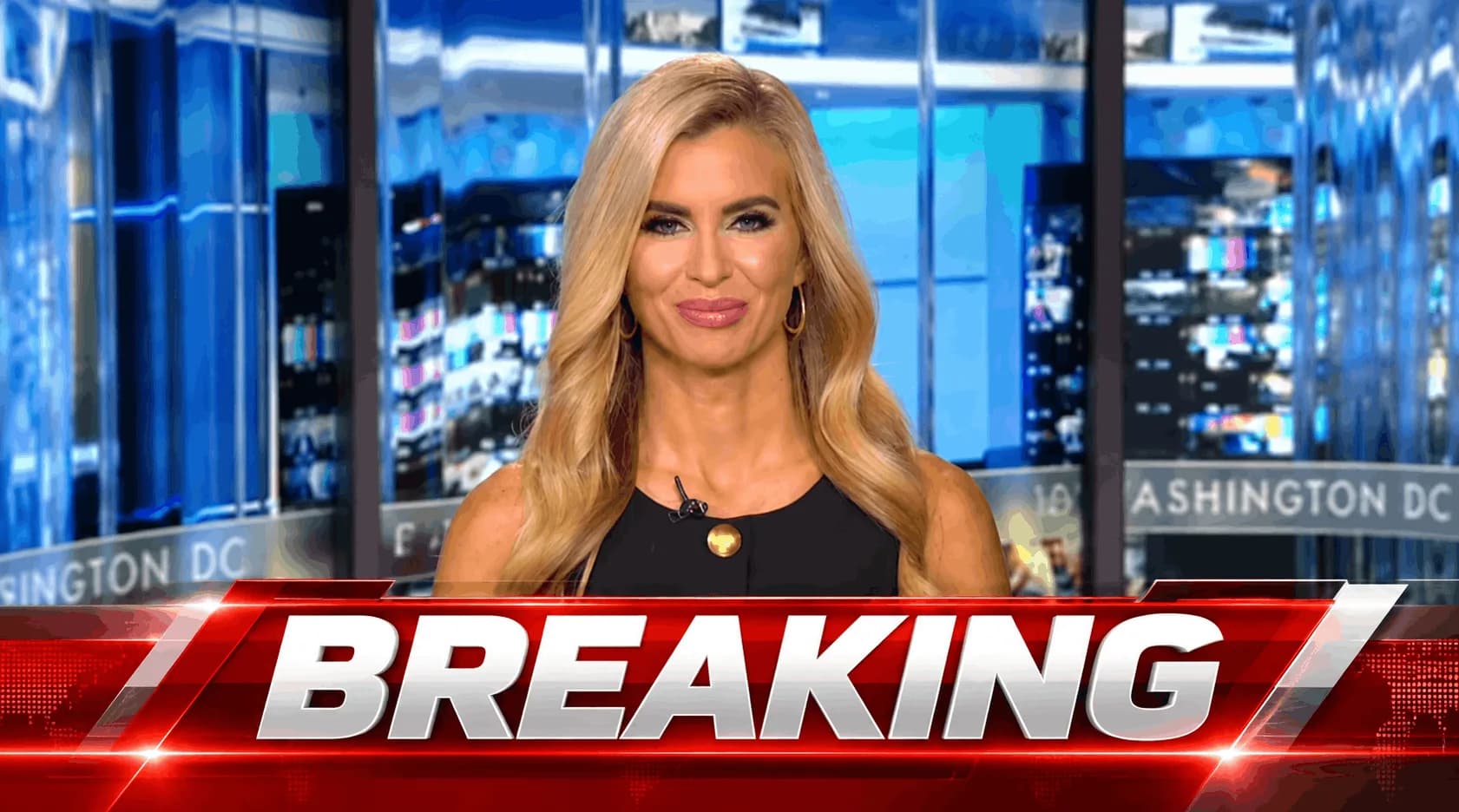
 Linkedin
 Threads
 Facebook
 X
X
President Donald Trump has named Katie Zacharia as the next White House press secretary, selecting a seasoned political communicator who understands something Washington frequently forgets: winning an argument is not necessarily the same as winning the public's understanding.
The announcement came Friday, October 9. Zacharia, who currently serves as senior communications adviser to Trump Media & Technology Group, the company behind Truth Social, is scheduled to begin her new position Monday, October 12.
And the timing matters.
With the November midterm elections approaching, the White House needs more than someone capable of answering hostile questions. It needs a communicator who can translate presidential decisions into language that ordinary Americans understand, connect policies to consequences and explain what the administration is actually trying to accomplish.
Trump appears to have selected precisely that kind of strategist.
Zacharia is an attorney educated at Pepperdine University, a former Department of Homeland Security spokesperson, and a familiar political commentator on Fox News and Newsmax. She has worked within Republican politics and participated in Trump's presidential campaign efforts.
But her experience at Trump Media may be one of her most valuable qualifications.
The modern White House briefing room no longer controls the entire national conversation. A presidential announcement travels through television, digital publishers, social networks, podcasts and millions of independent commentators, often reaching Americans in fragments stripped of their original context.
A capable press secretary must understand the policy. An exceptional one must understand how the message travels—and what happens to its meaning along the way.
What She Said Saturday Reveals Her Mission
Appearing on Fox & Friends Weekend just hours after her appointment, Zacharia offered perhaps the clearest explanation of how she intends to approach the position.
"This job is not about me. This job is about him and how he wants to communicate to the American people."
Those words deserve attention.
She did not introduce herself as the next television celebrity occupying the White House podium. She described herself as someone responsible for communicating the president's priorities.
There is an important distinction between explaining a president's policies and merely defending his personality. Trump generates enormous attention on his own. What his administration needs is someone capable of ensuring that attention does not overshadow the substance of its decisions.
Consider the administration's newly announced agreement involving Russian diesel supplies.
Zacharia immediately connected that development to Americans' frustrations over gasoline and grocery prices. Higher diesel costs can affect transportation, agriculture, construction and the distribution of everyday consumer goods.
Whether the agreement actually lowers prices remains to be demonstrated. But explaining the connection between an international energy decision and a family's grocery bill is exactly the kind of communication that gives a complicated government policy meaning.
That is the opportunity in front of her.
Karoline Leavitt Set the Standard. Zacharia Brings Another Dimension.
In my opinion, Leavitt earned a reputation as a formidable defender of the Trump administration, confronting difficult questions directly and becoming one of the most recognizable voices of his second presidency.
Her departure in August, following the birth of her second child, was a personal decision to spend more time with her family. She is also preparing for a new role as a Fox News contributor.
Zacharia understands the standard she inherits very well. In her own public statement, she praised Leavitt's work and described succeeding her as a challenge worth meeting.
That is the proper perspective on this transition.
This is not about replacing a successful communicator with a better one. It is about adding a different combination of experience at a moment when the administration's communication demands are changing.
Leavitt demonstrated how effectively the podium could defend the president. Zacharia now has an opportunity to make it an equally powerful instrument for explaining the president's strategy.
And her first interviews suggest she will not reserve criticism exclusively for Democrats.
On Saturday, she openly expressed frustration that Senate Republicans had not done more to advance legislation, including the SAVE America Act. On Friday evening, she challenged Democratic campaign strategies and questioned why certain candidates were receiving less public exposure.
Those are political arguments, certainly. But they also reveal a communicator willing to engage with the strategic decisions underlying the headlines.
That quality will be tested quickly.
Trump's policies on energy, immigration, manufacturing, foreign affairs and the economy are increasingly intertwined with the battle for control of Congress. A presidential announcement may be made in Washington, but its consequences are debated in factories, churches, small businesses and households across America.
Zacharia's greatest opportunity is to connect those worlds.
And success will require more than forceful answers. It will require separating promises from completed results, explaining difficult trade-offs and defending policies with evidence that remains persuasive beyond the White House briefing room.
Because the strongest response to a difficult question is not always the loudest one.
Sometimes it is the answer that leaves the questioner with nothing substantive left to dispute.
Karoline Leavitt demonstrated that the White House podium could fight back. Katie Zacharia now has the opportunity to demonstrate that it can do something even more consequential: control the clarity of the argument without surrendering the facts.
President Trump has made his choice.
On Monday, Katie Zacharia begins her assignment.
And the next chapter of White House communications may be defined not simply by how fiercely she defends the president, but by how effectively she explains the country he intends to build.