 5 min read
 61
61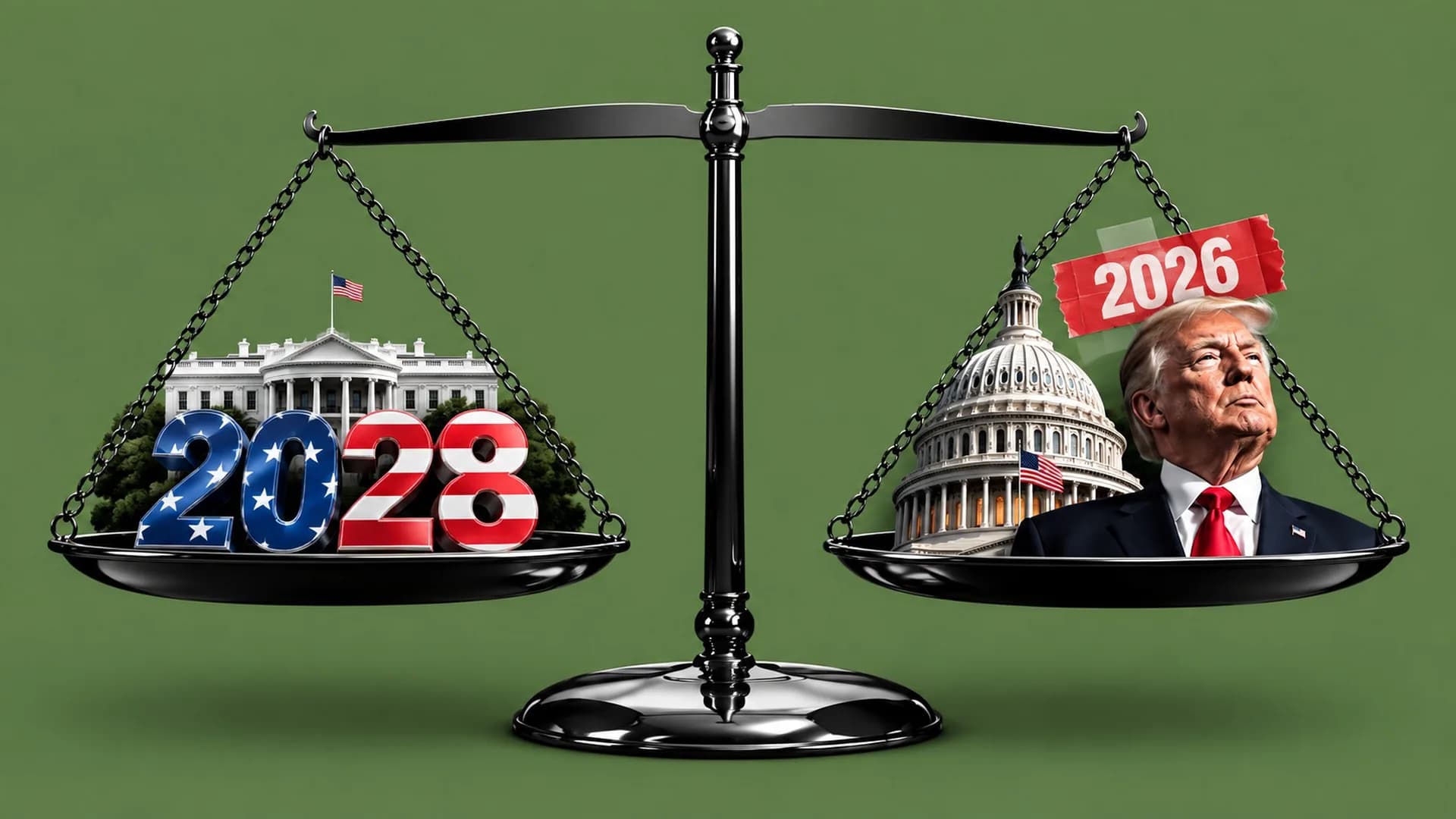
 Linkedin
 Threads
 Facebook
 X
XIt is easy to look ahead to 2028.
But before America reaches the next presidential election, there is another decision coming this November that could substantially shape what President Donald Trump can accomplish during the remainder of his term.
All 435 seats in the House of Representatives are up for election in the 2026 midterms.
That matters because the House is not simply another group of politicians in Washington.
For legislation to reach the president, it generally must pass both the House and Senate in identical form. If a president loses a cooperative House majority, passing major elements of his legislative agenda can become considerably more difficult.
So for Americans who support President Trump’s policies, the question surrounding November is straightforward:
What kind of House will he be working with for the next two years?
The race for the House is genuinely competitive
Nobody should assume the outcome is predetermined.
The Cook Political Report currently identifies 21 House races as Toss Ups. Significantly, 16 of those seats are presently Republican-held and five are Democratic-held. Cook also lists additional races as Lean Republican or Lean Democratic. Those ratings are assessments rather than election results, but they demonstrate how narrow the battlefield has become.
National polling also gives Republicans reason to take the environment seriously.
A July Pew Research Center survey found Democrats leading Republicans among registered voters on the generic congressional ballot, 43% to 37%, while another 20% supported someone else or remained uncertain. A national generic ballot does not determine individual House races, but it provides one measure of the political environment heading toward November.
In other words, this is not an election Republican voters can reasonably assume will take care of itself.
What happens if House control changes?
The consequences would extend well beyond changing the name displayed outside the Speaker’s office.
The Speaker is both the institutional leader of the House and the leader of its majority party. The majority also influences committee ratios, committee leadership and the legislative agenda. The House Rules Committee—which plays an unusually powerful role in determining which legislation reaches the floor and under what conditions—has traditionally been structured heavily in favor of the majority party.
That means a change in House control could change which legislation advances, which investigations receive attention, who chairs committees and how aggressively the executive branch is scrutinized.
A Democratic-controlled House would not cancel Trump's presidency or automatically reverse policies already enacted.
But it could make passing new Trump-backed legislation substantially harder because bills still need approval from the House before reaching the Senate and eventually the president.
It could also shift oversight priorities dramatically because congressional committees conduct investigations and supervise areas of federal policy and government activity.
Conversely, retaining a Republican House would preserve a congressional majority whose leadership currently shares many policy priorities with the Trump administration, although individual Republican lawmakers, Senate rules and internal disagreements would still affect what actually becomes law.
2026 is part of the road to 2028
Sometimes midterms are treated as political halftime.
That understates their importance.
The representatives elected this November will serve throughout 2027 and 2028—the exact period in which both parties will prepare for the next presidential election.
Congressional investigations, legislation, spending battles, immigration policy, economic debates, foreign affairs and conflicts with the administration can all help shape the political environment voters encounter in 2028.
So it would be inaccurate to claim that losing the House makes the 2028 election “impossible.”
It does not.
America will still hold a presidential election.
But the political landscape leading into 2028 could look dramatically different depending on who controls the House.
That distinction matters.
Trump supporters and the midterm problem
Presidential coalitions do not automatically reproduce themselves in midterm elections.
That is particularly relevant to Trump because his political strength has historically depended in part on voters who are highly motivated when he personally appears on the ballot.
This November his name will not appear as a presidential candidate.
House candidates will.
That means Americans who strongly approve of Trump's presidency must still make an independent decision about the congressional candidates representing their own districts.
Pew's survey illustrates just how closely presidential approval and congressional preference are currently connected: among registered voters who said they very strongly approve of Trump's job performance, 88% said they preferred the Republican House candidate in their district.
That does not guarantee those voters will actually participate.
And elections are determined by votes cast, not enthusiasm measured months earlier.
The House can turn on remarkably small margins
Recent congressional votes illustrate just how narrow House margins can become.
On September 15, for example, one House procedural resolution passed 214–211.
When control of a chamber is this closely contested, individual districts matter enormously.
A national movement ultimately becomes 435 separate elections.
Pennsylvania voters determine Pennsylvania representatives. Texans determine theirs. Arizona voters determine theirs.
There is no national House vote that automatically gives either party control.
The majority is assembled district by district.
This election deserves presidential-level attention
For voters who support Trump's economic, immigration, energy, national-security or other policy priorities, the 2026 House elections have a direct connection to whether Congress can help enact portions of that agenda or whether Washington enters a period of divided government.
For voters who oppose Trump's agenda, the same institutional facts provide an equally strong reason to care about congressional control.
That is democracy functioning as designed.
And it is precisely why treating 2026 as an insignificant election would misunderstand what is actually at stake.
The presidency determines who occupies the White House. Congress determines whether much of a president's domestic legislative agenda can move forward.
The road to 2028 therefore does not begin in 2028.
A major part of it runs directly through the House elections of 2026.