 8 min read
 2.4k
2.4k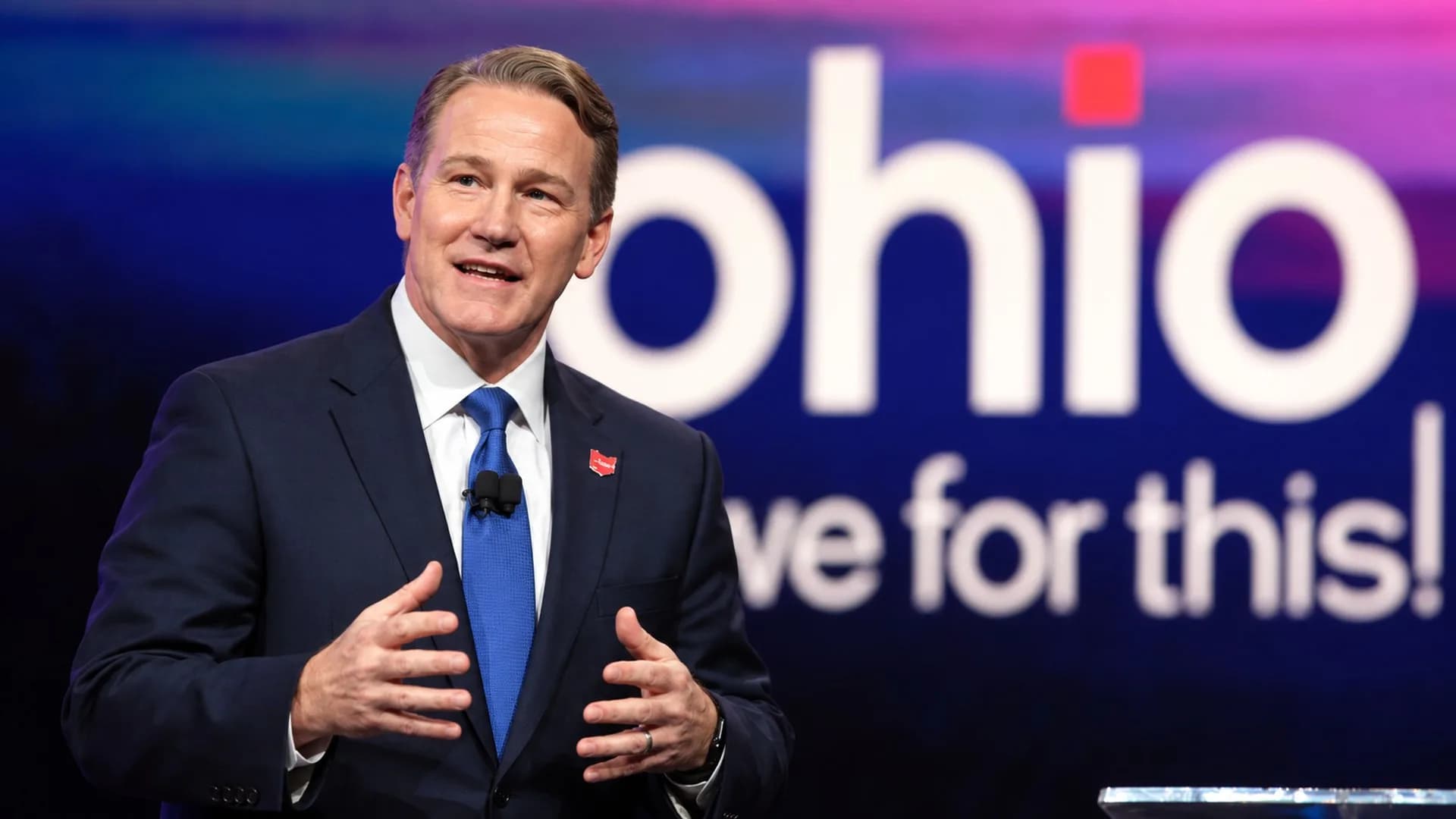
 Linkedin
 Threads
 Facebook
 X
XOhio may be one of the most fascinating Senate races of 2026 because voters have already answered one version of this question before.
In 2024, Ohio moved decisively toward Donald Trump.
Trump received 3,180,116 votes, or 55.16%, while Kamala Harris received 2,533,699 votes, or 43.95%.
That gave Trump an advantage of more than 11 percentage points.
But something else happened on that very same ballot.
Ohio voters also defeated longtime Democratic Sen. Sherrod Brown.
Republican Bernie Moreno received approximately 50.1% of the Senate vote, while Brown finished with roughly 46.5%.
After serving in the Senate since 2007, Brown was out.
Ohio had given Republicans both the presidential race and the Senate race.
Now Brown is back.
And the Republican standing between him and a return to Washington is Sen. Jon Husted.
How Jon Husted Ended Up in JD Vance’s Senate Seat
This is not a normal incumbent reelection.
Husted was not elected to this Senate seat in 2024.
The seat belonged to JD Vance.
When Vance resigned from the Senate after becoming vice president, Republican Gov. Mike DeWine appointed Husted to fill the vacancy in January 2025.
The appointment lasts until voters choose who will serve the remainder of Vance's term in the November 2026 special election.
Husted was already one of Ohio's most experienced Republican politicians.
He previously served as:
Ohio lieutenant governor,
Ohio secretary of state,
speaker of the Ohio House,
and a state senator.
When accepting the appointment, Husted said he looked forward to working with President Trump, Vice President Vance and the Republican Senate majority on what he described as an America First agenda focused on inflation, immigration and conservative priorities.
Trump has since endorsed Husted's Senate campaign.
So unlike some races where Republicans are trying to determine which candidate best represents Trump's coalition, Ohio is straightforward:
Jon Husted is the Republican incumbent, and he has Trump's backing.
But Sherrod Brown Is Not Starting From Zero
Brown may have lost in 2024, but he did not disappear from Ohio politics.
He spent nearly two decades representing Ohio in the Senate and built a political identity centered heavily around organized labor, manufacturing and working-class voters.
That name recognition matters.
And the latest polling demonstrates it.
An InsiderAdvantage survey conducted September 8-9 among 1,200 likely voters found:
Sherrod Brown: 47.3%
Jon Husted: 41.9%
A Wedgewood Polls survey in August similarly had Brown ahead 48% to 44%.
Other surveys earlier in the year showed a closer contest, and a June Siena poll actually had Husted ahead 50% to 47%.
RealClearPolling's current average places Brown at approximately 48.8% and Husted at 45.5%, a difference of 3.3 points.
So the current public polling advantage belongs to Brown.
But Ohio's recent election history introduces another piece of information that cannot be ignored.
Ohio Already Rejected Brown Once
Sherrod Brown's 2026 campaign is not an attempt to win a seat Democrats recently controlled comfortably.
Ohio voters removed him from this exact Senate seat cycle only two years ago.
In 2024:
Trump won Ohio by roughly 11 points.
Moreno defeated Brown by roughly 3.6 points.
The difference between those two margins is politically important.
It shows that Trump substantially outperformed the Republican Senate candidate.
Some voters who chose Trump did not choose Moreno.
Others supported third-party Senate candidate Don Kissick, who received more than 195,000 votes.
That creates one of the central questions of 2026:
Can Husted bring more of the Trump presidential electorate with him into the Senate contest?
There Are More Than Three Million Trump Voters to Look At
Trump's Ohio coalition was enormous.
More than 3.18 million Ohioans voted for him in 2024.
Husted does not automatically inherit those votes.
Midterm turnout differs from presidential turnout, voters can split tickets, and attitudes can change substantially over two years.
But those voters represent an existing statewide constituency rather than a hypothetical Republican opportunity.
Trump also won Ohio in 2016 and again in 2020.
Fox's compilation of certified results shows:
2016: Trump +8.1
2020: Trump +8
2024: Trump +11.2
That trajectory illustrates how dramatically Ohio's presidential politics have changed.
Barack Obama carried the state twice.
Ohio was once viewed as perhaps America's defining presidential swing state.
Today, Republican presidential candidates have won it three consecutive times.
The Senate race will test whether that movement extends equally strongly to a midterm election without Trump at the top of the ticket.
The Most Important Comparison May Be Trump Versus Moreno
There is another way to look at the 2024 results.
Trump received approximately 3.18 million Ohio votes.
Moreno received approximately 2.86 million.
That is a gap of more than 320,000 votes between the Republican presidential candidate and Republican Senate candidate.
Brown still lost.
But those numbers show why Republican turnout and ticket consolidation matter so much in 2026.
If Husted performs substantially closer to Trump's statewide Republican numbers than Moreno did, the electoral picture changes.
If Brown again attracts a meaningful number of voters who are willing to support Republicans elsewhere on the ballot, his path looks different.
That is why simply calling Ohio either “red” or “competitive” fails to capture the full story.
Both are relevant.
Husted Has Something Moreno Did Not Have: Incumbency
Husted entered the Senate through appointment rather than election, but he now campaigns as a sitting senator.
That gives him the ability to run on work already being done in Washington while also leaning on a long statewide résumé.
He also has support from major Republican institutions and organizations.
The Fraternal Order of Police of Ohio endorsed Husted in July.
The organization represents more than 23,000 law-enforcement officers and had previously supported Brown.
That endorsement is notable because Brown historically cultivated organized labor and union support as a central part of his political coalition.
It does not mean union voters as a whole have moved to Husted.
But it demonstrates that some organizations previously aligned with Brown are reassessing the race.
And Trump Is Part of Husted’s Political Equation
Husted has not attempted to distance himself from Trump.
From the moment he accepted the Senate appointment, he publicly aligned himself with Trump's agenda.
Trump has endorsed him.
And Ohio itself has become one of Trump's strongest former battleground states.
That makes Ohio another test of the Republican strategy coming out of the party's first national midterm convention.
Trump told supporters in Dallas to approach the midterms almost as though he were personally on the ballot.
The strategic challenge behind that message is obvious.
Presidential elections bring out voters who do not always participate in congressional midterms.
Ohio contains hundreds of thousands of voters who demonstrated enthusiasm for Trump in 2024 but whose participation in 2026 cannot simply be assumed.
Brown’s Advantage Is Familiarity
Brown has something few Democratic challengers possess:
Ohio voters have already elected him statewide multiple times.
He served as Ohio secretary of state before becoming a congressman and eventually a senator.
That history gives voters a clear idea of who he is.
Husted is also well known in Ohio politics, but his statewide political identity developed largely through state government rather than through years in the U.S. Senate.
This race therefore does not feature an unknown challenger trying to introduce himself against a deeply established incumbent.
It features two politicians with decades of Ohio experience.
One is a sitting Republican senator.
The other is the former Democratic senator voters removed two years earlier.
Ohio Could Become the Most Expensive Senate Battle in America
The importance of the contest is already visible in campaign spending.
Axios reported this month that Ohio is on track to become the country's most expensive Senate contest for the second consecutive cycle.
Republicans and Democrats are pouring money into advertising as control of the Senate becomes increasingly tied to a relatively small number of competitive races.
That alone tells us something about how both parties view Ohio.
Neither side is treating it as settled.
Republicans are defending a seat in a state Trump carried by double digits.
Democrats are investing behind a former senator who currently leads in several polls.
Those two realities are colliding.
Brown Has to Rebuild a Coalition That Broke in 2024
Brown's challenge is different from that of many Democratic candidates.
He has already experienced exactly what a Republican statewide coalition can do to him.
In 2018, Brown won reelection.
Six years later, he lost.
Ohio had changed around him.
Trump's appeal among working-class and non-college voters helped transform counties that Democrats once needed to remain competitive.
Moreno capitalized on that environment in 2024 and ended Brown's Senate career.
Brown's 2026 comeback effort therefore depends in part on convincing enough Ohioans that the special election should be evaluated differently from the presidential-era environment that defeated him.
Husted's task is effectively the opposite:
connect the 2026 Senate election to Ohio's broader Republican movement.
The Economy Could Determine Which Coalition Shows Up
As in Iowa and North Carolina, economic concerns are central to the race.
Brown has historically built his political brand around wages, trade, manufacturing and worker protections.
Husted and Republicans are countering by tying Brown to Democratic spending policies and arguing that Republican economic policies offer a better approach to inflation, energy and growth.
Those competing economic narratives matter particularly in Ohio because of the state's manufacturing heritage.
Automotive production.
Steel.
Energy.
Agriculture.
Advanced manufacturing.
Supply chains.
Trade with China.
Tariffs.
All of those issues connect directly to communities across the state.
And many of the voters most affected by those debates helped move Ohio toward Trump over the last decade.
There Is a Simple Reason This Race Remains So Important
Look at the two most recent statewide federal elections.
In 2024, Ohio voted for:
Donald Trump for president.
Bernie Moreno for Senate.
Two Republican victories.
Now, in 2026, the Democratic candidate is the same senator voters defeated in that election.
That does not guarantee the same result.
Current polling actually shows Brown ahead.
But it explains why the Republican case in Ohio begins with more than optimism.
It begins with recent election results.
The Question Is Whether 2024’s Republican Electorate Returns
Ohio therefore presents essentially the same question appearing across several of America's most important Senate races.
In Iowa, Republicans are asking whether Trump's overwhelming statewide coalition transfers to Ashley Hinson.
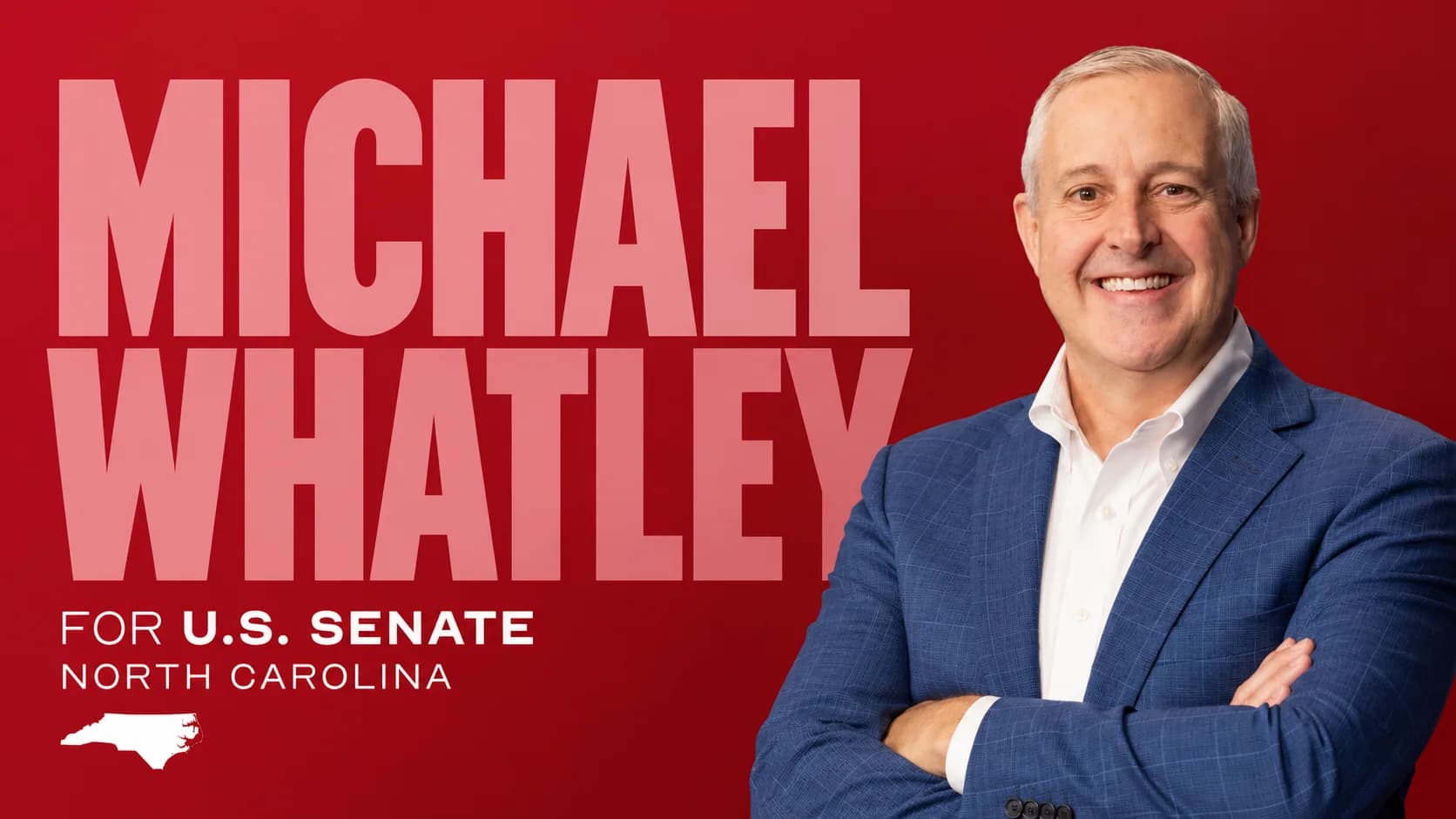
In North Carolina, Michael Whatley is trying to connect with an electorate that chose Trump three consecutive times.
In Alaska, Dan Sullivan is trying to reproduce enough of Trump's 13-point statewide advantage.
And in Ohio, Jon Husted is defending a Senate seat in a state Trump carried by more than 11 points.
But Ohio contains one additional piece of evidence those states do not.
Sherrod Brown was already on the ballot in 2024.
And he lost.
That makes the 2026 rematch with Ohio's Republican electorate particularly unusual.
Brown currently holds the advantage in public polling.
Husted, meanwhile, represents a party that has won Ohio's last three presidential elections and both of its most recent U.S. Senate elections.
Those are competing realities.
The election will determine which matters more this time.
Ohio is no longer the presidential swing state Americans remember from twenty years ago.
But this Senate race demonstrates that becoming more Republican at the presidential level does not make every statewide contest automatic.
More than three million Ohioans voted for Trump in 2024.
More than 2.85 million voted for a Republican senator.
The central question of 2026 is how many of those voters return, and where the Ohioans who split their tickets two years ago decide to go this time.