
 3 min read
 8
 Linkedin
 Threads
 Facebook
 X

A growing measles outbreak in Pennsylvania has surpassed 1,500 confirmed cases, raising concerns about vaccination rates and the return of a disease the United States once declared eliminated.
The Pennsylvania Department of Health announced November 9 that 1,505 infections had been confirmed across 45 counties since the outbreak began in late April.
The state has also recorded 290 hospitalizations and six measles-associated deaths.
The announcement was highlighted, as health officials continue expanding vaccination efforts and monitoring new infections.
The outbreak is particularly significant because measles was declared eliminated from the United States in 2000, following decades of vaccination and public health efforts.
The latest numbers demonstrate how quickly a highly contagious disease can spread when protection within communities declines.
Pennsylvania Is Facing a Major Public Health Challenge
The outbreak has expanded well beyond its initial communities, affecting 45 of Pennsylvania's 67 counties.
According to state health officials, 73 new cases were reported during the seven days preceding November 9.
Children and teenagers account for approximately one-third of infections, while the majority of confirmed cases have occurred among people who were unvaccinated or whose vaccination status was unknown.
The state has also reported six measles-associated deaths this year.
These figures demonstrate the seriousness of the outbreak, particularly for infants, young children, and people with weakened immune systems.
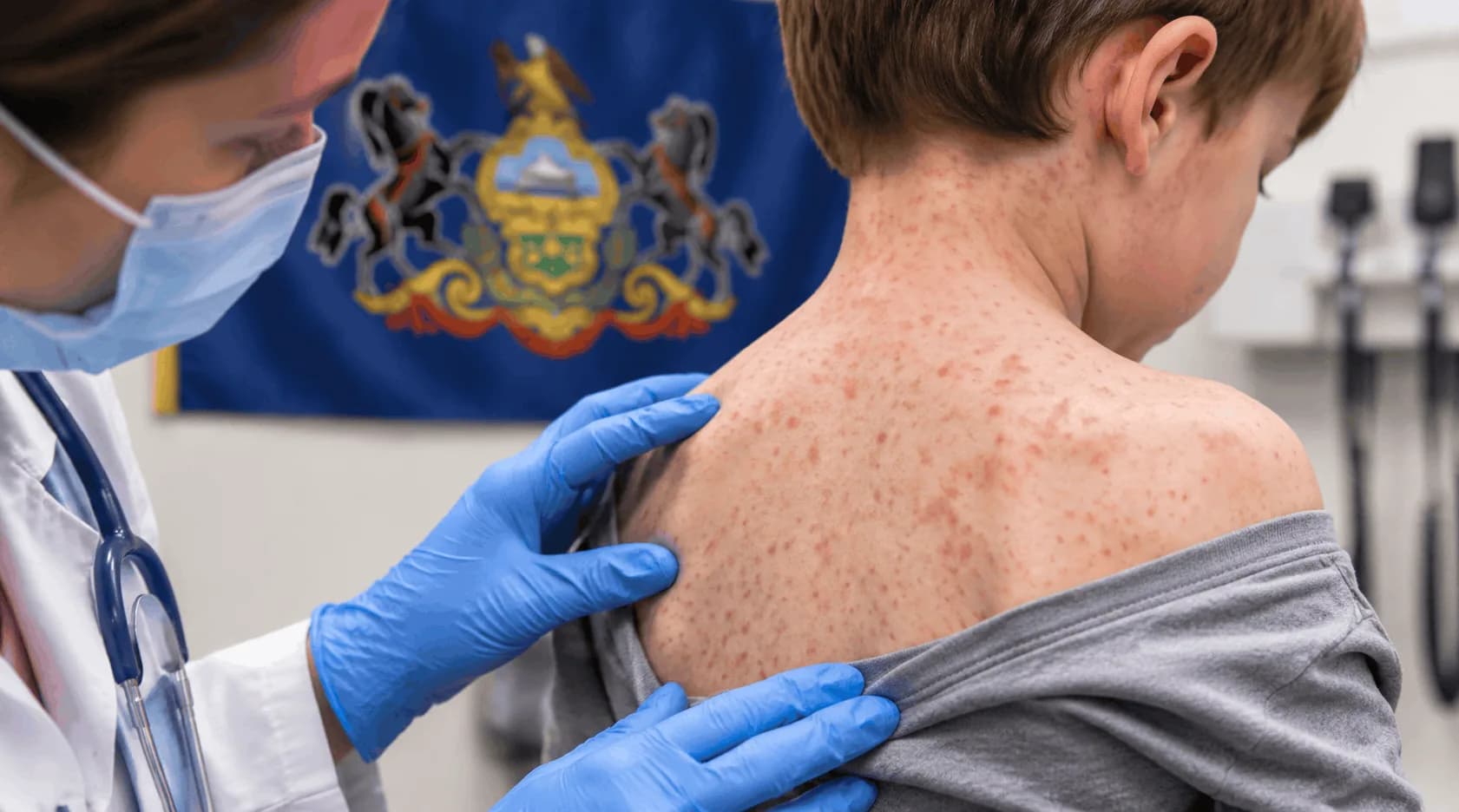
Measles is not simply a childhood rash or a temporary fever. It can cause pneumonia, severe dehydration, and inflammation of the brain.
Approximately 20% of people identified with measles in Pennsylvania have required hospitalization, according to the state health department.
Why Measles Spreads So Easily
Measles is among the most contagious infectious diseases.
The virus spreads through the air when an infected person coughs or sneezes. It can remain infectious in an enclosed space for up to two hours after that person leaves.
An unvaccinated person exposed to measles has a very high likelihood of becoming infected.
Initial symptoms generally appear seven to 21 days after exposure and include:
High fever.
Cough.
Runny nose.
Red, watery eyes.
A rash that typically begins on the face and spreads downward.
People can transmit the virus approximately four days before and four days after the rash appears.
This means an infected person may unknowingly expose others before realizing they have measles.
The Vaccine Remains the Strongest Protection
The measles, mumps, and rubella vaccine, commonly known as MMR, remains the most effective protection against infection.
According to the CDC, two doses are approximately 97% effective against measles.
Pennsylvania health officials report that fewer than 1% of the state's confirmed cases have occurred among vaccinated individuals.
The state has responded by expanding access to immunization.
Approximately 300 Department of Health employees are participating in outreach efforts, while state nurses have administered more than 7,000 vaccinations through 244 temporary clinics in affected communities.
Healthcare providers administered more than 56,000 MMR doses in September and more than 61,000 in October, substantially exceeding the state's typical monthly average of approximately 25,000 doses.
The increased demand demonstrates how the outbreak is encouraging families to review their vaccination records and seek additional protection.
What Parents Should Know About Children's Vaccinations
The standard childhood immunization schedule recommends two MMR doses.
The first is generally administered between 12 and 15 months of age, followed by a second dose between four and six years.
However, Pennsylvania health officials recommend an additional early dose for infants between six and 11 months who live in or travel to counties experiencing sustained community transmission.
That early dose does not replace the two routine childhood doses.
Children aged 12 months or older who have not received an MMR vaccine should begin vaccination promptly, with the second dose administered at least 28 days later.
Adults who have received two documented doses generally do not need another.
Those with incomplete records or uncertain vaccination histories should consult a healthcare professional.
Could Measles Lose Its Elimination Status in America?
The outbreak also has national implications.
The CDC reported 5,182 measles cases nationwide through November 5, representing the highest annual total since 1991.
The Pan American Health Organization is reviewing whether the United States continues to meet the criteria for measles elimination, a status the country has maintained since 2000.
Elimination does not mean a disease has disappeared worldwide. It means sustained domestic transmission has been interrupted.
If transmission continues for at least 12 months, the United States could lose that designation.
The review highlights the importance of vaccination coverage and effective outbreak control.
Protecting Communities Starts With Prevention
Pennsylvania's experience is a reminder that public health protection depends on sustained prevention, access to healthcare, and accurate information.
For families, checking vaccination records and discussing potential exposure with healthcare professionals are practical steps that can help reduce risk.
The state continues coordinating with the CDC, healthcare providers, and community organizations to expand vaccination access and identify new cases.
Measles is preventable, and the tools to protect American families already exist. The challenge now is ensuring that children, parents, and communities have access to the protection that decades of medical research have made possible.