 5 min read
 115
115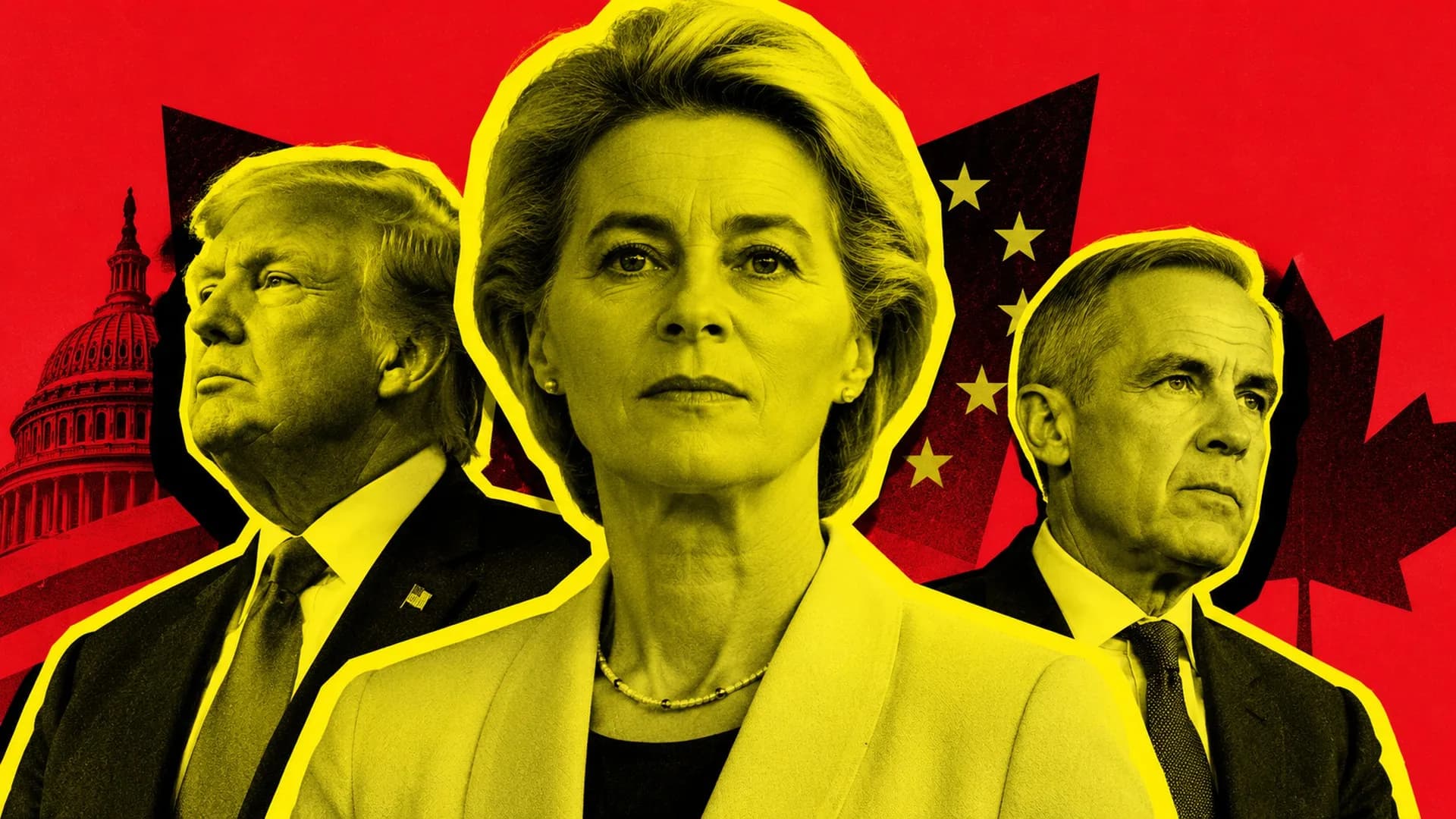
 Linkedin
 Threads
 Facebook
 X
XSomething unusual happened in Strasbourg this week.
Canadian Prime Minister Mark Carney sat inside the European Parliament as European Commission President Ursula von der Leyen publicly invited Canada to explore becoming the European Union’s first-ever “associate member.” No such membership category currently exists, and neither side has yet explained exactly what rights or obligations it would carry.
The timing is impossible to ignore.
Canada is simultaneously engaged in a serious trade confrontation with the United States. U.S.-Canada negotiations collapsed in August, both governments have imposed retaliatory tariffs, and Carney has openly made reducing Canada’s dependence on the American market a strategic objective.
That creates a much bigger story than another European diplomatic meeting.
Europe is attempting to redraw relationships at precisely the moment Washington is demanding different terms from some of its closest economic partners.
Europe sees an opening
Von der Leyen told Carney that she wanted to move beyond the existing Canada-EU trade agreement and create what she called an “Alliance for the Future.”
The proposed relationship could include cooperation in artificial intelligence, critical minerals, manufacturing, energy, defense production, space, financial services and the Arctic. Canada's government said the two sides are discussing greater “strategic autonomy, resilience, and sovereignty.”
Those words matter.
For decades, Canada’s geography and economy have naturally tied it overwhelmingly to the United States.
Even after Canada began expanding trade elsewhere, the United States still purchased more than 70% of Canadian exports, according to data cited in current reporting.
Europe cannot simply replace that relationship overnight.
But Brussels does not necessarily need to replace America to achieve something significant.
It only needs Canada to become less dependent on Washington.
And that is exactly what Carney says his government intends to do.
Is this partnership—or strategic distancing from America?
European and Canadian leaders reject the idea that the initiative is directed against Washington.
Von der Leyen explicitly described the emerging partnership as being “not against anyone else, but for our common strength.”
That is an important statement and should be taken seriously.
But diplomatic language does not erase geopolitical context.
Canada began accelerating its diversification strategy as its relationship with the Trump administration deteriorated. Carney has said repeatedly that the traditional U.S.-Canada economic relationship has changed and that Canada must build stronger partnerships elsewhere.
European leaders are responding to exactly that opening.
The Washington Post reported that some European political leaders are explicitly presenting Canada's response to Trump as a model of resistance to American pressure. One French European Parliament leader praised Carney for refusing to compromise and urged Europe and Canada to move closer together.
That is more politically charged than simply negotiating a trade agreement.
It shows how quickly a bilateral U.S.-Canada dispute can become part of a larger argument about American power, European independence and the future structure of Western alliances.
Trump responded immediately
President Trump did not treat the proposal as harmless symbolism.
On Wednesday, he said that if European leaders were attempting to bring Canada into a closer relationship specifically to damage American interests, he could consider the move a “hostile act.”
Trump also warned that the United States could respond economically, including through additional tariffs against Europe.
That does not mean such retaliation will necessarily occur.
The details of Canada's proposed relationship with Europe remain largely undefined, and Trump himself conditioned his criticism on the intent and structure of the arrangement.
But his reaction demonstrates why this story matters.
What Brussels describes as “strategic autonomy” can look very different from Washington.
A complicated relationship with American power
There is a broader debate underneath the headlines.
American administrations have spent decades maintaining enormous economic, security and military relationships with both Canada and Europe.
At the same time, European governments increasingly argue that they must become less dependent on Washington, particularly when U.S. policy changes sharply from one administration to another.
Von der Leyen's State of the Union address repeatedly emphasized Europe choosing its own path and strengthening its ability to act independently.
From the European perspective, that is prudent sovereignty.
From another American perspective, it can appear frustrating: allies that have benefited enormously from U.S.-led security and economic arrangements are now actively building structures designed to reduce Washington's influence when American leaders demand different trade terms.
Those are competing interpretations rather than established facts.
And both help explain the tension now emerging.
Canada says America has changed
Carney has been unusually explicit.
Last month he said Canada recognized that “America has changed” and that the old relationship would not simply return. His government has therefore concentrated on expanding trade and investment relationships outside the United States.
Canada has legitimate reasons for pursuing that strategy.
Governments are expected to protect their own economic interests, and relying excessively on any single customer creates vulnerability.
Washington is doing something similar through Trump's emphasis on reshoring manufacturing, domestic energy, reciprocal trade and American procurement.
The disagreement comes down to what each country believes constitutes fair treatment.
And increasingly, governments are responding not merely through tariffs but by reorganizing their alliances.
There is one enormous problem for Canada
Geography does not disappear because politicians are angry with each other.
Canada and the United States share the world's longest international land border, extraordinarily integrated manufacturing networks and huge flows of energy, agricultural goods, automobiles and investment.
Europe is thousands of miles away.
Canada already has a comprehensive free-trade agreement with the EU that eliminates tariffs on approximately 99% of goods, meaning that simply announcing another partnership will not automatically replace the economic advantages of proximity to the United States.
That may explain why even the Europeans have not yet defined what “associate membership” would actually mean.
It could eventually involve deeper trade integration, defense cooperation or mobility rights.
Or it could prove largely symbolic.
Nobody knows yet.
The larger lesson for Americans
The important development is not simply that Canada and Europe are talking.
They have worked together for generations.
What has changed is the language.
Strategic autonomy. Reduced dependence. New alliances. Economic security. Sovereignty.
Those phrases reveal governments preparing for a world in which relationships once considered permanent are increasingly negotiable.
Trump's approach has forced many allied governments to reconsider longstanding assumptions about access to the American market and reliance on American security.
Europe and Canada are responding by exploring alternatives.
Whether that ultimately strengthens Western cooperation or produces deeper fragmentation remains unsettled.
But Americans should understand what is happening rather than viewing the Strasbourg meeting as another ceremonial diplomatic gathering.
Canada is trying to create leverage beyond Washington.
Europe sees an opportunity to expand its own geopolitical weight.
And the United States is signaling that it will defend its economic interests if those new arrangements are structured against it.
For all three sides, the message is becoming increasingly clear:
The era in which old alliances operated automatically is giving way to one in which every government is asking what the relationship actually delivers in return.