 8 min read
 2.4k
2.4k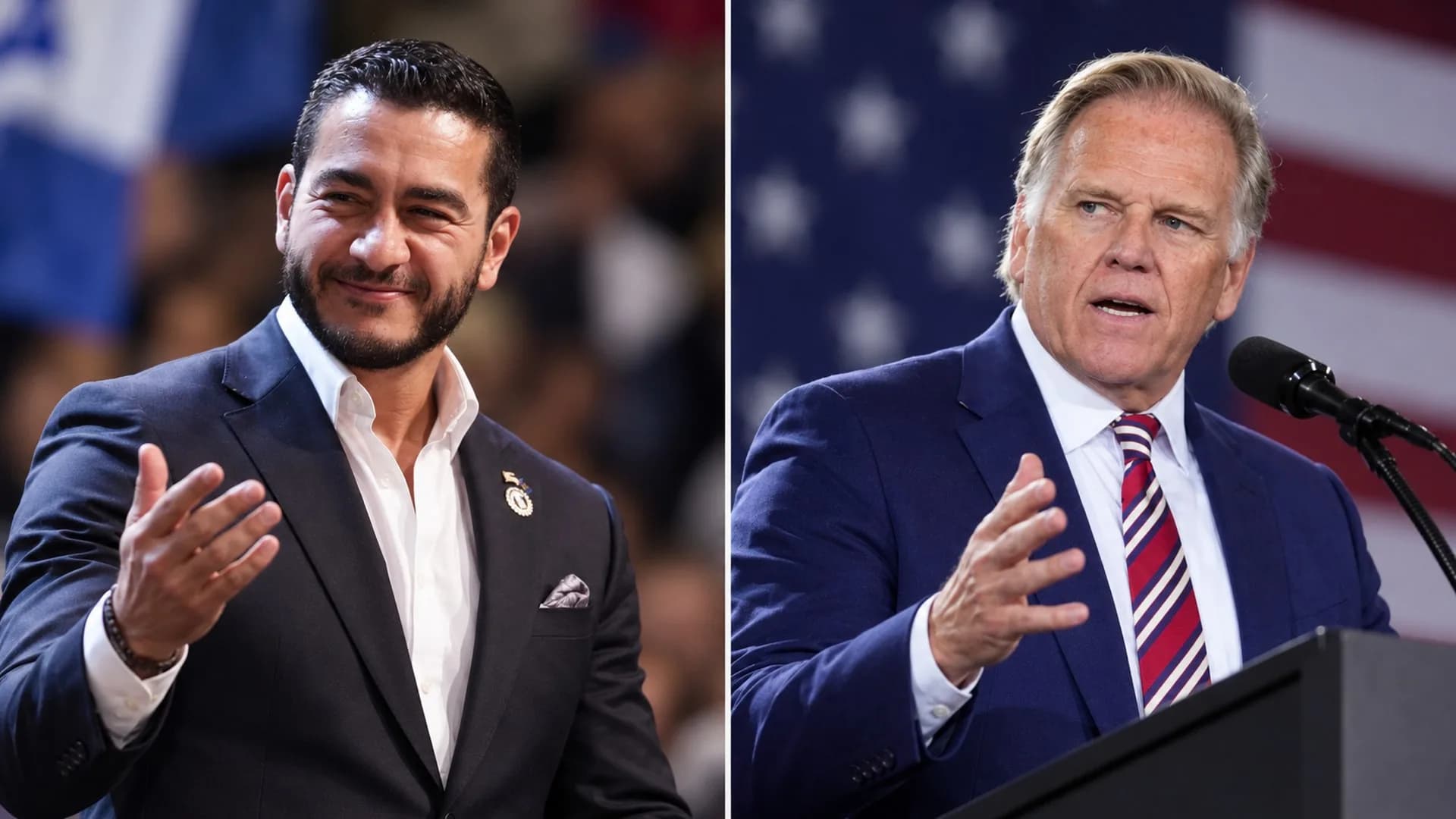
 Linkedin
 Threads
 Facebook
 X
XLet me say something Democrats may not enjoy hearing:
Michigan should not feel this dangerous.
We are talking about a Senate seat currently held by Democrats, in a state with a large union tradition, major urban Democratic strongholds and a political history that once made Michigan part of the party’s dependable “blue wall.”
And yet here we are, less than two months before Election Day, staring at another Senate race separated by only a few points.
Democratic nominee Abdul El-Sayed leads Republican Mike Rogers in most current polling averages, but not by much.
One recent Trafalgar survey conducted September 7-9 found:
Abdul El-Sayed: 46.3%
Mike Rogers: 44.8%
A broader polling average currently places El-Sayed around 45.8% and Rogers around 44.3%.
That is a competitive race.
And Democrats should ask themselves an uncomfortable question:
How did a Senate seat in Michigan become this uncertain again?
Start With What Happened in 2024
Donald Trump won Michigan.
That is the first fact Democrats cannot explain away.
Official Michigan results show:
Donald Trump: 2,816,636 votes, 49.73%
Kamala Harris: 2,736,533 votes, 48.31%
Trump's advantage was roughly 80,000 votes.
That was not an accident hidden inside some questionable count.
Michigan's subsequent statewide audit confirmed the 2024 election results and found only tiny differences between machine and hand counts.
Michigan voters chose Trump.
For Democrats, that should have been the warning.
The state was not automatically ours anymore.
And Then Look at Mike Rogers
Rogers came extraordinarily close to winning the Senate seat in the very same election.
Democrat Elissa Slotkin received 2,712,686 votes.
Rogers received 2,693,680.
The difference was only 19,006 votes, about three-tenths of one percentage point.
Think about that.
Trump won Michigan.
Rogers came within 19,006 votes of joining him with a Republican Senate victory.
Now Rogers is back.
And this time he has Trump's endorsement.
Democrats therefore are not facing some theoretical Republican candidate hoping to discover whether he can compete statewide.
We already know Rogers can.
He came within a fraction of a percentage point two years ago.
That should concentrate Democratic minds.
Then Democrats Had a Brutal Primary
This is where the Democratic critique becomes more uncomfortable.
The party had a choice between sharply different candidates.
Rep. Haley Stevens represented the more establishment-oriented wing.
Abdul El-Sayed represented the insurgent progressive wing and campaigned on ideas including Medicare for All and reducing the influence of money in politics.
El-Sayed won.
But barely.
He defeated Stevens approximately 48.5% to 47.5%, overcoming enormous outside spending against him.
That victory was genuinely impressive.
He built enthusiasm.
He mobilized younger and progressive voters.
He defeated much of the Democratic establishment.
But winning a Democratic primary and winning Michigan statewide are not identical political exercises.
That is the part Democrats cannot afford to confuse.
A Primary Rewards Intensity. Michigan Rewards Breadth.
El-Sayed demonstrated that he can inspire the Democratic left.
His recent events have attracted large crowds, particularly among young people and progressive voters.
AP reported roughly 400 students filling one Michigan State University event, with additional attendees turned away after the venue reached capacity. His campaign is emphasizing universal health care, affordable housing, economic inequality and removing money from politics.
That enthusiasm matters.
But Michigan contains millions of voters who did not participate in the Democratic primary.
Suburban independents.
Macomb County working-class voters.
Trump Democrats.
Union households.
Moderates.
Religious conservatives.
Voters worried primarily about grocery prices, automobiles, energy and jobs.
Those voters decide general elections.
The central Democratic question is whether El-Sayed's progressive coalition can expand far enough beyond the voters who delivered his primary victory.
Republicans Understand the Opportunity
If Democrats want evidence that Republicans see El-Sayed as potentially vulnerable, look at the Republican midterm convention.
El-Sayed became one of the Democratic candidates Republicans talked about most.
Mike Rogers attacked his politics and associations.
Trump called him an extremist.
Other Republican speakers tried to connect him to the Democratic Party's left flank.
Some of those attacks have crossed important lines.
Rogers alleged that El-Sayed was funded by groups such as the Muslim Brotherhood without providing evidence, according to AP.
Other Republicans have attacked his Muslim faith or attempted to blur the distinction between his religion and political extremism.
Those claims should be treated for what they are: allegations requiring evidence, not facts simply because politicians repeat them.
Democrats should not confuse irresponsible attacks with legitimate political vulnerabilities, however.
There is a real policy argument underneath the uglier rhetoric.
El-Sayed is significantly to the left of many previous Michigan statewide Democratic nominees.
Republicans are going to emphasize that relentlessly.
Hasan Piker Is a Problem Democrats Did Not Need
El-Sayed also entered the general election carrying a controversy from the primary.
Left-wing streamer Hasan Piker campaigned with him.
Piker previously made the notorious statement that “America deserved 9/11,” a comment for which he later apologized.
El-Sayed has called the remark “dumb” and distanced himself from Piker, saying that only he and his campaign speak for his candidacy.
That distinction matters.
A candidate should not automatically inherit every statement ever made by someone who supported him.
But politics is not always fair.
Rogers and Republicans are already using the association.
And when Democrats are fighting over a Senate seat in a state decided by tens of thousands of votes, unnecessary political liabilities become expensive.
That is the kind of thing Democratic strategists should have anticipated during the primary.
Michigan Is Also an Auto State
This may ultimately matter more than ideological labels.
El-Sayed himself is trying to redirect the campaign toward economics.
He has criticized gasoline prices, housing costs and the trade conflict with Canada, noting Michigan's unique exposure because of the deeply integrated automobile industry.
That is probably where Democrats would prefer this election to remain.
Michigan does not live on Twitter.
It builds things.
Cars.
Parts.
Machinery.
Advanced manufacturing.
Michigan households care about wages, energy prices, health care and whether their jobs will still exist five or ten years from now.
Both candidates understand that.
And Republicans are trying to link Rogers closely to Trump's economic and manufacturing message.
Trump formally endorsed Rogers in July, praising him and tying his candidacy to the administration's agenda.
The political significance is obvious because Trump already proved he can win Michigan.
Democrats Should Study the 2024 Gap Carefully
Here is one number Democrats should probably put on a wall somewhere.
Trump received 2,816,636 votes in Michigan.
Rogers received 2,693,680.
That is a difference of approximately 123,000 votes.
Rogers lost his Senate race by only 19,006.
So he did not need every Trump voter.
He needed only a relatively small additional portion of that presidential Republican electorate.
That does not mean those votes automatically become available in 2026.
Midterms produce different electorates.
Trump's approval rating has changed.
Rogers is not Trump.
And Democratic voters may become more motivated during a Republican administration.
But those 2024 numbers demonstrate why Democrats cannot dismiss Rogers.
The Republican votes required to make him competitive have already appeared in Michigan once.
El-Sayed Also Has Real Strengths
A Democratic critique should not pretend the nominee is doomed.
He isn't.
Current polling generally has El-Sayed ahead.
His primary victory showed unusual grassroots strength.
He defeated an establishment-backed opponent despite being dramatically outspent.
The United Auto Workers endorsed him during the primary, an important credential in Michigan politics. The Washington Post reported that the endorsement was a significant setback for Stevens, whose own campaign had emphasized her auto-industry background.
And his economic populism may prove more attractive to general-election voters than ideological labels suggest.
A candidate arguing about health-care costs, corporate power and working-class economics can reach voters who would never describe themselves as progressive.
That is essentially the bet Democrats are making.
But Democrats Are Still Fighting Among Themselves
The primary left scars.
AP reports that divisions remain inside the party after the bitter Stevens-El-Sayed contest, particularly over Israel, progressive economic policy and the people surrounding El-Sayed's campaign.
This is where Democrats need an honest diagnosis.
The party cannot spend September relitigating August.
El-Sayed won.
Stevens lost.
The voters made that decision.
But the narrowness of the primary result means nearly half of Democratic primary voters preferred someone else.
That does not make them disloyal Democrats.
It makes party reunification a real task rather than a slogan.
Michigan Is Not a Progressive Laboratory
This is perhaps the central lesson.
Michigan is a genuine swing state.
Trump won it in 2016.
Joe Biden won it in 2020.
Trump took it back in 2024.
Republican and Democratic Senate candidates were separated by just 19,006 votes that same year.
Any political movement treating Michigan as a place to test ideological purity is taking a substantial risk.
That applies to Republicans too.
Michigan punishes candidates who lose touch with its center.
But Democrats currently hold the seat, so Democrats bear the burden of defending it.
The Polls Are Sending a Very Specific Message
El-Sayed is ahead.
But look at the margins.
Trafalgar: roughly El-Sayed +1.5.
CNN/SSRS: approximately El-Sayed +3.
Detroit News/Glengariff produced a poll with Rogers ahead.
Michigan State University/YouGov found El-Sayed ahead by around five.
EPIC-MRA found a narrow Democratic advantage.
These are different pollsters with different methodologies and results.
What they collectively do not show is a Democratic runaway.
They show a close Michigan Senate race.
That is exactly what the state's political history would lead us to expect.
If I Were Advising Democrats, I Would Worry Less About Republican Insults and More About Michigan Voters
Republicans calling El-Sayed names will excite Republicans.
Democrats defending his identity will excite Democrats.
Neither exercise necessarily persuades the voter deciding whether she can afford groceries in Macomb County.
El-Sayed appears to understand that.
After the Republican convention attacks, he deliberately redirected reporters toward gas prices, housing and Michigan's economy.
“They want to point to me and my name and my faith,” he said, while arguing those issues are not responsible for rising household costs.
Politically, that is probably the more consequential argument.
Michigan's Senate race may ultimately be decided by voters who do not care very much about either party's online ideological battles.
They care whether Michigan is working.
Democrats Cannot Pretend Trump’s 2024 Win Never Happened
This may be the largest analytical mistake available to the party.
Trump winning Michigan did not mean Michigan permanently became Republican.
It also did not mean nothing changed.
He won more than 2.8 million votes.
Rogers nearly won a Senate seat simultaneously.
Those voters exist.
El-Sayed now has to compete in the same state with a Democratic coalition that emerged from an extremely divisive primary.
That does not make a Rogers victory inevitable.
Current polling actually puts El-Sayed slightly ahead.
It makes the election competitive.
And after 2024, Democrats should know better than to treat “competitive” as another word for “safe.”
The Democratic Party Wanted Change. Michigan Will Test the Price of It.
El-Sayed's primary victory represented something real.
Democratic voters rejected much of their own establishment.
They chose a younger, more progressive, explicitly populist candidate.
They decided that defeating big-money political organizations and challenging conventional Democratic politics mattered.
That deserves to be understood rather than dismissed.
But insurgent victories create a second test.
Can the movement expand?
Can the candidate who inspired progressive activists persuade voters who never attended the rally?
Can economic populism overcome ideological concerns?
Can a divided party reunify?
Can El-Sayed outperform Harris among the Michigan voters who delivered Trump the state?
Those are not attacks.
They are the questions a serious Democratic Party should be asking.
Because Michigan is not a theory anymore.
Donald Trump already won it.
Mike Rogers already came within 19,006 votes of winning a Senate seat there.
And now Democrats have nominated a candidate who represents a considerably different political direction from the one they took into Michigan's previous statewide contests.
Maybe that gamble works.
Maybe El-Sayed's populism becomes exactly the kind of political realignment Democrats need.
But anyone inside the Democratic Party looking at Michigan honestly should recognize what the polling is saying:
This is not a comfortable Democratic seat.
It is another Michigan knife fight.
And whichever side ultimately wins will have to earn it.