 8 min read
 2.4k
2.4k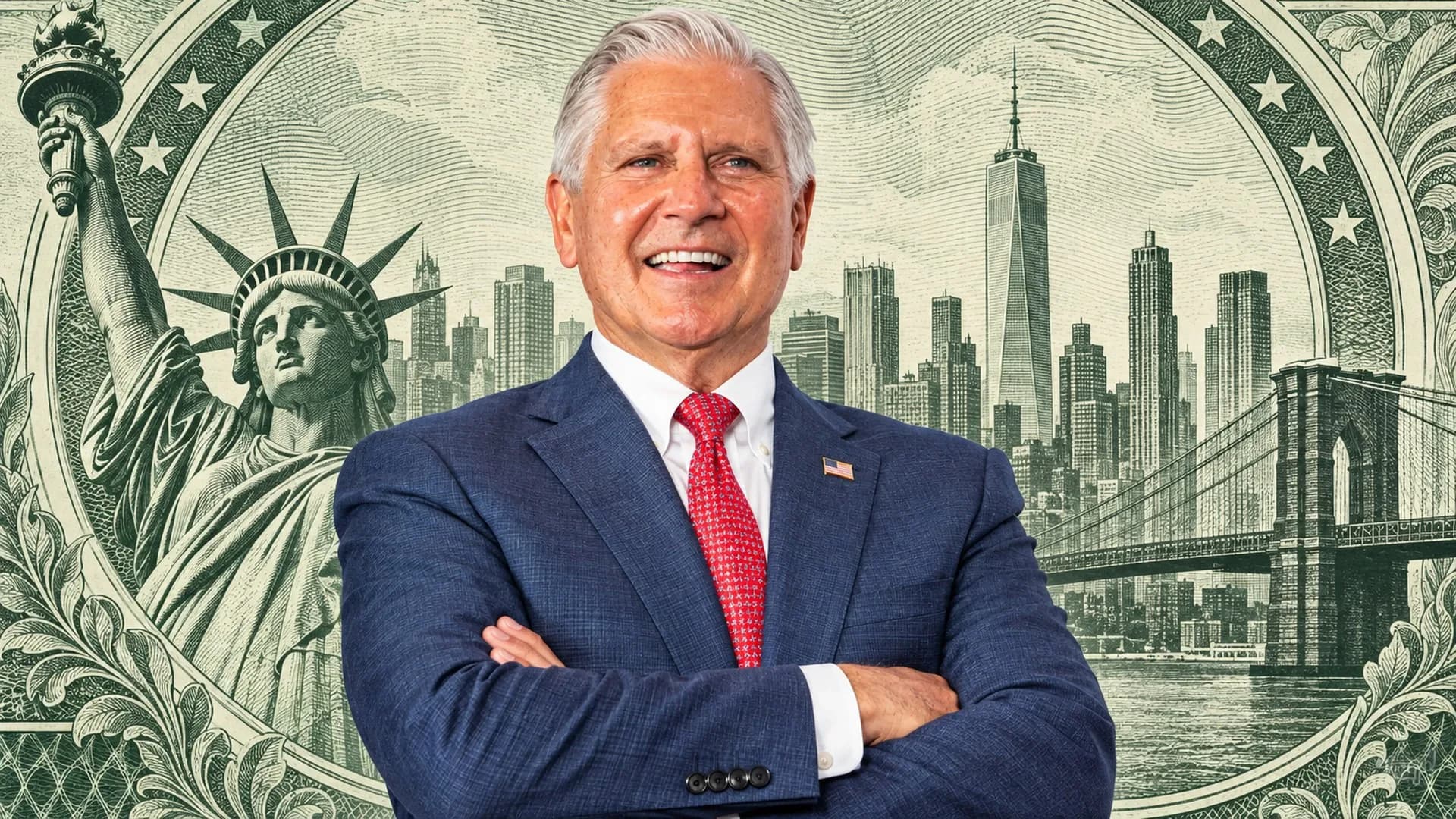
 Linkedin
 Threads
 Facebook
 X
XSomething is changing in the conversation around New York politics.
For years, statewide races in New York have begun with a basic assumption: Democrats hold the advantage, Republicans fight uphill, and New York City supplies the enormous Democratic margins that make statewide victories difficult for the GOP.
That structural reality has not disappeared.
But with the November 3 election now less than 50 days away, Republican gubernatorial nominee Bruce Blakeman is trying to test how durable it really is.
Blakeman, the Nassau County executive, is challenging Democratic Gov. Kathy Hochul in a race increasingly centered on the everyday frustrations New Yorkers encounter long before they think about political parties: rent, electricity, groceries, taxes, housing, crime and whether living in New York still feels economically sustainable.
Official New York election records list Hochul as the Democratic nominee and Blakeman as the Republican and Conservative nominee.
And while statewide polling still gives Hochul the advantage, there are signs that Republicans believe there is an electorate worth fighting for.
Trump’s Midterm Experiment Is About Turnout
Days before the latest phase of the New York campaign, President Donald Trump convened what he described as the first national midterm convention held by a U.S. political party.
Speaking in Dallas on September 9, Trump called it the “first ever midterm convention of any party.” The event was designed around a central Republican problem: getting voters who normally become highly engaged during presidential elections to participate with similar intensity when the presidency is not on the ballot.
New York Republicans were part of that gathering, although reports noted that the state's delegation was seated farther from the main stage than at previous presidential conventions. Republican officials nevertheless emphasized their continued work with national party organizations heading toward November.
The significance for New York is straightforward.
A Republican candidate for governor does not need only Republicans.
He needs independents, suburban voters, disaffected Democrats and voters from communities where Republicans have traditionally performed poorly.
That includes Latino New Yorkers.
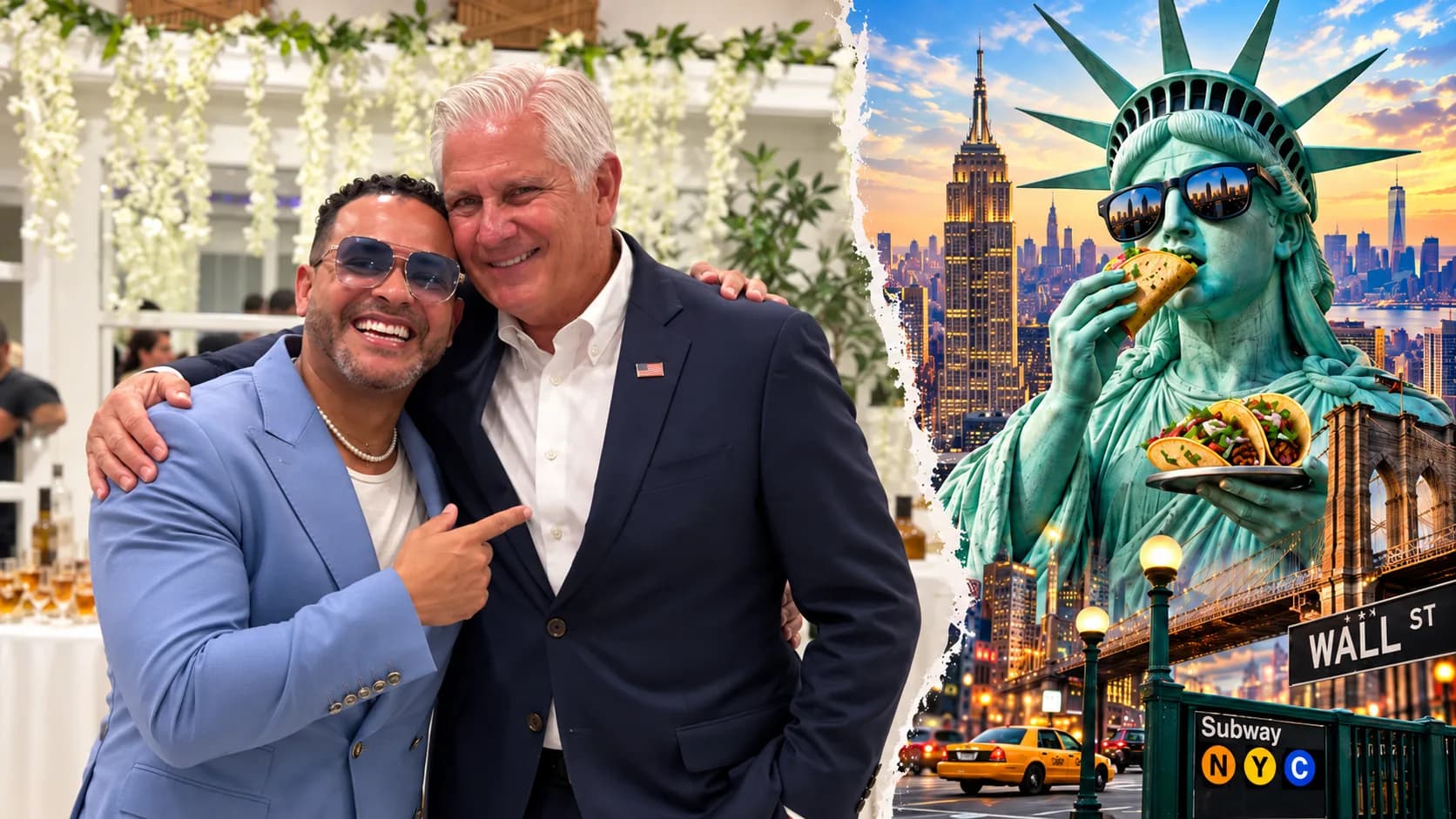
Blakeman Is Deliberately Going Into Democratic Territory
Blakeman's campaign has shown signs of adjusting its message depending on where he is campaigning.
Newsday reported in August that his advertising to New York City voters was noticeably more moderate in tone than messaging associated with his Nassau County campaigns. Blakeman has also appeared at events including the Bronx Dominican Parade as part of his outreach beyond the traditional Republican base.
That matters because the Latino electorate in New York is neither politically insignificant nor ideologically uniform.
Campaigns that treat Latino voters as a single bloc risk misunderstanding them.
Puerto Rican voters in the Bronx may have different priorities from Dominican small-business owners, Colombian immigrants in Queens, Mexican families, Cuban voters or second- and third-generation Hispanic New Yorkers.
The common thread appearing repeatedly in polling is less about party ideology than about daily life.
Latino New Yorkers Are Frustrated With the Direction of the City
A Hispanic Federation survey of 600 Latino registered voters in New York City conducted before the 2025 mayoral election found significant dissatisfaction.
Sixty-two percent said New York City was moving in the wrong direction.
Sixty-five percent said they were concerned about their family's income, savings and employment over the coming years.
The issues respondents identified most frequently were cost of living, public safety and housing affordability.
Those findings matter in 2026 because those problems have not disappeared from political debate.
Affordability remains prominent enough that Hochul announced an expansion this week of New York's Energy Affordability Program, saying millions of additional households could qualify for utility-bill discounts of as much as $500 annually.
Blakeman immediately attacked the initiative as inadequate and has made lower energy costs one of his campaign themes.
The disagreement provides a useful snapshot of the broader election.
Both campaigns know people are feeling squeezed.
They disagree sharply about the cause and the solution.
Dissatisfaction Does Not Automatically Mean a Republican Realignment
This is where the Latino story requires some care.
The same 2025 Hispanic Federation poll that showed 62% of Latino New Yorkers believing the city was headed in the wrong direction also showed Democrat Zohran Mamdani leading among Latino voters in that year's mayoral contest.
He received 48% in that survey, compared with 24% for Andrew Cuomo and 14% for Republican Curtis Sliwa.
So dissatisfaction should not automatically be interpreted as rejection of the Democratic Party.
An April 2026 Siena statewide survey similarly showed Hochul ahead of Blakeman among its Latino respondents, 49% to 22%. That poll was taken months ago, and subgroup results carry greater uncertainty than the overall statewide sample, but it remains relevant evidence when discussing claims of a wholesale partisan shift.
The more accurate conclusion is also potentially the more interesting one:
Latino voters are dissatisfied on several major issues, and both parties have reasons to compete intensely for them.
Nobody should assume their vote.
The Statewide Race Has Produced Very Different Polling Pictures
The numbers also require context.
An independent Siena University survey conducted August 3-6 among 811 likely New York voters put Hochul at 49% and Blakeman at 39%.
That same survey found 47% saying New York was headed in the wrong direction and 43% saying it was on the right track.
Among independents, 55% said the state was headed in the wrong direction.
But a more recent McLaughlin & Associates survey sponsored by Republicans produced a considerably closer result.
That poll, conducted August 27-31 among 800 likely voters, reported Hochul at 49.6% and Blakeman at 45.7%, a difference of 3.9 points. Because it was commissioned by Republican interests and did not publicly provide all of the methodological information available from independent academic pollsters, its results should be interpreted in that context.
Polling averages remain less favorable to Blakeman. FiftyPlusOne's September 15 average placed Hochul at 49.6% and Blakeman at 39.2%.
In other words, there is evidence of a competitive environment in individual surveys, but not evidence that Blakeman currently leads the statewide race.
Where Blakeman Does Have an Opening: Voter Mood
One of the more revealing findings in the Siena polling had little to do with the horse race.
When respondents were asked about personal characteristics, Blakeman's net ratings were stronger than Hochul's on being perceived as “tough,” “in touch with average New Yorkers,” “honest” and someone who “gets things done.” Hochul nevertheless maintained the overall ballot advantage and led on several policy questions, including housing affordability.
That helps explain Blakeman's strategy.
His challenge is not simply convincing voters to become Republicans.
It is convincing voters dissatisfied with conditions in New York to connect those frustrations with the governor's office.
Hochul's task is almost the reverse: persuade voters who may be unhappy with particular problems that her administration's policies remain preferable to the Republican alternative.
That battle will likely be especially intense among voters who do not strongly identify with either party.
Latino Voters Are Not a Political Possession
There is a tendency in American politics to discuss racial and ethnic groups as though political parties own them.
The data increasingly make that assumption difficult.
National polling from UnidosUS in 2026 found Latino voters heavily focused on affordability, jobs, housing and health care. But that survey also showed considerable dissatisfaction with Republicans in Washington, including 62% disapproval of Republican congressional leadership.
In New York City, meanwhile, Latino voters have expressed deep dissatisfaction with the city's direction while simultaneously supporting Democratic candidates in significant numbers.
That combination is important.
It suggests Latino voters should be understood as persuadable citizens with competing priorities, not as a permanently assigned constituency.
For Blakeman, the opportunity is to make a case around affordability, safety, taxes and quality of life.
For Hochul, the task is to defend her record and convince those same voters that her policies offer the stronger response.
The voters will decide which argument they accept.
New York’s Election May Ultimately Be About Whether Frustration Becomes Political Change
Blakeman does not enter the final stretch with the advantage in public polling.
Hochul does.
But polling also shows considerable dissatisfaction with New York's direction, particularly among Republicans and independents, while affordability continues to dominate much of the state's political conversation.
That creates a fundamentally different political question from simply asking whether New York is a blue state.
The question is how voters evaluate their own lives.
Can they afford their homes?
Can they afford their energy bills?
Do they feel safe?
Can their children afford to remain in New York?
Do they believe state government understands those concerns?
Those questions cross racial, ethnic and party lines.
They matter in suburban Nassau County.
They matter upstate.
And they matter in Latino neighborhoods across New York City.
Trump's first-ever midterm convention was built around the idea that voter enthusiasm can change the character of a midterm election. New York now provides one place to watch how that theory plays out.
With November 3 approaching, the available evidence does not establish that Latino New Yorkers have abandoned Democrats or that Republicans have captured their support.
What it does establish is something politicians in both parties would be wise to recognize:
A large number of Latino New Yorkers are unhappy with the cost and direction of life in their city, and their votes cannot simply be taken for granted.