 8 min read
 2.6k
2.6k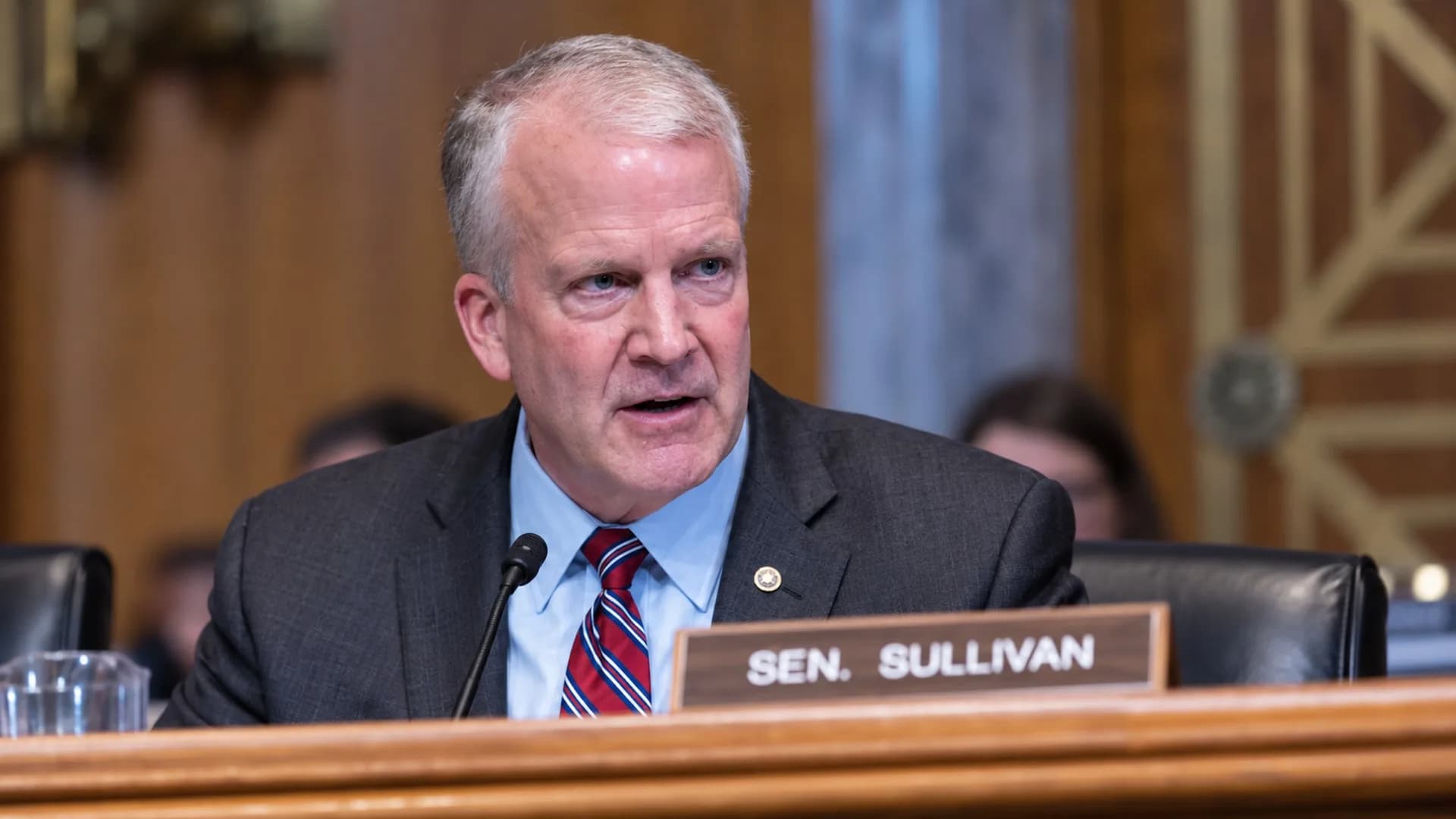
 Linkedin
 Threads
 Facebook
 X
XAlaska delivered Donald Trump one of his clearer statewide victories in 2024.
Trump received 184,458 votes, or 54.54%, while Kamala Harris received 140,026 votes, or 41.41%.
That was a margin of more than 13 percentage points.
Two years later, Republicans are trying to translate that presidential advantage into another statewide victory.
And there should be no confusion about which Republican Donald Trump is supporting.
It is incumbent U.S. Sen. Dan S. Sullivan.
Trump endorsed Sullivan ahead of Alaska's August primary, publicly warned voters not to confuse him with another candidate carrying almost exactly the same name, and later said he intended to travel to Alaska to campaign for the senator.
“Dan Sullivan's a great senator,” Trump said from the Oval Office on September 2.
That puts Alaska directly into the same political question confronting Republicans in Iowa, North Carolina and other states:
Can candidates endorsed by Trump reproduce enough of the electorate that voted for him when Trump himself is not on the ballot?
First, There Are Two Dan Sullivans
If this race already sounds confusing, it gets stranger.
The November ballot contains:
Sen. Dan S. Sullivan, the Republican incumbent endorsed by Trump.
Mary Peltola, the Democratic former congresswoman.
Daniel J. Sullivan Jr., another registered Republican who shares almost exactly the incumbent's name.
And Gerald L. Heikes, also a registered Republican.
Those four candidates are officially certified for Alaska's November 3 general election.
That unusual ballot composition matters because Alaska uses ranked-choice voting.
Voters can rank candidates rather than simply selecting one, and if nobody receives a majority of first-choice votes, lower-performing candidates are eliminated and their ballots are redistributed according to voters' subsequent preferences until someone crosses 50%.
So this is not a conventional Republican-versus-Democrat election.
The way voters rank the other candidates could become important.
Trump Has Made His Choice Very Clear
Trump entered the race because Republicans became concerned that voters could confuse the two Sullivans.
Before the primary, he explicitly endorsed Dan S. Sullivan, the incumbent, and urged Alaskans not to confuse him with Daniel J. Sullivan Jr.
Trump accused Democrats of attempting to exploit the name confusion, although Daniel J. Sullivan Jr. and Peltola have denied coordinating with each other.
Trump then went further.
On September 2, he said he planned to campaign personally in Alaska for the incumbent.
He praised Sullivan's work for the state and emphasized his own administration's relationship with Alaska.
Sullivan's campaign responded that the senator looked forward to welcoming Trump and continuing their work together.
Alaska Public Media described the incumbent as a frequent Trump ally who rarely breaks publicly with him.
So on the question of whether the incumbent is aligned with Trump, the evidence is clear:
Dan S. Sullivan is Trump's endorsed candidate.
Alaska Has Already Demonstrated Its Republican Presidential Preference
Trump's advantage in Alaska was substantial in 2024.
He received 54.54% of the vote.
Harris received 41.41%.
Trump also won all three of Alaska's Electoral College votes.
And this was not Trump's first Alaska victory.
He carried the state in each of his three presidential campaigns.
That history gives Republicans a significant pool of voters who have demonstrated a willingness to support Trump and Republican presidential candidates statewide.
But Senate elections do not always mirror presidential results.
That is exactly what makes 2026 interesting.
Mary Peltola Is Not a Typical Challenger
Democrats have a particularly recognizable candidate in Mary Peltola.
Peltola represented Alaska in the U.S. House from 2022 until 2025 and has already won statewide elections under Alaska's unusual ranked-choice system.
She lost her House seat to Republican Nick Begich in 2024, but the margin was comparatively narrow even as Trump won Alaska by double digits.
Official 2024 results show Republican Nick Begich initially receiving 48.41% of the congressional vote to Peltola's 46.37% before ranked-choice tabulation.
That demonstrates something important.
A voter choosing Trump for president was not necessarily choosing every Republican farther down the ballot.
Peltola has previously shown an ability to attract support beyond the traditional Democratic base.
That is one reason national Democrats view Alaska differently from a conventional strongly Republican state.
The Primary Produced Another Warning for Republicans
The August primary also showed why neither side can treat the general election as automatic.
Peltola finished ahead of Sullivan in the preliminary competition, while both advanced under Alaska's top-four election system.
The final general-election ballot now contains Peltola, Sen. Sullivan, Daniel J. Sullivan Jr. and Gerald Heikes.
The existence of three Republican-registered candidates does not necessarily mean Republican votes will simply split three ways permanently because ranked-choice voting allows voters to rank multiple candidates.
But it does make voter education especially important.
The incumbent's campaign must ensure supporters know that Dan S. Sullivan is the senator seeking reelection.
Trump has already been doing exactly that.
The Latest Polling Shows an Extremely Close Contest
Trump's 13-point presidential margin might suggest a comfortable Republican advantage.
The Senate polling says otherwise.
An Alaska Survey Research poll conducted August 20-23 among 1,495 likely voters found the final ranked-choice round at:
Mary Peltola: 50.6%
Dan Sullivan: 49.4%
Earlier polling has moved in both directions.
A New York Times/Siena survey conducted in June had Sullivan ahead 47% to 45%.
Other Alaska Survey Research surveys showed Peltola narrowly ahead.
The RealClearPolling average currently has Peltola at 49.7% and Sullivan at 47.7%, a two-point difference.
That is not evidence of a predetermined outcome.
It is evidence of a close election.
Why Is a Trump +13 State This Competitive?
Because Alaska politics has never fit perfectly into conventional national categories.
Alaska often votes Republican for president.
But its electorate also has a strong independent streak.
Candidates frequently emphasize state-specific issues rather than simply national party identity.
Those include:
fishing rights,
oil and natural-resource development,
federal land management,
Alaska Native priorities,
energy prices,
the Permanent Fund Dividend,
military policy,
and the cost of living in remote communities.
Peltola has attempted to build her political identity around that Alaska-first tradition rather than running exclusively as a national Democratic figure.
She even rejected an endorsement from former Vice President Kamala Harris during this campaign.
That helps explain why merely looking at Trump's 2024 margin does not completely explain the Senate race.
Sullivan Has Another Advantage: Incumbency
Dan Sullivan is not an unknown Republican challenger trying to introduce himself to Alaska.
He has been senator since 2015.
He first won the seat in 2014 and was reelected in 2020.
In that 2020 election, Sullivan received approximately 54% of the vote and defeated Democrat Al Gross by nearly 13 points.
He also enters the closing stretch with substantial campaign resources.
Federal campaign-finance tracking cited by MyRepTracker showed Sullivan with more than $7 million cash on hand through late July. Peltola had raised more overall during the cycle but reported approximately $4.6 million cash on hand during the same period.
Outside Republican organizations are also investing significantly in keeping the seat.
Trump Is Betting His Alaska Coalition Can Transfer
Trump's involvement makes the political strategy straightforward.
He carried Alaska by more than 44,000 votes in 2024.
In a state with a relatively small electorate, that is a substantial number.
The Senate contest is currently polling within only a few points.
Republicans therefore do not need to discover an entirely new electorate.
They need to determine how much of Trump's 2024 coalition can be transferred to Sullivan.
That is similar to the question Republicans face elsewhere.
In Iowa, Trump won overwhelmingly, but Ashley Hinson still has to persuade those voters to participate in a midterm.
In North Carolina, Trump carried the state three times, but Michael Whatley still has to build his own coalition.
And in Alaska, Dan Sullivan has something those candidates do not:
He is already the incumbent.
Alaska Is Still Fundamentally Different From a Blue-State Pickup Attempt
There is also a broader historical fact worth remembering.
Alaska has voted Republican for president in every election since 1968 except one, when Democrat Lyndon Johnson carried it in 1964.
Trump's 2024 result reinforced that presidential pattern.
Republicans also reclaimed Alaska's lone U.S. House seat in 2024 when Nick Begich defeated Peltola.
That means Democrats are contesting a Senate seat in a state whose recent federal voting history generally favors Republicans.
But the competitiveness of Peltola's campaign demonstrates why election outcomes cannot simply be inferred from presidential results.
Alaska's electorate has repeatedly shown that individual candidates matter.
The Same-Name Problem May Be the Weirdest Factor in the Race
There may be no Senate contest in America with a ballot complication quite like this one.
Two candidates named Dan Sullivan will appear on it.
The incumbent will appear as:
Sullivan, Dan S.
The other candidate will appear as:
Sullivan, Daniel J. Jr.
Republican officials challenged Daniel J. Sullivan Jr.'s candidacy and questioned whether it was designed to confuse voters.
The Alaska Supreme Court ultimately allowed him onto the ballot.
He maintains that his campaign is legitimate and has denied being recruited to damage the incumbent.
That controversy explains why Trump has been unusually specific when discussing the race.
He has repeatedly identified the incumbent by his ballot designation.
The November Election Will Test Two Different Political Realities
Both parties can point to legitimate evidence supporting their position.
Republicans can point to:
Trump's 54.5% statewide vote share.
His 13-point margin.
Sullivan's incumbency.
Trump's explicit endorsement.
Republican control of Alaska's House seat.
And Sullivan's previous statewide victories.
Democrats can point to:
Peltola's previous statewide wins.
Her familiarity among Alaska voters.
Her first-place showing in the 2026 primary.
And several polls showing her competitive with, or narrowly ahead of, Sullivan.
Those facts are why Alaska cannot be described simply as another predictable red-state Senate race.
Trump Has Already Made the Republican Choice Clear
For voters trying to understand the crowded ballot, there is at least one question that has already been answered.
Donald Trump's candidate is not one of the lesser-known Republican challengers.
It is not the other Daniel Sullivan.
It is Sen. Dan S. Sullivan, the incumbent.
Trump endorsed him before the primary and has now said he intends to campaign personally in Alaska.
The much larger question will be whether Alaska's 2024 presidential electorate behaves similarly in a Senate midterm.
Trump won the state by more than 13 points.
Sullivan's contest is currently much closer.
That gap between the presidential result and the Senate polling may be the entire story of Alaska's 2026 election.
Trump already demonstrated the size of the Republican vote in Alaska.
November will show how much of that coalition remains attached to the Republican senator when Trump himself is not on the ballot.