 3 min read
 17
17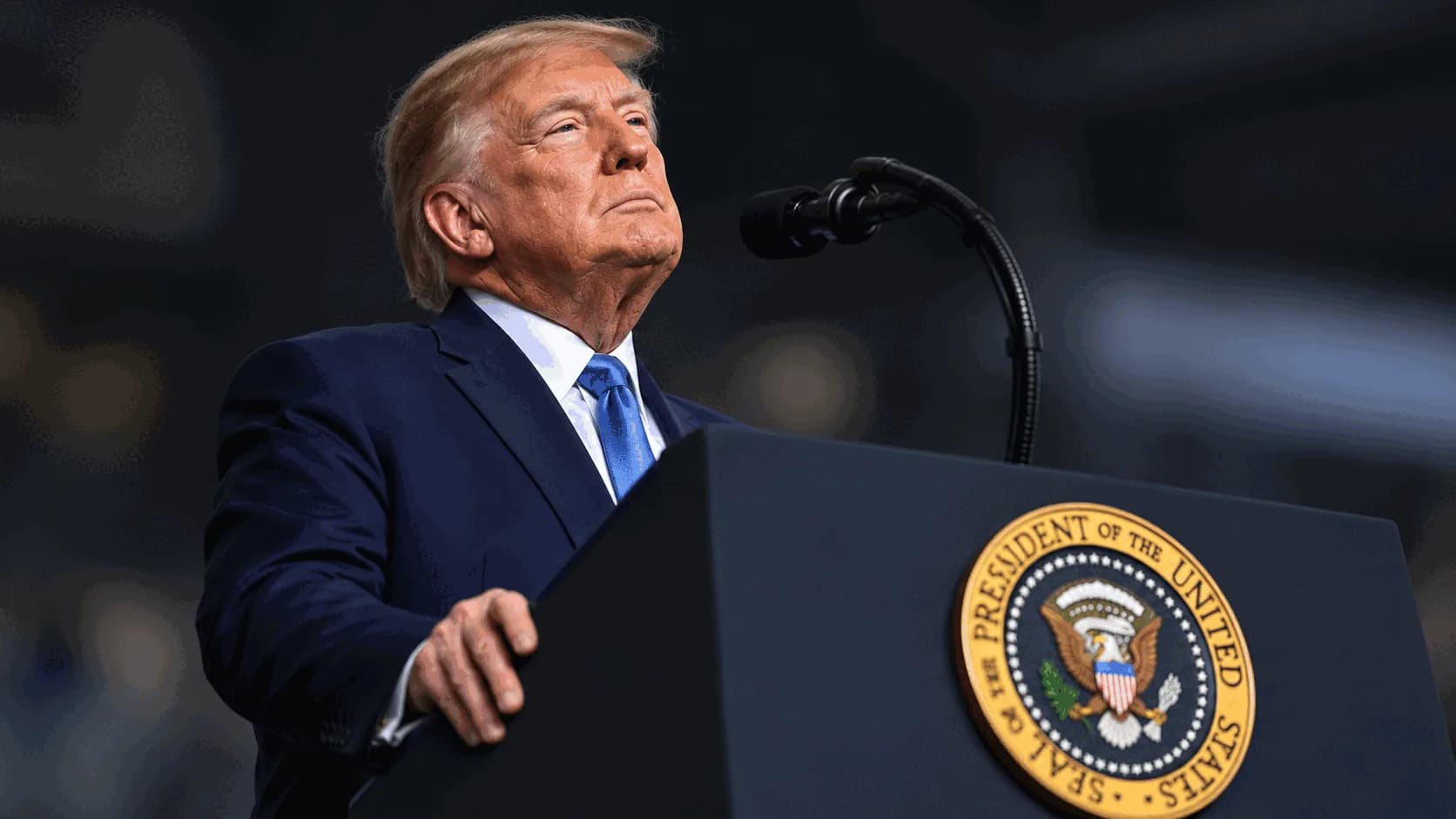
 Linkedin
 Threads
 Facebook
 X
X
One sentence from President Donald Trump’s Nebraska rally immediately became the headline.
Speaking about the costs of the war with Iran, Trump said keeping America safe was worth the economic pressure and then referenced the possibility of Iran being able to “take out” Los Angeles or San Diego.
California Gov. Gavin Newsom, Los Angeles Mayor Karen Bass and San Diego Mayor Todd Gloria quickly condemned the remarks.
CNN framed the comments as Trump appearing to suggest the two cities were expendable.
But the White House says that interpretation misses what Trump was arguing, he always uses real data he has available.
Communications Director Steven Cheung said Trump was not calling for Iran to attack American cities; he was making the case that preventing Iran from gaining the ability to threaten American cities is precisely why the administration considers confronting Tehran necessary.
That context matters.
The Intelligence Community Has Been Warning About Iran
The concern about Iran threatening Americans is not something invented at a campaign rally.
The 2026 Annual Threat Assessment of the U.S. Intelligence Community says Iran has demonstrated the ability to develop lethal operations against Americans both inside the United States and overseas and assesses that Tehran could pursue those efforts again.
The same assessment warns that Iran has researched missile technologies that could eventually threaten the U.S. homeland, although it does not say Iran currently possesses an operational intercontinental missile capable of destroying Los Angeles or San Diego.
That distinction is important.
The intelligence supports the administration’s broader argument that Iran represents a homeland-security threat.
It does not establish that California currently faces an imminent Iranian missile strike.
The FBI is even more direct about the existing threat.
Federal officials say Iran has plotted assassinations, conducted surveillance, pursued cyberattacks and targeted Americans on U.S. soil. The FBI continues operating an Iran Threats Mission Center specifically to coordinate intelligence and operations against those activities.
That is the national-security debate Americans should actually be having.
Not whether a sentence at a rally sounded inflammatory.
But what level of risk the United States is willing to tolerate from a hostile government that has already demonstrated a willingness to target Americans.
California’s Cost of Living Is a Different Debate
There is another issue becoming mixed into the political argument: affordability.
Trump acknowledged that the Iran conflict has temporarily contributed to higher energy prices.
That is real.
Global oil prices respond to war, shipping disruption and geopolitical risk.
But California’s unusually high cost of gasoline did not begin with the current administration.
California’s own Energy Commission says its fuel prices are structurally higher because of the state's isolated fuel market, special gasoline requirements, environmental programs and state and local taxes.
Beginning July 2026, California’s state gasoline excise tax reached 63.4 cents per gallon, on top of the 18.4-cent federal gasoline tax and applicable sales taxes.
California also has its own progressive personal income-tax structure reaching 12.3%, with an additional 1% tax on taxable income above $1 million, producing a maximum rate of 13.3%.
The state’s base sales-tax rate is 7.25%, and local jurisdictions can add district taxes on top of it.
Los Angeles-area consumer prices were still 3.6% higher than a year earlier in August, according to the Bureau of Labor Statistics.
None of that means Washington has no influence over affordability. Federal fiscal policy, interest rates, trade, energy policy and international conflict all affect household costs.
But blaming every high price in Los Angeles on the president ignores decades of state and local decisions involving taxes, housing, energy and regulation.
The same distinction applies farther north.
Seattle’s combined sales-tax rate is currently 10.55%, according to Washington’s Department of Revenue. Washington does not currently have a general individual income tax, although a 9.9% tax on annual adjusted gross income above $1 million is scheduled to begin in 2028.
These are state and local policy choices, not White House tax rates.
This Is What Elections Are Supposed to Decide
The real political question heading into the midterms is not whether Americans liked Trump’s choice of words.
It is what policies voters want governing national security, energy, taxation and the cost of living.
One administration may argue that confronting Iran aggressively reduces a much larger future risk to Americans.
Critics may argue that the military and economic costs are too high.
States such as California may choose higher taxes and stricter environmental policies because voters there value the programs those revenues finance.
Other states may choose lower-tax models and fewer regulations.
Those are legitimate political differences.
But voters deserve to see each one clearly.
The Iran debate is about whether American policy is reducing a documented national-security threat.
The affordability debate is about the accumulation of federal, state, local and global economic pressures.
Mixing those issues into one inflammatory headline may generate clicks.
Understanding where the threats—and the costs—actually come from gives voters something more valuable:
context.