


 3 min read
 4
 Linkedin
 Threads
 Facebook
 X

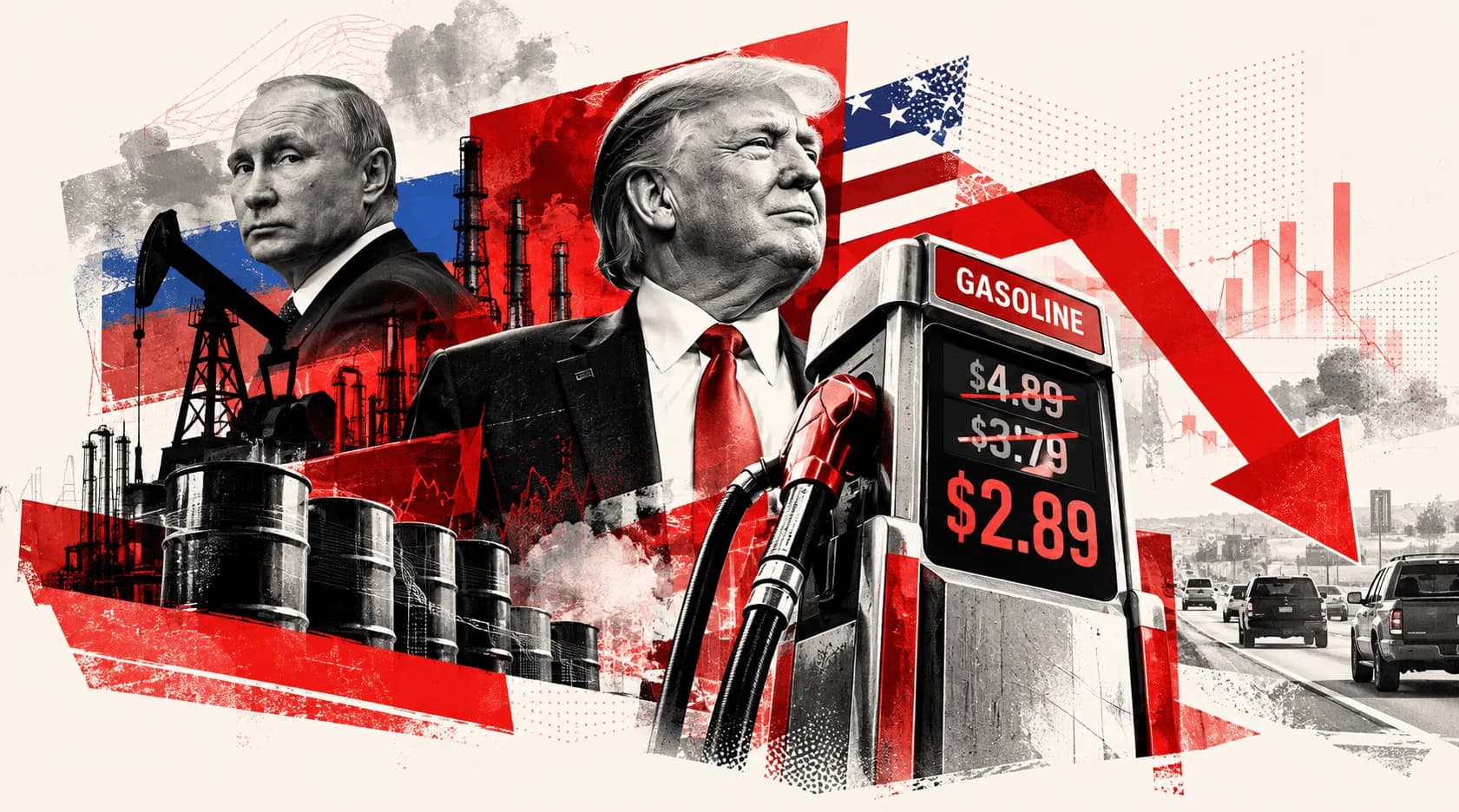
What does a gallon of diesel have to do with the war in Ukraine, the price of groceries in America, and President Donald Trump's relationship with Vladimir Putin?
More than most Americans might realize.
On October 9, Trump announced an agreement under which Russia would release additional diesel fuel into American and international markets.
The response was immediate. Critics accused the administration of weakening sanctions against Moscow, undermining Ukraine, and rewarding Putin while Russian forces continue their military offensive.
But there is another dimension to the decision that deserves examination.
The administration is attempting to address an international fuel shortage while keeping economic and diplomatic pressure available as instruments of negotiation.
Understanding that strategy requires looking beyond the agreement itself.
Why Diesel Has Become a National Economic Priority
On October 19, the average American retail price of diesel reached $6.28 per gallon, according to the U.S. Energy Information Administration.
That was approximately 10 cents higher than the previous week.
For many Americans, gasoline prices are the most visible measure of energy affordability. But diesel plays a different—and economically significant—role.
Farmers depend on diesel-powered equipment to harvest crops. Trucking companies transport food, medicine, building materials, and consumer products across the country. Construction companies depend on heavy machinery, while railroads move commodities essential to American manufacturing.
When diesel prices increase, the effects can spread through transportation costs, business expenses, and eventually consumer prices.
The problem has been intensified by disruptions to Middle Eastern energy supplies, damage to Russian refineries, and limited refining capacity.
According to the EIA, American refineries were already operating near maximum capacity in September.
Producing more crude oil does not automatically solve a diesel shortage when refineries cannot process enough fuel.
That distinction helps explain the administration's decision to seek additional supplies internationally.
What Trump Actually Negotiated
Following his discussion with Putin, Trump announced that Russia had agreed to release diesel in several stages.
The announced quantities included 300,000 metric tons immediately, another 500,000 tons in November, one million tons afterward, and potentially three million additional tons depending on Russian refinery conditions.
On October 9, the Treasury Department issued General License 135, authorizing certain transactions involving Russian-origin diesel, including imports into the United States, through April 7, 2027.
This was a significant sanctions exception.
However, authorization to import fuel is not the same as proof that the promised volumes have been delivered or that prices have already fallen.
Energy analysts remain skeptical that the proposed shipments alone can substantially reduce global diesel prices.
The administration's broader strategy depends on whether additional supply actually reaches the market.
Why the White House Is Preserving Negotiating Flexibility
A second development attracted considerable criticism.
On October 16, Trump signed an executive order waiving new sanctions and tariffs under the Lindsey O. Graham Sanctioning Russia and Iran Act of 2026.
That legislation, signed into law on September 18, had strengthened Washington's ability to impose economic penalties against Russia and certain countries purchasing Russian energy.
The new waiver was broader than the diesel authorization.
Nevertheless, the White House did not revoke every existing sanction against Russia.
In October 2025, the Treasury Department sanctioned major Russian oil companies Rosneft and Lukoil, citing Moscow's failure to make meaningful progress toward peace.
The October 16 executive order expressly preserved sanctions imposed under existing Russia-related emergency authorities.
Most importantly, the administration submitted an explanation to Congress identifying its central objective: maintaining flexibility for negotiations intended to produce a durable peace between Russia and Ukraine.
Energy Secretary Chris Wright described the diesel arrangement as an incentive for Russia to reduce hostilities.
The underlying calculation is straightforward.
Economic restrictions can be used to impose costs, while carefully chosen exceptions can become incentives for specific concessions.
That does not guarantee success. Russia must still demonstrate meaningful changes in its conduct for the negotiating strategy to produce results.
But it explains why an administration might combine sanctions enforcement with limited economic openings rather than treating every commercial transaction as a permanent diplomatic commitment.
The Broader Energy Strategy Started Before the Russia Deal
The Russian diesel agreement was not the administration's first response to rising fuel costs.
Four days earlier, on October 5, Trump signed an executive order directing Treasury to examine temporary diesel excise-tax deferrals and providing relief from specified penalties associated with highway use of dyed diesel.
The order also instructed federal agencies to coordinate with farmers, fuel distributors, and state governments.
Deferred taxes are not automatically forgiven. The administration directed Treasury to explore whether permanent forgiveness could be authorized.
Taken together, the two actions illustrate the White House's approach.
The first addresses certain domestic tax and regulatory costs.
The second attempts to expand available international supply.
Neither measure can independently eliminate the global shortage, but both target identifiable factors influencing the price of diesel.
The Real Test Is Whether the Strategy Produces Results
Ukraine's government argues that allowing additional Russian energy exports could strengthen Moscow's finances and diminish economic pressure to end the war.
Several Republican and Democratic lawmakers have raised similar concerns.
Those objections concern a measurable risk: Russian petroleum revenue can contribute to the government's resources while the war continues.
The administration therefore faces two competing objectives—lowering costs for American businesses and consumers while preventing economic engagement from rewarding continued Russian aggression.
The October 16 waiver retains the possibility of renewed penalties, but it does not specify an automatic expiration date.
That makes future decisions important.
Will the additional diesel actually reach international markets? Will fuel prices respond? Will negotiations produce reciprocal commitments from Moscow? And can Washington maintain meaningful sanctions leverage?
Those outcomes, rather than the announcement alone, will determine whether the strategy succeeds.
For American families, the reasoning behind the policy is understandable. The cost of war is not confined to military budgets or foreign capitals. It can reach farms, trucking businesses, factories, and supermarket shelves.
President Trump's decision reflects an effort to manage those economic consequences while seeking a diplomatic path toward ending the war.
It is a consequential approach with risks, but it should be evaluated as part of a broader strategy—not merely as an isolated purchase of Russian fuel.
The true measure of the diesel agreement will not be whether Washington and Moscow signed a deal. It will be whether Americans experience economic relief while diplomacy moves the conflict closer to peace.