



 3 min read
 3
 Linkedin
 Threads
 Facebook
 X

Two South Korean technology giants are moving forward with plans to manufacture more advanced memory chips in China, highlighting an increasingly complicated reality in the global semiconductor industry: American technology restrictions are reshaping where companies invest, while artificial intelligence is making advanced computing components more valuable than ever.
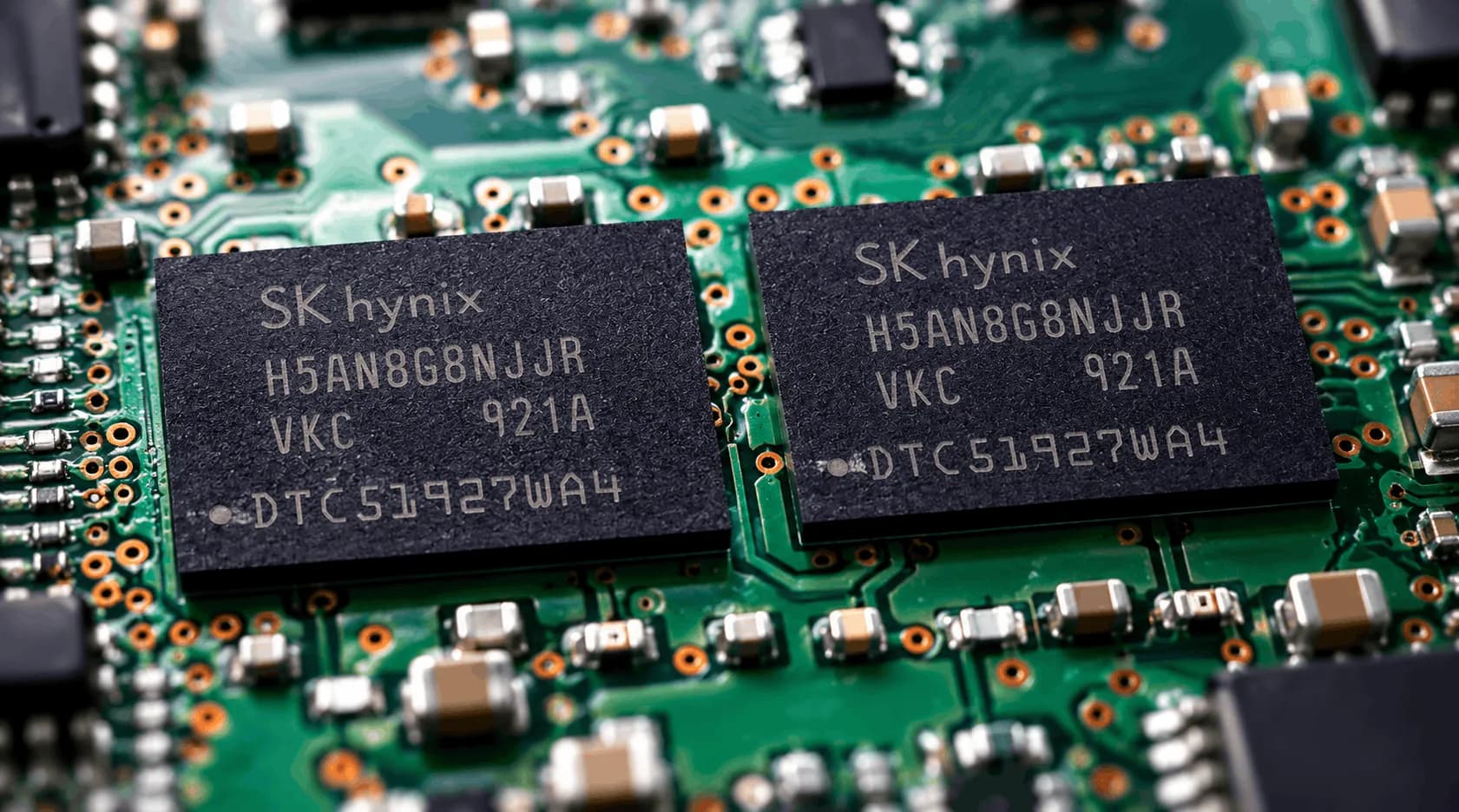
According to an October 21 Reuters investigation, Samsung Electronics and SK Hynix are upgrading manufacturing operations in China to produce more sophisticated NAND flash memory chips.
The companies confirmed that modernization work is underway and said they are coordinating with the U.S. government to comply with American export regulations.
The developments come as China's domestic semiconductor industry gains ground and global demand for AI-related computing infrastructure accelerates.
For Washington, the situation presents an important strategic question.
How does America protect its technological advantages while maintaining influence over an international semiconductor industry that still depends heavily on American equipment and innovation?
Why These Memory Chips Matter to the AI Revolution
When Americans hear about artificial intelligence chips, they often think of the advanced processors designed by companies such as Nvidia.
But those processors are only one part of the infrastructure supporting AI.
Modern computing systems also require enormous amounts of memory and storage.
NAND flash memory stores information even when a device is powered off. It is widely used in smartphones, laptops, solid-state drives, and data centers.
As companies build more sophisticated AI systems, demand for fast and efficient storage continues growing.
Manufacturers are responding by developing memory chips with increasingly complex three-dimensional structures.
Instead of placing components only across a flat surface, engineers stack memory cells vertically in hundreds of layers.
More layers can increase storage density and improve manufacturing efficiency, allowing companies to store more information within a limited physical area.
These improvements matter to businesses operating data centers, manufacturers producing electronic devices, and consumers who depend on increasingly sophisticated technology.
They also explain why the world's leading memory-chip producers are investing in more advanced production processes.
Samsung's Plan: 286-Layer Chips Made in China
Samsung is upgrading its semiconductor facility in Xi'an, northwestern China.
According to Reuters, the plant currently manufactures NAND chips with approximately 200 layers and accounts for roughly 40% of Samsung's global NAND production.
The company is working to transition the facility toward 286-layer V9 NAND technology.
Under an internal project known as Monami, Samsung aims to reach monthly production of approximately 5,000 wafers using the advanced process by December 2026.
The reported target increases to 40,000 wafers per month by December 2027.
These are production goals reported by sources familiar with the plans, rather than completed manufacturing milestones.
Samsung told Reuters that the modernization is intended to serve global customers, including American buyers, while complying with U.S. export requirements.
The company also emphasized that it is not constructing new factories or expanding the facility's overall production capacity.
That distinction reveals an important part of modern semiconductor competition.
Companies are not simply racing to manufacture more chips. They are trying to manufacture better chips using increasingly sophisticated processes.
SK Hynix Is Making a Similar Move
Samsung is not alone.
SK Hynix is upgrading its manufacturing operations in Dalian, northeastern China.
The facility currently produces NAND chips with approximately 192 layers, according to people familiar with its operations.
The company is preparing to manufacture products with 240 layers or more.
Reuters also reported that SK Hynix may seek American authorization to conduct research involving NAND technology exceeding 300 layers.
The Dalian facility became part of SK Hynix's operations following its acquisition of Intel's NAND memory business in 2021.
That history demonstrates how internationalized the semiconductor industry has become.
A facility originally developed under American ownership is now operated by a South Korean company on Chinese territory, using technology and equipment governed partly by American export rules.
The factory's future therefore depends on more than engineering capability.
It also involves trade policy, international relations, licensing decisions, and competition for global customers.
China's Domestic Competitors Are Catching Up
The urgency behind these upgrades becomes clearer when examining the rise of Chinese manufacturer Yangtze Memory Technologies, commonly known as YMTC.
According to market research firm Omdia, cited by Reuters, YMTC controlled approximately 38.5% of China's NAND market during the second quarter of 2026.
That represents a substantial increase from its estimated 28% share for 2025.
Samsung's share declined from 36% to approximately 33.5%, while SK Hynix's share fell from 20% to 17%.
These figures describe market share within China, not worldwide semiconductor market share.
Nevertheless, the trend is important.
YMTC has developed increasingly competitive memory products, including limited production of 294-layer NAND technology, according to sources familiar with its plans.
The company is also pursuing designs exceeding 300 layers.
This progress demonstrates why technology restrictions alone do not eliminate competitive pressure.
Chinese manufacturers continue investing in domestic research, production equipment, and engineering capabilities.
For Samsung and SK Hynix, maintaining competitive products in China is becoming increasingly important as local rivals improve.
For the United States, China's progress raises broader questions about how export controls influence the development of alternative technology supply chains.
Washington Still Holds a Powerful Advantage
America's role in this story is especially significant.
Although the factories are located in China and operated by South Korean companies, portions of their production systems depend on American semiconductor manufacturing equipment.
Advanced chipmaking requires specialized machines capable of depositing materials, etching microscopic structures, and controlling extraordinarily precise manufacturing processes.
American companies supply important technologies used in these operations.
That gives Washington considerable influence over what equipment can be transferred to certain overseas facilities.
In August 2025, the U.S. Commerce Department announced restrictions ending special export privileges previously granted to selected foreign-owned chip factories in China.
Those factories subsequently became subject to individual licensing requirements for covered American equipment and technologies.
The Bureau of Industry and Security stated that licenses could support continued operation of existing facilities, while indicating that it did not intend to authorize capacity expansions or technological upgrades.
Reuters could not establish the full extent of the licenses granted for the upgrades now being reported.
Samsung and SK Hynix maintain that their activities comply with applicable U.S. rules.
The underlying strategic calculation is clear: American policymakers want to preserve U.S. technological advantages while maintaining oversight of equipment used in advanced semiconductor production abroad. <Cite refs={["turn648055search12","turn648055search13"]}/>
The Bigger Question: Where Will the Next Generation of Chips Be Made?
The semiconductor industry is no longer simply a commercial contest between manufacturers.
It has become central to national security, industrial development, artificial intelligence, and international economic influence.
Advanced computing supports financial systems, medical research, communications networks, automobiles, and military technology.
That makes semiconductor supply chains strategically important.
The United States has responded by pursuing domestic manufacturing investments while maintaining export controls on selected advanced technologies.
South Korean manufacturers must navigate those restrictions while serving international markets.
China, meanwhile, is investing in its domestic semiconductor capabilities to reduce reliance on foreign suppliers.
These strategies create an increasingly complex global marketplace.
For American businesses, reliable chip supplies influence production costs and access to advanced computing.
For American workers, domestic semiconductor investment creates opportunities in engineering, construction, specialized manufacturing, and equipment maintenance.
For national security, maintaining expertise in semiconductor design, manufacturing equipment, and advanced production is an important part of technological leadership.
The Future of AI Depends on More Than Software
Samsung and SK Hynix's Chinese factory upgrades reveal a fundamental truth about artificial intelligence.
The future of AI depends on physical infrastructure: chips, storage, energy, manufacturing equipment, and highly specialized workers.
As competition intensifies, countries and companies are pursuing different strategies to secure those capabilities.
China is expanding domestic semiconductor technology. South Korean companies are modernizing international production. The United States is using industrial investment and export policy to protect strategically important technological advantages.
The outcome will influence where computing infrastructure is manufactured, who supplies advanced components, and which economies capture the industries built around them.
For America, the long-term opportunity lies in strengthening the entire technology ecosystem, from research laboratories and chip designers to equipment manufacturers and domestic factories.
The global chip race is about far more than making smaller, faster electronics. It is about who builds the infrastructure of the artificial intelligence economy—and who will possess the industrial strength to lead the technologies of tomorrow.