


 3 min read
 6
 Linkedin
 Threads
 Facebook
 X

American manufacturing is gaining momentum, and new economic data suggests the recovery is reaching workers as well as factory owners.
An October 22 report from the White House Council of Economic Advisers (CEA) highlights improving factory employment, stronger purchasing power for industrial workers, and accelerating investment in domestic production.
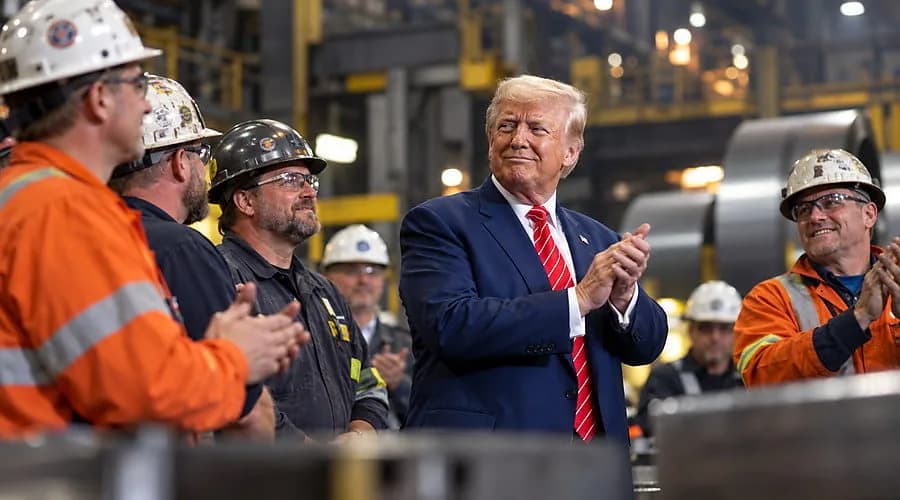
The analysis comes as President Donald Trump advances an economic agenda built around tax incentives, trade policy, deregulation, and expanded American manufacturing.
The significance extends beyond the factory floor. Manufacturing supports entire networks of suppliers, construction firms, transportation businesses, and local communities.
When America builds more of what it needs at home, the benefits can extend from industrial investment to family paychecks and national economic security.
Manufacturing Jobs Are Moving in the Right Direction
According to the Bureau of Labor Statistics, manufacturing employment increased by 72,000 positions from its December 2025 low through September 2026.
The White House reports that durable-goods manufacturing accounted for 101,000 additional jobs during 2026, including gains in metals and transportation equipment.
These industries manufacture the machinery, industrial components, vehicles, and materials needed throughout the American economy.
The improvement follows a difficult period for manufacturing employment, which declined by more than 200,000 jobs during the final two years of the previous administration, according to the CEA.
Independent business surveys also indicate expansion.
The Institute for Supply Management reported a September manufacturing index of 54.5, marking nine consecutive months of growth. New orders and production remained firmly in expansion territory.
Together, the employment and production figures point toward renewed industrial activity.
Higher Wages Mean More Purchasing Power
For American workers, the most meaningful economic improvement is often what remains in their paycheck after everyday expenses.
The CEA estimates that inflation-adjusted annual earnings have increased by approximately $2,400 for manufacturing workers and $3,800 for construction workers since Trump returned to office.
Because these figures account for inflation, they represent estimated improvements in purchasing power rather than simply larger nominal paychecks.
For families managing mortgages, groceries, transportation, and childcare, additional real income can strengthen household financial flexibility.
The administration's overtime tax deduction offers another benefit to eligible workers.
Under IRS rules, qualifying taxpayers may deduct the federally required overtime premium, subject to annual limits of $12,500 for individual filers and $25,000 for joint filers, with income restrictions.
The deduction does not make every dollar of overtime earnings tax-free, but it can reduce federal income taxes for eligible households.
Why Factory Construction Matters for America's Future
One of the most important indicators of industrial investment appears before a factory begins producing anything: construction.
New manufacturing facilities require electricians, welders, engineers, equipment installers, concrete suppliers, and specialized contractors.
The White House reports that factory construction employment has increased by more than 111,000 positions since Trump took office.
These projects can generate employment during construction while establishing infrastructure for future production.
The administration argues that tariffs, immediate deductions for qualifying investments, and business tax provisions are encouraging companies to manufacture more products domestically.
For businesses, investment decisions also depend on market demand, financing costs, available workers, and dependable energy supplies.
The opportunity is to convert today's construction projects into long-term manufacturing capacity.
Manufacturing Is a National Security Priority
The CEA identifies aerospace, metals, aircraft equipment, and energy-related industries as strategically important sectors.
America depends on these industries to manufacture aircraft, transportation systems, defense equipment, and essential infrastructure.
Greater domestic capacity can reduce vulnerabilities associated with overseas production and international supply disruptions.
It also creates opportunities for technical colleges, apprenticeships, and skilled workers.
When manufacturers expand, surrounding communities can benefit through additional demand for housing, restaurants, transportation, maintenance, and professional services.
That connection between industrial production and local prosperity helps explain why manufacturing remains central to America's economic strategy.
Building an Economy That Produces
The new analysis presents encouraging signs: manufacturing jobs have increased from their recent low, factory activity has expanded for nine consecutive months, and inflation-adjusted earnings have improved for industrial workers.
These gains provide a foundation for further investment, although announced corporate commitments and projected economic benefits are distinct from completed factories and realized employment.
The administration's long-term objective is to translate industrial expansion into lasting American production, stronger supply chains, and opportunities for future generations.
For workers, the most important results will be durable careers and increasing purchasing power. For entrepreneurs, they will be new customers and expanding markets.
America's manufacturing resurgence is about more than restoring factories. It is about rebuilding the productive strength that supports good jobs, competitive businesses, resilient communities, and a more prosperous future for American families.