3 min read
 30
30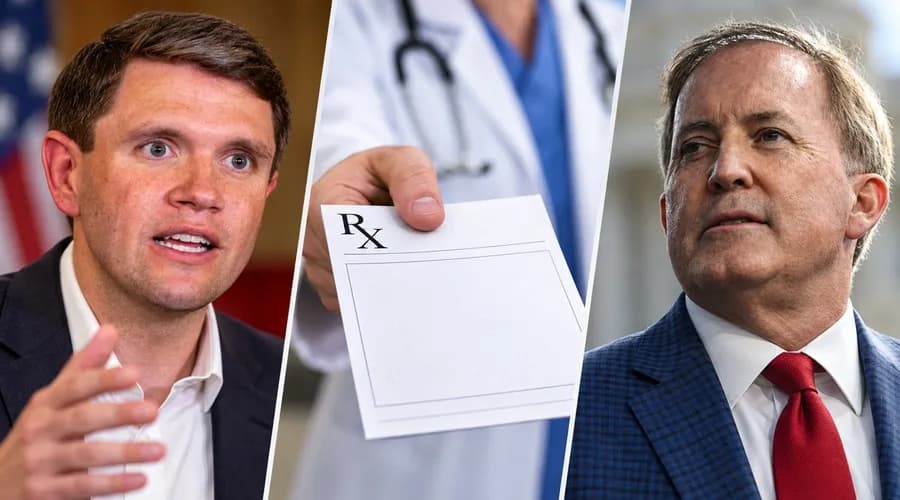
 Linkedin
 Threads
 Facebook
 X
X
Nine days away from the public campaign trail. Forty-seven seconds of recorded telephone audio. A psychiatric hospital in Ohio. And suddenly, one of America's most closely watched Senate races was consumed by questions about Democratic candidate James Talarico.
The controversy began with something ordinary enough: an illness.
Talarico last appeared publicly on September 30, participating virtually in a business forum after announcing that he had contracted influenza. He then remained absent from public appearances until October 9, when he returned at the Austin City Limits music festival.
In an ordinary month, that interruption might have attracted little attention. But October is not an ordinary month for a candidate seeking to become Texas's first Democratic U.S. senator in nearly four decades.
With Election Day approaching, the absence became political ammunition.
President Donald Trump questioned Talarico's whereabouts. Republican nominee Ken Paxton's campaign demanded proof that the candidate was available and even established a telephone tip line seeking information about his appearances.
But the story became considerably more explosive on October 11.
The Recording That Ignited the Controversy
Political commentators Nick Sortor and Rhein Amacher circulated a recording they claimed showed that Talarico had received treatment at the Lindner Center of Hope, a psychiatric facility in Mason, Ohio.
In the widely shared excerpt, a woman apparently answering the facility's telephone suggested that someone named James Talarico had been discharged.
Talarico also denied ever visiting Ohio, while his campaign maintained that he had been recovering from influenza at home in Austin.
These facts matter.
The existence of a telephone recording with an employee is established.
The Campaign's Communication Problem
There is, nevertheless, a legitimate political story surrounding the candidate's absence.
The New York Post reported that leaked messages from a group of Talarico volunteers revealed concerns about losing campaign momentum during the final weeks before Election Day.
That is significant because political campaigns operate on continuity, public visibility, and confidence among organizers.
A candidate who cancels appearances during a closely watched Senate race creates logistical challenges for volunteers, donors, and campaign staff. The longer the absence, the greater the opportunity for political opponents to control the conversation.
Talarico's campaign did communicate that he was ill, and the candidate had appeared virtually before stepping away. However, knowing that news outlets were questioning his whereabouts, how could his campaign allow one day to pass, then two, three, four, five, six, seven, eight, then nine. nearly 2 weeks without directly addressing the growing speculation? And then, after all that silence, to simply reappear at a music festival as though nothing had happened, without acknowledging the concerns surrounding his absence, shows a troubling lack of respect for his own campaign staff, volunteers, supporters, and ultimately, the voters he is asking to represent.
Still, the episode illustrates a vulnerability in modern political communication: even a legitimate absence can become a national controversy when information travels faster than explanations, and the candidate seems to ignore for days.
The campaign's eventual response was forceful. It characterized the hospital allegation as a conspiracy theory, while Talarico personally gave interviews disputing the story.
The controversy intensified on October 9 when Republican Senate candidate Ken Paxton's campaign formally requested a doctor's note from the Dallas urgent care facility where Talarico said he had been diagnosed with influenza. Paxton also requested a dated video and records of Talarico's return flight from New York. His campaign stated that none of those documents had been provided. As of this FPTN reporting, no doctor's note has been publicly verified or released. While Talarico has a right to medical privacy, a voluntary, limited confirmation from his physician could have helped address questions about his absence without exposing his private medical history. Instead, the unresolved request gave his political opponents another opportunity to challenge the campaign's handling of the situation.
Texas Deserves a Debate About Convictions
There is a larger issue worth examining.
Texas voters are selecting someone who will help determine federal policy on immigration, energy, taxation, religious liberty, education, and constitutional authority.
Talarico has frequently presented his political worldview through the language of Christianity. His interpretation of faith, however, differs substantially from that of many religious conservatives.
Many pastors and Christian conservatives see Talarico as a "wolf in sheep's clothing." He presents himself as a man guided by Christian values while advocating for transgender-related policies involving minors and suggesting that parents who refuse to affirm their child's gender identity are abusive. To these critics, such positions stand in direct conflict with their understanding of Christianity, which teaches us to welcome children to Jesus, protect their innocence, honor parental responsibility, and preserve the unity of the family. They question how someone can claim to defend Christian values while supporting policies they believe undermine those very principles.
Those disagreements are legitimate subjects for debate.
His previous statements on gender identity, legislative votes concerning medical interventions for transgender minors, and recent campaign positions have drawn scrutiny. Those records can be examined directly, without relying on rumors about his private medical life.
Indeed, whether someone has sought mental healthcare is not, by itself, evidence of incapacity to serve in public office.
For Texans who regard faith as central to public life, that distinction is particularly meaningful. Religious conviction can inspire vigorous disagreement about public policy while also requiring truthfulness, compassion, and respect for human dignity.
The phrase Texas is holy carries a responsibility. It cannot merely describe the political values someone wants to defend. It must also describe the standards of conduct they are prepared to uphold.
The Real Test Comes Before November 3
The controversy surrounding Talarico demonstrates how quickly an unexplained campaign interruption can become a national political spectacle.
Republicans have raised questions about his public absence. His own volunteers reportedly expressed concern about campaign momentum. A viral recording produced a serious allegation that the hospital itself has now explicitly denied.
These developments are newsworthy and expose what appears to be a meltdown within Talarico's campaign.
But the final political verdict will not come from a controversial recording, a wave of social-media reactions, or videos of Talarico suggesting that parents who refuse to affirm their children's gender identity are abusive. The real verdict will come at the ballot box on November 3, when Democrats and Republicans alike will decide where they stand on issues that go to the very heart of our humanity.
This campaign is no longer simply about individual candidates. It is about what they represent, the values they defend, and the policies they intend to take to Washington—policies that could directly affect the lives of babies, toddlers, and young children growing up under the roofs of homes across Texas.
If Texas is holy, then Texans must be ready to stand for their convictions and show up at the ballot box like never before.