3 min read
 1
1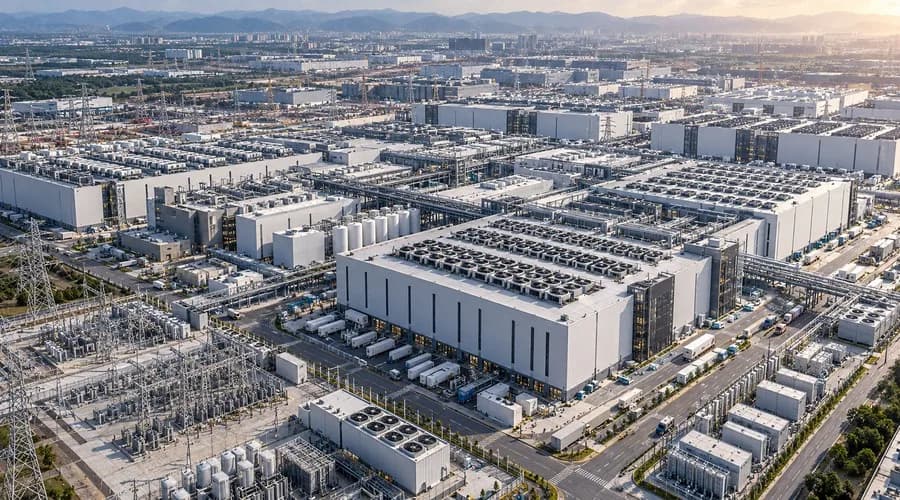
 Linkedin
 Threads
 Facebook
 X
X
In a city called Ulanqab, near China's Gobi Desert, an extraordinary transformation is underway.
Nearly 90 data centers are planned in a city of fewer than two million residents. Industrial parks once surrounded by agricultural land are becoming massive computing complexes, powered by enormous electricity infrastructure and connected to China's expanding artificial intelligence economy.
Much of one densely packed industrial park was constructed in approximately two years.
According to CNN's October 13 investigation, Beijing recently announced a $560 billion, five-year plan to expand information infrastructure, including computing facilities.
China is not merely developing another technology.
It is building the physical infrastructure necessary to become an artificial intelligence superpower.
And while these enormous facilities rise across China, American communities are increasingly debating whether similar projects should be allowed in their own neighborhoods.
The contrast reveals something much bigger than a disagreement over construction permits.
It exposes two radically different approaches to industrial development—and an urgent question about America's future.
The Next Economic Superpower Will Run on Electricity
Americans often imagine artificial intelligence as a chatbot answering questions on a smartphone.
But behind that screen sits an industrial ecosystem requiring billions of dollars in infrastructure.
Data centers require advanced semiconductors, enormous electricity supplies, transformers, cooling systems, high-speed networks, specialized construction workers, and highly trained engineers.
The economic consequences stretch across entire industries.
An electrical contractor receives new business. Manufacturers supply power equipment. Construction companies hire skilled workers. Local suppliers provide transportation, materials, security, and logistical support.
And once the computing infrastructure is operating, entrepreneurs can build businesses that use artificial intelligence in medicine, manufacturing, agriculture, finance, education, and national defense.
That is the opportunity China is pursuing.
But America is not starting from behind.
Stanford University's 2026 AI Index reports that the United States hosts approximately 5,427 data centers, more than ten times the total of any other country. American private investment in AI reached nearly $286 billion in 2025, substantially exceeding China's reported private investment.
America possesses enormous advantages in technology companies, entrepreneurship, access to advanced chips, and investment capital.
The danger is not that China has already won.
The danger is allowing America's existing advantages to erode while China builds the infrastructure necessary to close the gap.
Trump, Texas, and the Infrastructure Behind American AI
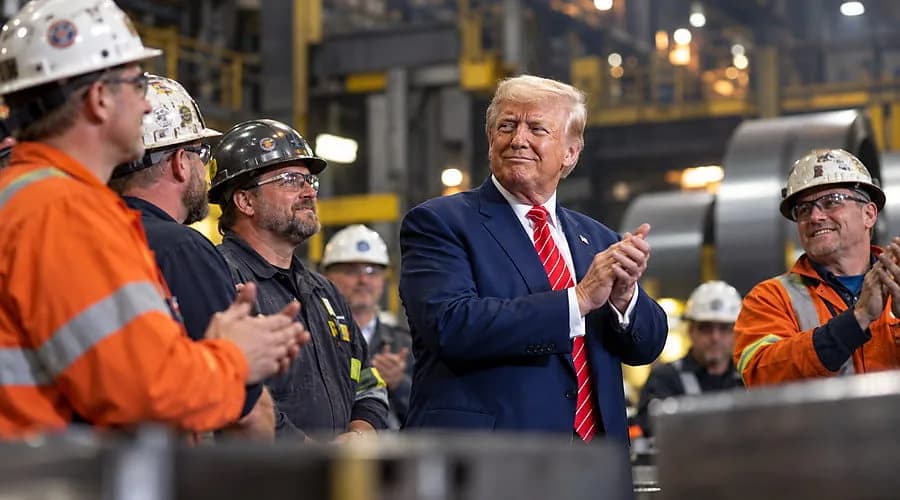
The Trump administration has made accelerating American AI infrastructure an explicit national priority.
In July 2025, the White House released America's AI Action Plan, calling for faster permitting of data centers, semiconductor manufacturing facilities, and electricity infrastructure.
The administration also issued an executive order to accelerate federal permitting for large-scale AI facilities.
These actions reflect an important economic principle: America cannot lead an energy-intensive technological revolution without expanding the energy infrastructure required to support it.
Texas provides a concrete example.
In Abilene, the Stargate AI infrastructure project, developed through partnerships involving OpenAI, Oracle, and SoftBank, has already begun operating computing equipment while additional facilities remain under development.
The project's broader investment commitments involve hundreds of billions of dollars nationally, although announced investment, planned construction, and completed facilities must be distinguished.
For Texas, the opportunity extends beyond servers.
It involves electricians, engineers, construction contractors, energy developers, manufacturers, and the small businesses serving those industries.
Republican Governor Greg Abbott has also directed Texas regulators to protect residential electricity customers from costs associated with data-center expansion.
Under Texas Senate Bill 6, large electricity users face additional requirements intended to improve grid reliability and allocate infrastructure costs more appropriately.
In March 2026, Trump brought major technology companies together around a Ratepayer Protection Pledge, under which participating companies committed to covering the electricity and infrastructure costs associated with their data centers.
These measures recognize that industrial expansion should not require ordinary families to subsidize every new facility.
The challenge is to build quickly while protecting electricity affordability, water resources, and local communities.
Economic development becomes more meaningful when the companies building America's future also help strengthen the communities making that future possible.
America's Political Conversation Is Missing the Bigger Picture
As November approaches, immigration enforcement, transgender policies involving minors, parental rights, religious liberty, and other cultural disputes occupy significant space in American political debate.
These issues matter deeply to many voters. They involve important disagreements about the Constitution, family responsibilities, civil rights, and government authority.
But they cannot become the entire national conversation.
Because while Americans debate domestic political controversies, China is planning computing infrastructure, expanding power generation, developing its semiconductor industry, and positioning artificial intelligence throughout its manufacturing economy.
The competition extends into military technology, medicine, robotics, industrial automation, and global economic influence.
A country can spend years arguing about its cultural identity while losing the industrial capacity that supports its economic independence.
And that creates a critical challenge for both major political parties.
What is the plan to make electricity more abundant and affordable? How will America attract manufacturing investment? How will small businesses participate in the AI economy? What will the government do to accelerate critical infrastructure without transferring unreasonable costs to families?
These are questions that deserve a central place in the midterm campaign.
November 3 Is About the Next American Economy
For Texas, the November elections involve much more than the personalities competing for political office.
The state's Republican leadership has already committed to expanding energy infrastructure, attracting private investment, and establishing rules intended to accommodate large industrial electricity users.
The Trump administration has pursued complementary federal policies involving permitting, energy production, and AI infrastructure.
That creates a clear Republican argument for maintaining continuity in Texas and Congress: keeping those state and federal policies aligned could make it easier to advance planned infrastructure projects and associated industrial development.
But delivering that economic vision will require verifiable investment, completed facilities, reliable electricity, and measurable benefits for American workers—not simply impressive announcements.
The next generation of economic leadership will depend on who can produce energy, manufacture advanced components, develop powerful AI systems, and turn those capabilities into businesses that create lasting American prosperity.
China understands that competition and is organizing enormous national resources around it.
America's advantage is different: entrepreneurship, private investment, technological innovation, and the freedom to build companies capable of transforming entire industries.
The question facing Texas and the nation is whether their elected leaders can convert those advantages into the infrastructure, industries, and opportunities of tomorrow.
China is building for the next 50 years. America must think beyond the next election—because the future belongs not simply to the country that invents the technology, but to the country capable of building the economy around it.