2 min read
 1
1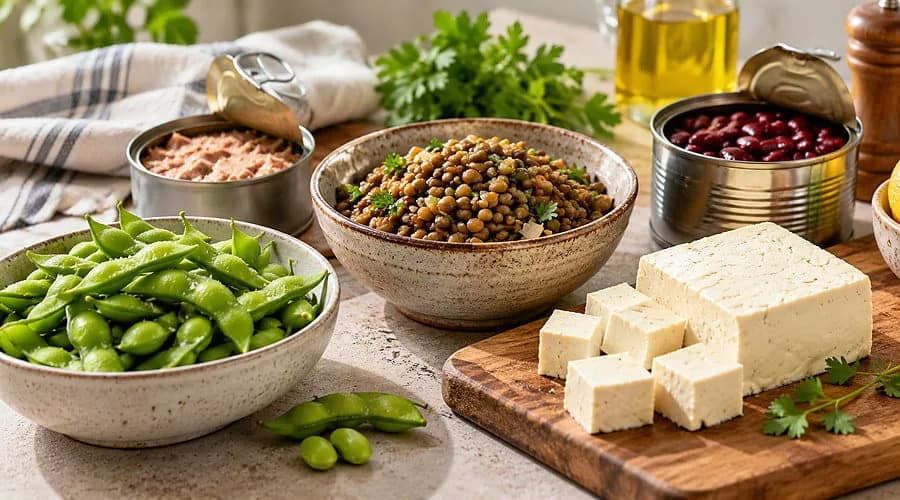
 Linkedin
 Threads
 Facebook
 X
X
For millions of older Americans, staying healthy has become a balancing act between what their bodies need and what their grocery budgets can afford.
Protein is emerging as an increasingly important part of that equation.
As people age, their bodies become less efficient at building and maintaining muscle. That makes adequate protein intake particularly valuable for preserving strength, mobility, and independence.
But getting more protein does not necessarily require expensive steaks, protein powders, or specialty products advertised as essential for healthy aging.
According to nutrition experts interviewed by AARP, some of the most practical sources of protein are already familiar items in American kitchens: lentils, beans, eggs, canned fish, yogurt, and even peanut butter.
The bigger story is about more than choosing the right groceries.
For older Americans, affordable nutrition can influence something far more valuable than the number on a scale: the ability to continue living independently.
Why Protein Becomes More Important After 60
Aging changes how the body responds to food.
Muscles depend on protein to maintain and repair tissue. But as people grow older, their muscles generally become less responsive to the signals that stimulate muscle protein synthesis.
Researchers sometimes describe this process as anabolic resistance.
The result is that older adults may need to pay closer attention to both the quantity and quality of protein in their diets.
Without adequate nutrition and physical activity, age-related muscle loss can contribute to weakness, difficulty walking, and reduced ability to perform everyday tasks.
This condition, known as sarcopenia, can increase the risk of falls and loss of independence.
According to the National Institute on Aging, protein-rich foods help maintain muscle and provide important nutrients needed for healthy aging.
Yet protein alone is not the complete answer.
Physical activity, particularly resistance exercises that challenge the muscles, remains important for maintaining strength.
The lesson is straightforward: protein supplies the building materials, while physical activity helps give the body a reason to use them.
How Much Protein Do Older Adults Actually Need?
The amount depends on body weight, health status, activity level, and individual nutritional needs.
The longstanding adult Recommended Dietary Allowance is 0.8 grams of protein per kilogram of body weight per day.
For someone weighing 150 pounds, that equals approximately 54 grams daily.
However, newer dietary guidance and some aging researchers support higher intake targets for many older adults, particularly those trying to maintain muscle function.
The 2025–2030 Dietary Guidelines for Americans emphasize protein-rich foods and recommend a general target of approximately 1.2 to 1.6 grams per kilogram of body weight daily, depending on individual circumstances.
That would represent roughly 82 to 109 grams a day for a 150-pound adult.
These figures should not be interpreted as a universal prescription.
People with kidney disease or other medical conditions may require individualized nutritional guidance, and higher protein intake is not automatically better for everyone.
What matters is understanding that dietary needs can change with age.
It is also important not to confuse the number of ounces of protein-rich foods with the number of grams of actual protein they contain.
For example, a three-ounce serving of fish does not contain 85 grams of protein. Most of that serving's weight is water and other components.
Learning to recognize the difference can help older adults make more informed choices without overbuying.
The Affordable Foods Worth Bringing Home
A January 2026 AARP report identified ten categories of economical protein sources, drawing on advice from nutrition researchers and registered dietitians.
Several deserve particular attention.
Lentils and beans are among the most versatile options.
They provide protein along with dietary fiber and other nutrients. Dried varieties are often economical, store well, and can be prepared in batches.
A pot of lentil soup or beans can provide several meals without requiring an expensive protein source at every sitting.
Eggs offer another convenient option. A large egg contains approximately six grams of protein and can be used for breakfast, lunch, or dinner.
Canned fish, including sardines, salmon, and light tuna, provides concentrated protein without requiring fresh seafood prices or elaborate preparation.
Certain varieties also supply omega-3 fatty acids associated with cardiovascular health.
For people watching sodium intake, choosing lower-sodium options when available can be helpful.
Plain Greek yogurt is another useful choice, often providing substantially more protein per serving than regular yogurt.
It can serve as breakfast, a snack, or a substitute for higher-fat ingredients in certain recipes.
Tofu and frozen edamame supply plant-based protein and can be added to soups, rice dishes, salads, and other familiar meals.
Even peanut butter, sunflower seeds, oats, and whole grains can contribute to daily protein intake.
Not every food offers the same amount or combination of amino acids, and vegetables such as broccoli should be viewed as supplementary sources rather than primary protein replacements.
The practical advantage comes from variety.
Older adults do not need to rely on one expensive food to meet their nutritional needs.
The Grocery Bill Is Part of the Health Equation
Why does affordability matter so much?
Because nutritional advice only works when people can follow it consistently.
For a retiree managing groceries, housing expenses, medical bills, and utilities on a fixed income, a diet that looks ideal on paper may be difficult to sustain.
The United States Department of Agriculture recommends several ways to make protein purchases more economical.
These include choosing dried or canned beans, comparing prices, purchasing discounted products that can be safely frozen, and substituting some meat in recipes with legumes.
A chili recipe, for example, can use a smaller amount of ground beef supplemented with beans.
A lunch that might otherwise involve more expensive deli meats could be replaced occasionally with an egg sandwich, lentil soup, or canned salmon.
The objective is not necessarily to eliminate meat.
It is to improve the nutritional value of each grocery dollar.
And the cheapest package is not always the best bargain.
Consumers can compare the price per serving, the amount of protein delivered, and whether a food supplies additional nutrients such as calcium, fiber, or healthy fats.
That approach is especially useful when comparing ordinary groceries with heavily marketed protein snacks.
Do Seniors Really Need Protein Shakes?
Walk through almost any supermarket and it is difficult to miss the expanding market for protein products.
Shakes, bars, fortified cereals, desserts, and powders promise convenient ways to increase intake.
Some can be genuinely useful.
For older adults with reduced appetite, dental difficulties, swallowing limitations, or recovery-related nutritional needs, appropriately selected supplements may help close dietary gaps.
But the words high protein do not automatically make a packaged food healthy.
A product may provide additional protein while also containing substantial added sugar, saturated fat, or sodium.
And specialty products often cost more than ordinary foods supplying comparable nutrients.
The National Institute on Aging recommends prioritizing a varied, nutrient-dense diet and adjusting food choices to individual health needs.
For many people, regular meals can provide substantial protein without requiring supplements.
Those experiencing unintended weight loss, difficulty eating, or persistent weakness should discuss their situation with a healthcare professional rather than relying only on over-the-counter products.
A Simple Way to Build a Protein-Rich Day
Consider how ordinary meals can contribute toward a daily protein goal without depending on costly specialty products.
Breakfast might include plain Greek yogurt with oatmeal and a spoonful of peanut butter.
Lunch could feature lentil soup, whole-grain bread, and a serving of vegetables.
Dinner might include baked chicken, fish, or tofu with rice and vegetables.
An egg, a small serving of nuts, or another appropriate snack could help fill any remaining nutritional gap.
The exact amount of protein will depend on ingredients and portion sizes, so this is an illustration rather than a personalized meal plan.
The broader principle is to distribute protein-containing foods across the day instead of depending entirely on one large dinner.
Older adults should also consider hydration, food safety, medication interactions, and medical dietary restrictions.
A diet that is affordable but does not meet a person's health needs is not an effective solution.
Healthy Aging Is About Independence
The importance of adequate protein becomes clearer when viewed through everyday life.
For an older adult, maintaining muscle is not primarily about physical appearance.
It can mean being able to carry groceries, climb stairs, stand up from a chair, work in the garden, or enjoy time with grandchildren.
Strength can influence whether someone continues managing daily activities independently or gradually needs additional assistance.
That makes affordable nutrition a family concern as much as an individual one.
It also raises a larger public-health question.
As America ages, are we doing enough to help older adults understand how ordinary, accessible foods can support long-term health?
Better nutrition information cannot eliminate aging or prevent every illness.
But practical food education, access to affordable groceries, and opportunities for safe physical activity can help people make choices that support their well-being.
The solution does not always require a breakthrough product.
Sometimes it begins with explaining how to prepare beans, comparing the price of canned fish, or helping someone identify a more nutritious breakfast.
The Best Investment May Be the Simplest One
The growing attention to protein reflects an important shift in how Americans think about aging.
Living longer is valuable. Maintaining the strength and independence to enjoy those years is equally important.
Expensive supplements and specialized products may have a role for some people, but they are not the foundation of every healthy diet.
For many older adults, a thoughtful combination of beans, lentils, eggs, dairy, fish, soy foods, and other nutritious staples can provide meaningful protein at a manageable cost.
The key is consistency, variety, and matching dietary choices to individual health needs.
America's aging population faces real challenges, from rising living expenses to the physical demands of growing older.
Yet some of the most practical tools for healthy aging remain surprisingly accessible.
The secret to staying stronger longer may not be hiding in an expensive supplement. It may already be sitting on the grocery store shelf, waiting to become part of tomorrow's dinner.