3 min read
 6
6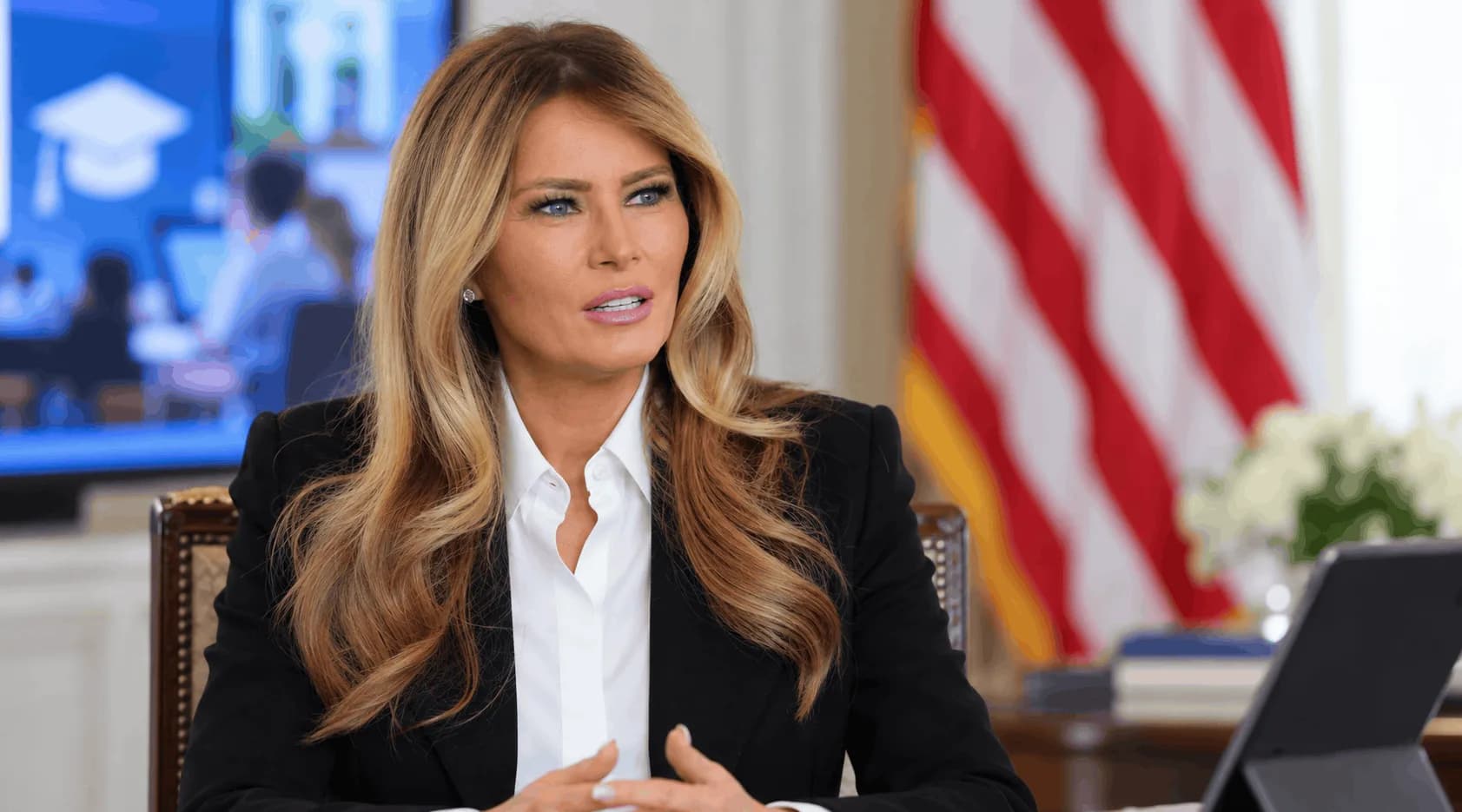
 Linkedin
 Threads
 Facebook
 X
X
First Lady Melania Trump announced a new nationwide initiative on October 13 aimed at preparing American students for a future increasingly shaped by artificial intelligence.
The 2027 Presidential Super Intelligence (SI) Challenge invites K-12 students, teachers, and schools to develop innovative technology projects that address real problems in their communities.
The announcement also introduces the First Lady Seal of SI Readiness, a new designation recognizing schools that demonstrate meaningful progress in preparing students and educators to understand and responsibly use emerging AI technologies.
According to the White House, the inaugural competition engaged more than 20,000 students from all 50 states and American schools abroad.
The new challenge builds on that participation while expanding its focus from individual student projects to the readiness of entire educational institutions.
But the larger story is not simply another national student competition.
America is beginning to confront a question that could influence an entire generation: What should children learn when artificial intelligence can already perform many tasks traditionally taught in classrooms?
From Learning About AI to Actually Building With It
The Presidential Challenge takes a practical approach to technology education.
Rather than limiting participation to traditional computer science courses, the initiative encourages students to identify real-world problems and investigate how AI-powered tools might help solve them.
Elementary, middle, and high school participants can develop projects addressing challenges within their schools, families, or communities.
The program includes a Standard Track, where students develop solutions to practical problems, and a Trailblazer Track for middle and high school teams exploring more advanced technologies and national challenges.
Educators can also participate by designing creative classroom applications or developing tools that improve teaching and administrative work.
Projects may involve machine learning, language models, robotics, computer vision, or other age-appropriate technologies.
The idea is straightforward: students should become more than consumers of technology.
They should understand how it works, recognize its limitations, and learn how to apply it to useful problems.
Consider a group of students developing a tool to help identify accessibility barriers at their school. Another team might explore ways to reduce food waste in a cafeteria or help teachers personalize learning activities.
These are examples of possible applications, not announced winning projects.
They illustrate an important educational shift.
The objective is not simply teaching children how to ask an AI system a question. It is teaching them how to identify a problem worth solving.
What Does It Mean for a School to Be AI-Ready?
The most significant addition to the 2027 program may be the First Lady Seal of SI Readiness.
Under the new framework, eligible K-12 schools can earn recognition by completing documented milestones showing that they are preparing their institutions for responsible AI use.
According to the program's official guidance, readiness includes appropriate school policies, teacher capabilities, student learning opportunities, safeguards, and partnerships with outside organizations.
Participating schools must submit evidence demonstrating progress toward these requirements.
Registration remains open through December 18, 2026, while schools pursuing the readiness designation have until April 30, 2027, to submit evidence of completed milestones.
Qualifying schools may be recognized during the national finals in June 2027.
The distinction between individual achievement and institutional readiness matters.
A school might have several technologically talented students while lacking a consistent strategy for teaching AI literacy across classrooms.
Another may purchase sophisticated software without adequately training teachers or establishing rules governing student use.
The new designation attempts to address those gaps.
However, the seal is a program recognition, not evidence that every student at a participating school has mastered AI or that the school's educational outcomes have improved.
Its long-term value will depend on whether the required milestones produce measurable improvements in teaching, responsible technology use, and student skills.
Why Washington Is Calling It Super Intelligence
The competition also introduces a noticeable change in language.
The original initiative was known as the Presidential AI Challenge. The 2027 version uses the term Super Intelligence, or SI.
According to the program's official website, President Trump signed a September 29, 2026, executive order directing the executive branch to replace the term artificial intelligence with super intelligence in designated federal usage.
This explains the program's new name.
However, the terminology should not be confused with a scientific announcement that artificial superintelligence has already been achieved.
In technical discussions, artificial superintelligence generally refers to a hypothetical or future level of AI capability surpassing human intelligence across a broad range of tasks.
The student competition itself accommodates technologies already in use, including language models, computer vision, robotics, and machine learning.
The distinction is important.
Changing the terminology may communicate an administration's ambitions, but the practical educational challenge remains understanding what current technologies can do, where they fail, and how students should use them.
A new name does not automatically create a new technological capability. The quality of education behind the name is what matters.
The Workforce These Students Will Enter Is Already Changing
The urgency behind the initiative extends beyond schools.
Artificial intelligence is increasingly influencing software development, healthcare, engineering, financial services, manufacturing, marketing, and business operations.
Many jobs are unlikely to disappear entirely, but the tasks performed within those jobs may change substantially.
A future engineer may use AI to evaluate possible designs. A healthcare professional may work with systems that help analyze medical information. A small-business owner may use automation to manage operations that once required considerable administrative time.
The economic advantage may increasingly belong to people who can combine human judgment with technical capabilities.
That creates a challenge for education.
For generations, schools emphasized acquiring information, retaining knowledge, and demonstrating mastery through assignments and examinations.
Those skills remain important.
But when AI systems can generate essays, computer code, presentations, and research summaries within seconds, educators must also determine how to assess independent thinking.
Can students evaluate whether an AI-generated answer is correct? Can they recognize fabricated information? Do they understand the difference between assistance and allowing technology to perform the entire intellectual task?
These are not theoretical classroom concerns.
They affect whether students develop the judgment necessary to work effectively with increasingly powerful tools.
Parents and Teachers Still Have a Central Role
There is another dimension to introducing advanced technology into classrooms: children are not adults.
Young students need age-appropriate guidance, privacy protections, and opportunities to develop essential skills without becoming dependent on automated systems.
AI tools can produce incorrect information. Some systems collect user data. Others may generate content unsuitable for children or provide responses that sound authoritative despite being unreliable.
That makes parental involvement and teacher supervision essential.
The Presidential Challenge's participation rules include adult supervision and parental consent requirements for student teams.
The official readiness framework also identifies safeguards as part of institutional preparation.
These provisions recognize that access to technology and responsible use are not the same thing.
Families and educators may reasonably disagree about how early children should encounter advanced AI systems or how extensively schools should integrate them.
Those decisions also intersect with local school authority, family preferences, and educational philosophy.
A useful school AI policy should explain what information students may share, which tools are permitted, how work is evaluated, and when technology should not replace direct learning.
For homeschooling families, the competition also offers opportunities for eligible educators to participate.
Ultimately, preparing children for AI should not mean outsourcing their education to AI.
The goal should be stronger human capabilities supported by useful technology.
A Competition for America's Technological Future
The initiative also fits into a larger national conversation about technological competitiveness.
The United States is competing internationally to develop advanced AI systems, train technical workers, and translate research breakthroughs into economic opportunities.
That competition cannot be sustained through corporate investment alone.
It also depends on whether younger generations develop the scientific understanding, creativity, and practical skills needed to contribute.
A student who learns to build a useful application today may become an engineer, researcher, entrepreneur, or teacher tomorrow.
Yet technology education must reach beyond well-funded districts.
Schools with limited broadband access, outdated equipment, or insufficient teacher training may struggle to offer the same opportunities available elsewhere.
The Presidential Challenge says it welcomes participants from different backgrounds and experience levels, and its organizers provide resources and support sessions.
The question is whether that access will be broad enough to translate national ambition into meaningful educational opportunity.
Participation numbers can demonstrate interest. Lasting success requires evidence that students actually acquire valuable skills.
How Students and Schools Can Participate
Families and educators interested in the 2027 Presidential SI Challenge can review eligibility rules, project categories, and registration requirements through the official program.
The competition accepts student projects involving the development or use of relevant AI technologies, while participating educators can demonstrate innovative classroom applications.
Schools seeking the First Lady Seal of SI Readiness must complete the designated institutional milestones.
Important deadlines:
December 18, 2026: Registration deadline.
December 23, 2026: Student and educator competition project submission deadline.
April 30, 2027: Deadline for schools to submit evidence toward the SI Readiness Seal.
June 6–9, 2027: Scheduled national competition events.
Official information and registration are available at https://www.si.gov/initiatives/presidential-challenge.
Participants should review the full eligibility and consent requirements before registering.
The Future Will Belong to More Than Technology Users
Melania Trump's new initiative reflects a broader shift in how American leaders are thinking about education and technological competitiveness.
The challenge encourages students to move beyond passive technology consumption and experiment with solving real problems.
The new school-readiness designation attempts to ensure that institutions, not just individual students, develop the capacity to teach and manage emerging tools responsibly.
But the deeper question reaches beyond any single competition.
Artificial intelligence will continue changing how people work, create, learn, and make decisions.
Schools must prepare students to operate in that environment without allowing technology to replace the critical thinking, creativity, responsibility, and human judgment that education is meant to cultivate.
The most meaningful outcome of the Presidential Challenge will not simply be how many projects students submit or how many schools receive a seal.
It will be whether those students become more capable, independent, and thoughtful problem-solvers.
America's next generation should not grow up believing its greatest responsibility is to keep up with intelligent machines. It should learn how to direct those machines toward purposes worth pursuing.