



 2 min read
 6
 Linkedin
 Threads
 Facebook
 X

One million barrels of Venezuelan crude oil arrived in Corpus Christi, Texas, marking the first delivery under a major energy agreement negotiated by President Donald Trump's administration.
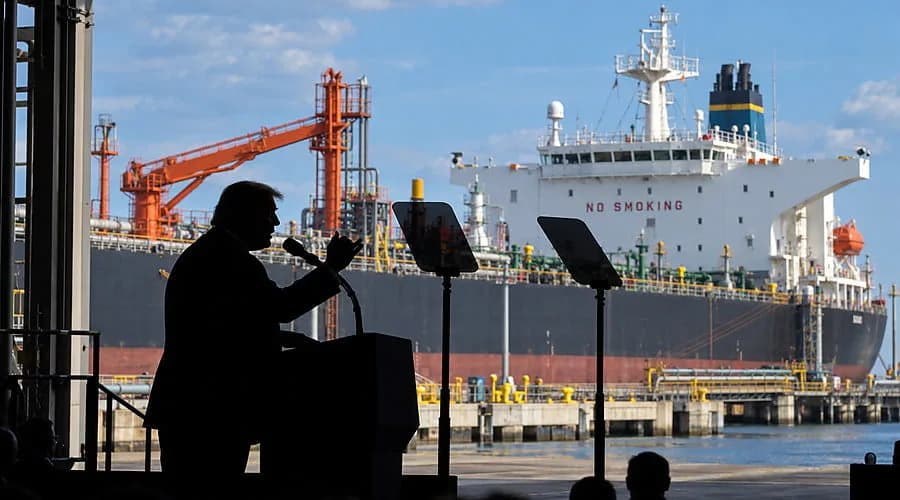
The shipment, transported aboard two tankers, was announced October 27 during a visit by Trump and Secretary of State Marco Rubio to the Port of Corpus Christi.
The White House confirmed the milestone October 28, identifying Texas refineries as the destination for the crude.
The development puts a previously announced international energy agreement into operation, connecting Venezuelan oil production with American refining infrastructure.
For the United States, the significance extends beyond one shipment. The agreement creates a new channel for securing crude oil while supporting American industrial capacity and energy security.
What America Secured in the Oil Agreement
The agreement involves North American Blue Energy Partners (NABEP), a private energy company operating in Venezuela.
Under arrangements announced in August, the U.S. government obtained a 35% equity stake in NABEP's parent company without an upfront taxpayer payment.
It also secured the right to purchase 20% of the company's oil production at cost, without a markup, plus a right of first refusal on additional production.
NABEP holds concessions covering approximately 65 billion barrels of proven Venezuelan oil reserves.
These reserves represent resources associated with the company's production rights, not oil already extracted or stored in American facilities.
The arrangement gives Washington commercial access, governance rights, and a financial interest in a major regional energy operation.
That combination reflects a strategic approach extending beyond traditional oil purchasing agreements.
Why Texas Refineries Matter
Corpus Christi is an important gateway for America's petroleum industry, connecting international shipments with refineries, pipelines, storage terminals, and transportation networks.
The White House says the newly arrived crude will be refined in Texas.
That process creates activity for refinery workers, marine transportation operators, equipment suppliers, maintenance contractors, and logistics companies.
Venezuelan crude can also complement the capabilities of Gulf Coast refineries equipped to process heavier grades of oil.
Refining is an essential part of energy security because crude oil must be converted into products such as gasoline, diesel, and aviation fuel before reaching consumers.
For American industry, maintaining dependable access to suitable crude helps support refinery utilization and downstream manufacturing.
The Financial Advantage Behind the Deal
NABEP states that the initial million-barrel shipment was provided at no cost to American taxpayers.
Future purchases under the broader agreement are different: the United States has the right to purchase an agreed portion of production at cost.
The company corrected its initial announcement to clarify that distinction.
Separate reporting by The Washington Post, citing people familiar with the transaction, described discounted pricing and questioned whether the shipment was entirely free. The published accounts therefore differ on the initial cargo's precise financial treatment.
The administration's longer-term objective is to obtain reliable oil supplies under favorable commercial terms.
NABEP reports production exceeding 223,000 barrels of oil equivalent per day as of October 19, with plans for substantial expansion.
Could This Help Lower Gas Prices?
Additional crude supply can strengthen refinery access and potentially ease supply pressures.
But gasoline prices depend on more than one delivery.
Global oil markets, refining costs, transportation, taxes, and regional demand all influence what Americans pay at the pump.
One million barrels represents a meaningful commercial shipment, not enough by itself to transform nationwide gasoline prices.
The potential advantage becomes more significant if sustained deliveries increase available supply over time.
The agreement could also provide additional sourcing options during international disruptions, reducing reliance on more distant suppliers.
A Strategic Opportunity for American Energy
The administration views the agreement as part of its broader effort to strengthen America's energy position.
The United States already maintains substantial domestic oil production, but its refineries also rely on imported grades suited to specific equipment.
Securing additional crude within the Western Hemisphere can diversify supply arrangements and shorten some transportation routes.
The agreement also provides potential access to oil for strategic purposes, although the 65 billion barrels covered by production rights should not be confused with America's Strategic Petroleum Reserve.
For Texas, continued shipments could support refining and related industrial activity.
For the country, the larger opportunity involves building a dependable energy network connecting production, transportation, refining, and national security.
The first million barrels arriving in Corpus Christi mark a tangible beginning. If the agreement delivers sustained production and competitively priced crude, its lasting value could come through stronger American refining capacity, more secure energy supplies, and greater economic opportunities across the Gulf Coast.