


 3 min read
 21

 Linkedin
 Threads
 Facebook
 X

The Church faces a peculiar danger when the memory of yesterday’s visitation becomes more precious than the pursuit of God’s Presence today. What previous generations purchased through travail, consecration, and costly obedience, their successors may preserve through ceremony, commemorate through monuments, and eventually reduce to the harmless antiquities of religious history. The tragedy is not that the inheritance has been forgotten, but that it has been remembered without being recovered.
Why? Because revival cannot be inherited as an artifact. Its history may be preserved, its testimonies rehearsed, and its theological foundations faithfully transmitted, but the spiritual impartations and weighty responsibilities that accompanied its emergence. The God who answered the cry of our fathers has not surrendered His sovereignty to the generations that separate us from their awakening.
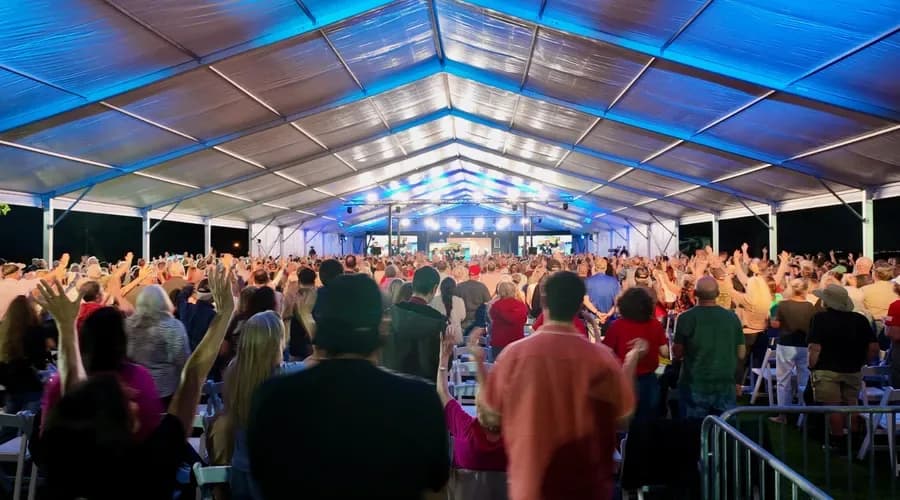
That conviction acquired extraordinary significance beneath a tent in Wise County, Texas, where Gene and Terry Bailey convened FlashPoint’s River at the Ranch. Upon the platform rested the historical witnesses of America’s great revival and healing movements: crusade chairs, a portable organ, broadcasting equipment, and furnishings whose histories stretched back through generations of Pentecostal proclamation. Yet the most consequential feature of that extraordinary assembly was not what had been preserved from the past, but what this gathering demanded of the present.
We who gathered had not assembled to excavate the remains of a former awakening. We gathered to confront the possibility that the same God who moved among our fathers was summoning their children to a greater measure of obedience.
Gene Bailey gave that conviction its governing expression: “We remember because we’re redigging the well.” The declaration recalled Isaac’s recovery of Abraham’s wells in Genesis 26, but its contemporary implication reached beyond the historical narrative. A generation may possess the geography of its fathers’ encounters without possessing their spiritual discipline. It may occupy their pulpits, inherit their institutions, and recite their testimonies while remaining strangers to the travail that once made those places holy.
And herein lies the searching question raised by those three nights:
Have we become custodians of a revival we are no longer prepared to contend for?
The answer cannot be found in preserving another religious tradition, enlarging another institution, or celebrating another extraordinary gathering. It must be found where every authentic awakening has demanded its greatest price: in the surrender of human ambition, the recovery of consecrated altars, and the restoration of a Church whose confidence rests upon the unchanging authority of Jesus Christ.
The River was rising in Texas. The greater question was whether the Church was prepared to rise with it.
The Inheritance That Refused To Become A Museum
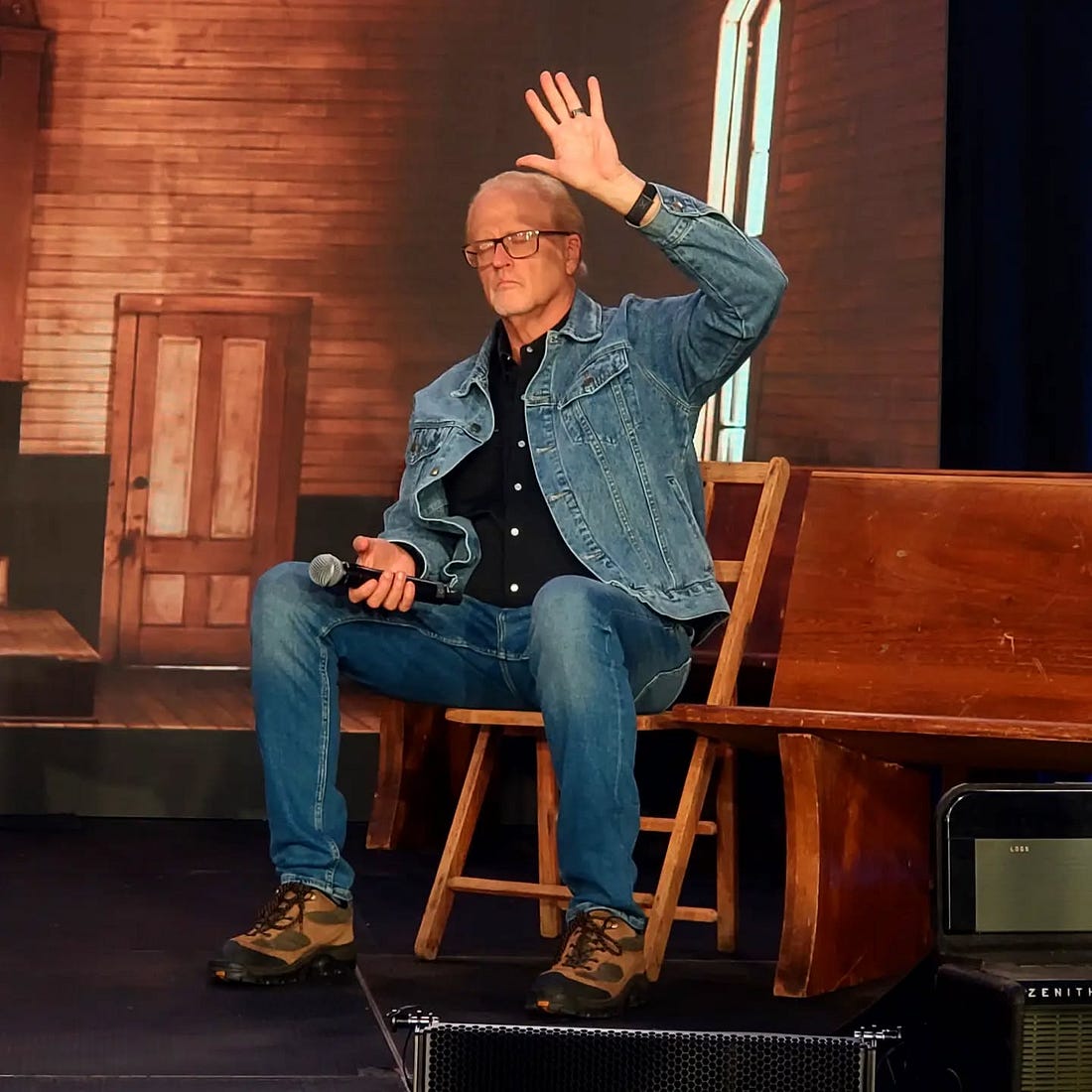
The historic furnishings assembled upon the platform were more than artifacts of Pentecostal antiquity. They constituted a visible genealogy of sacrifice, recalling an era when evangelists traversed the nation beneath canvas, transported their instruments of worship across unforgiving landscapes, and proclaimed the Gospel without the institutional conveniences now considered indispensable to successful ministry.
Gene’s recollection of his family’s spiritual inheritance introduced a dimension seldom encountered in contemporary religious gatherings. The pews and communion table were connected to generations whose devotion had preceded the technological and organizational apparatus of modern evangelical Christianity. His account reached back to County Antrim, Ireland, and to his ancestors' nineteenth-century migration to America.
The unexpected presence of Paul Brady, likewise born in County Antrim, gave that history a remarkable continuity. Brady spoke of the Ulster Awakening and of his own ministry’s emergence under the inspiration of Ezekiel 47:9. The historical relationship did not require an extravagant claim of supernatural coincidence to become meaningful. It showed how one generation's spiritual labors may reach another through paths no human institution could have designed.
Pat Schatzline confronted that temptation when he declared his weariness with preaching in museums. His observation exposed the progressive domestication of revival: one generation encounters the power of God, another recounts the encounter, and a third constructs an institution to commemorate what it has never personally known.
The indictment is not against history. Scripture repeatedly commands remembrance. Israel was instructed to rehearse the mighty acts of God to succeeding generations, and the memorial stones at Jordan were established so that children yet unborn might inquire concerning the significance of what their fathers had witnessed (Joshua 4:6–7).
In Genesis 26:18, Isaac reopened the wells that had been stopped after Abraham’s death. The Hebrew chaphar, to dig, describes deliberate excavation, an act requiring labor against accumulated obstruction. Isaac’s responsibility was not to invent another source of water, but to recover access to what had already sustained his father’s household.
The contemporary application is exacting. We do not require another generation to manufacture a different Holy Spirit, construct a more fashionable Gospel, or discover an authority superior to the Scriptures. We require a generation willing to remove the obstructions that have accumulated around the wells of New Testament gospel faith.
The inheritance of revival is not the right for us to admire what our fathers experienced. It is our obligation to recover the obedience through which they encountered God.
The Glory That Refuses To Share The Platform
Among the most searching declarations of the opening night was the insistence that Jesus Christ must recover the central place in the Church’s assemblies. Gene Bailey repeatedly expressed his willingness to surrender the anticipated order of the meetings rather than subordinate the gathering to the expectations of religious performance.
Kent Christmas intensified that burden with a prophetic address confronting the culture of spiritual celebrity. His declaration that the glory of God would not be surrendered to individual prominence challenged an ecclesiastical habit in which the reputation of the minister can become more consequential than the majesty of the One being proclaimed.
Pat Schatzline developed the same concern through his distinction between the anointing and the glory. His assertion that the Church has often prized ministerial empowerment above divine Presence deserves careful examination, for it exposes the possibility of becoming accomplished in the functions of ministry while neglecting the fellowship from which those functions derive their legitimacy.
The Hebrew kavod conveys weight, honor, and majesty. Its biblical use goes beyond religious sensation to describe the overwhelming significance of God’s revealed Presence. When Solomon dedicated the temple, the priests could not continue their ministry because the glory of the LORD filled the house (1 Kings 8:10–11).
The passage presents a profound reversal of religious expectation. Those appointed to minister were rendered incapable of continuing in their ordinary ministerial function because the God they served had manifested His Presence.
Divine calling carries a certain authority, and majesty belongs exclusively to God. The former must never be permitted to eclipse the latter.
The Apostle Paul understood this distinction when he declared that the treasure of divine revelation was entrusted to earthen vessels so that the excellency of the power might be of God and not of us (2 Corinthians 4:7). The vessel is indispensable to the stewardship of the treasure, but it must never mistake its usefulness for ownership.
The glory of God does not require the extinction of human ministry.
It requires the surrender of human supremacy.
The ranch became a searching reminder that the Church does not gather to witness the accomplishments of religious personalities. It gathers before the living Christ Jesus, whose Name is above every name and whose authority cannot be enlarged by applause or diminished by the absence of it.
The Altar: Where Consecration Confronts Convenience
If the first night recalled the inheritance of revival, the succeeding gatherings confronted its cost.
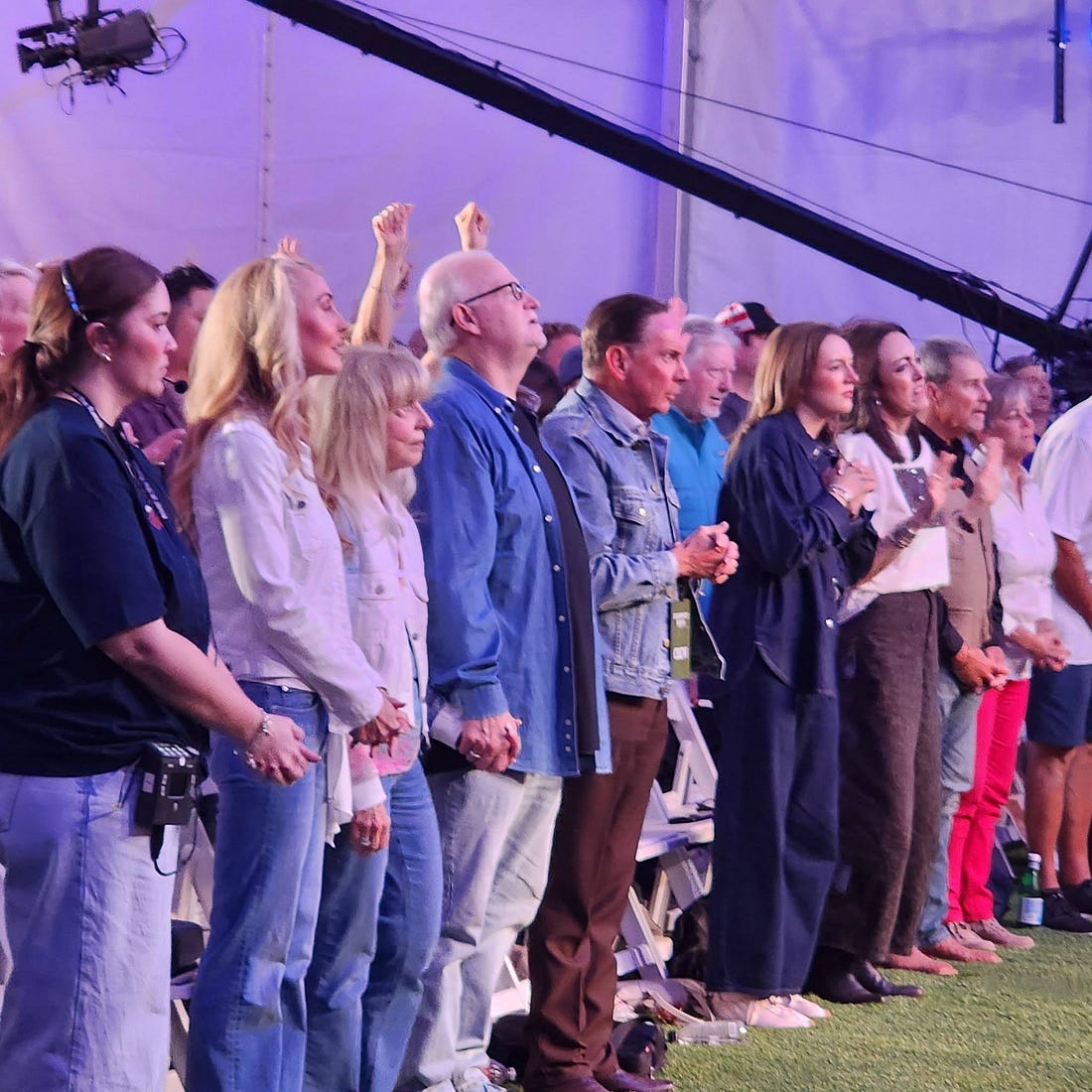
Tim Sheets’s unexpected invitation through the historic hymn Softly and Tenderly altered the meeting’s atmosphere. What began as a call to those estranged from God became a summons to believers who had allowed spiritual lethargy and familiarity to hide the distance between our religious participation and our genuine surrender.
Men and women came forward carrying wounds that had survived beneath the appearance of Christian respectability. Marriages were brought before the Lord, unforgiveness was confronted, and the invitation to repentance became a declaration that the Church cannot demand transformation from the world while refusing the sanctifying work of God within its own household.
I was privileged to pray over everyone assembled and to lead the administration of the Lord’s Supper. The solemnity of that interval brought the entire gathering into the shadow of Calvary, where the authority of our redemption rests not upon the intensity of our petitions, but upon the finished work of our Savior, Jesus Christ.
The broken bread and the cup of the New Covenant established the theological center of everything being proclaimed. Whatever the Church may experience in revival, its spiritual legitimacy must remain inseparable from the blood of the Lamb and the authority of His Word.
On the final night, Pat Schatzline carried the burden of consecration into a dramatic act of dedication, placing an altar at the front of the tent. His declaration that one’s former life is interrupted by the possibilities of divine transformation expressed well the central purpose of repentance.
Yet the significance of the altar extends beyond its physical construction. Under the New Covenant, Jesus Christ's sacrifice has accomplished what the repeated offerings of the former order could never perfect. Hebrews 10 establishes the sufficiency of His offering, while Romans 12:1 summons the redeemed to present their bodies as living sacrifices, holy and acceptable unto God.
The altar therefore becomes the language of surrendered life, the place where self-government yields to divine lordship and where we as believers relinquish the illusion that spiritual authority can coexist indefinitely with unrepentant disobedience.
Paul Brady gave the moment its most penetrating diagnosis when he connected the disappearance of altars with the disappearance of sacrifice and fire. His prophetic announcement reached beyond the arrangement of church furniture into the moral and spiritual condition of too many of today’s Christian churches.
The altar is not the monument of our religious sincerity.
It is the witness that our lives no longer belong to ourselves.
The Sound That Silence Could No Longer Contain
One recurring declaration throughout the gathering concerned recovering the Church’s voice.
Kent Christmas spoke prophetically of a cry becoming a shout, drawing upon Israel’s confrontation with Jericho. Tim Sheets summoned the people to spiritual mobilization, while Paul Brady repeatedly challenged the congregation to recover the boldness of corporate prayer and Spirit-filled proclamation.
Their messages converged upon a question of considerable consequence: What becomes of a Church that has learned to survive by remaining silent where Scripture commands it to speak?
The account of Jericho offers a compelling biblical pattern. Israel secured its victory through obedience to a specific divine command, not through the independent power of human noise. The shout possessed significance because it was the appointed response to the Word of the LORD.
The same distinction governs the New Testament Church. Spiritual boldness does not come from volume, temperament, or cultivating confrontation alone. It arises from confidence in the authority of Jesus Christ and submission to the Holy Spirit who empowers His witnesses.
Acts 4 records the apostles refusing to abandon their testimony concerning Jesus, even under the threat of religious and civil punishment. When the believers later gathered in prayer, they did not ask God for exemption from opposition; they asked for boldness to speak His Word.
Their prayer was answered with renewed infilling of the Holy Spirit and continued proclamation.
Paul Brady’s appeal to Gideon’s three hundred added another dimension. The trumpets were not reserved for Gideon alone; every man in the appointed company possessed an instrument and participated in the commanded action. The breaking of the pitchers exposed the concealed light, and the coordinated response became part of the victory God had ordained.
The imagery confronts the distortion of the post-modern model of ministry, where a congregation becomes an audience while a few recognized personalities perform the visible work of spiritual engagement.
The New Testament model is different. Ephesians 4 identifies leadership's responsibility as equipping the saints for the work of ministry until the Body reaches maturity under Jesus’ headship.
The Church was never commissioned to become an audience applauding its leaders' courage. It was constituted as a Body in which every member bears responsibility for the testimony of Jesus Christ.
The recovered voice of the Church must be more than just a louder declaration; it must become a life of truthful witness, intercession, holiness, evangelism, and courageous obedience.
When The Streams Become One River
Dutch Sheets introduced one of the gathering's most consequential themes through dream accounts of the convergence of spiritual movements that had long traveled along parallel courses.
In one striking image, separate streams were divided by an island until the movement of an immense flock removed the obstruction and the waters became one. The vision was presented as an anticipation of cooperation among ministries whose historical distinctions had often prevented the full expression of their common responsibilities.
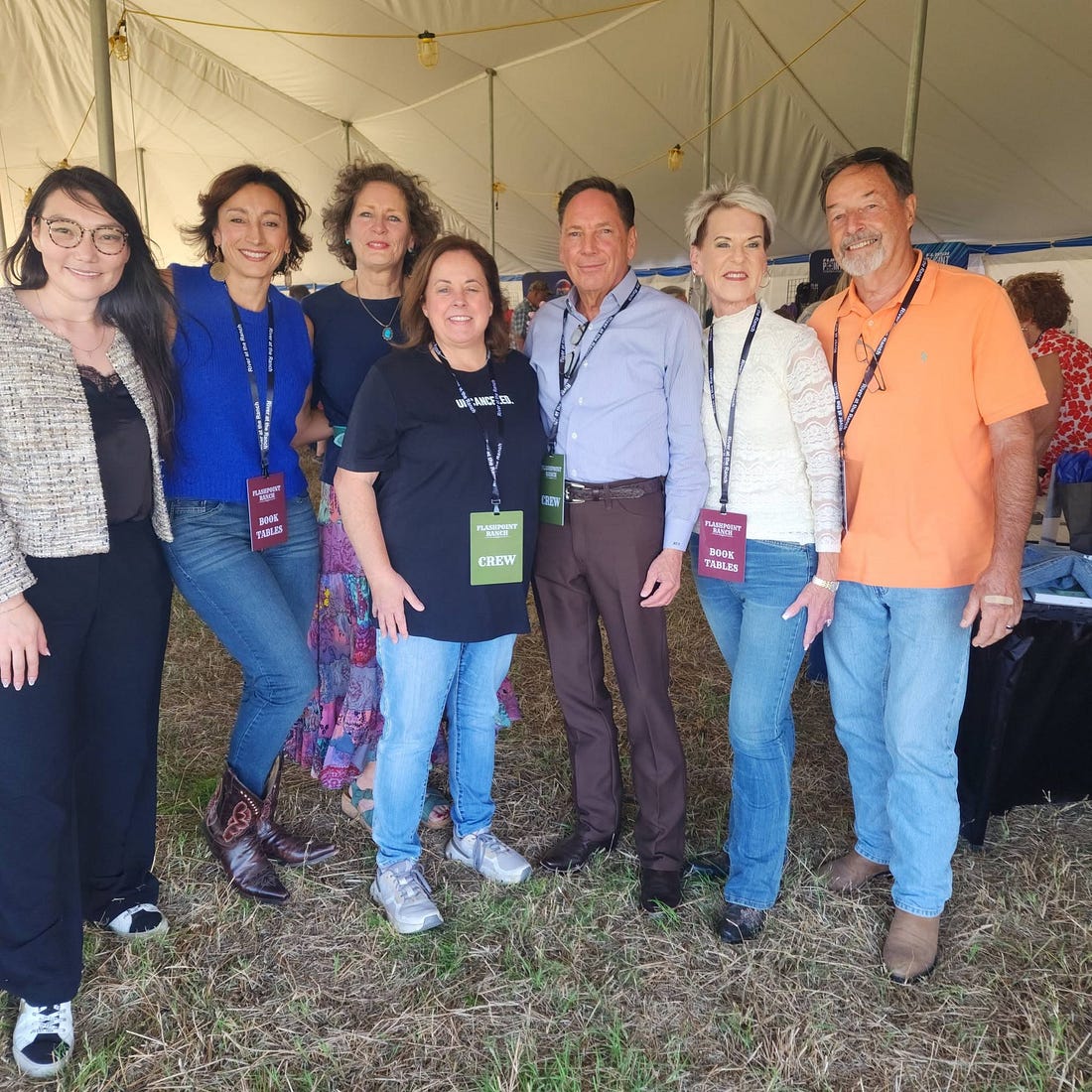
The image's significance became clear when Gene Bailey invited representatives of different Christian traditions to stand. Baptists, Pentecostals, Methodists, Catholics, and believers associated with the Word of Faith movements were represented beneath the same tent.
The moment was remarkable, not because centuries of theological disagreement had suddenly disappeared, but because believers from differing traditions had gathered around a common desire for prayer, repentance, spiritual renewal, and the advancement of the Gospel in our nation and around the world.
Unity does not require abandoning our biblical convictions. Indeed, the New Testament refuses to separate genuine fellowship from fidelity to truth. The unity Jesus prayed for in John 17 is inseparable from the sanctifying authority of God’s Word.
Yet doctrinal seriousness must not become an excuse for personal ambition, institutional rivalry, or the refusal to recognize the work of God beyond one’s own ecclesiastical boundaries.
Sheets’s exposition of homothymadon, the Greek expression commonly translated “with one accord,” illuminated the early Church’s spiritual character. The term conveys a united purpose and shared impulse: distinct individuals converging around a compelling common commitment.
At Pentecost, the believers were not united by the absence of personality, background, or individual history. They were united by obedience to the command of the risen Jesus and their expectation of the promise He had made them at His ascension.
The River does not require every stream to surrender its history.
It requires every stream to surrender its claim to supremacy.
The Healing Stream And The Responsibility Of Faith
The second night brought all who gathered into an extended period of prayer for healing, accompanied by public testimonies from individuals who described changes in their physical conditions.
Tim and Dutch Sheets invoked the spiritual inheritance of twentieth-century healing movements, while Paul Brady emphasized believers' responsibility to pray for one another rather than reserve the exercise of faith for recognized ministers.
People lined up to publicly report relief from longstanding pain, restored movement, and many other changes following prayer. Their testimonies included conditions affecting the back, shoulders, feet, knees, and other parts of the body. Others spoke of serious diagnoses for which they continued to believe God for healing. Their testimonies, offered openly before the congregation, bore witness to the faith and expectation that had drawn so many to the ranch.
The biblical foundation for praying for the sick is certain and is not dependent upon the reputation of the individual praying. James 5:14–16 instructs believers to seek prayer, while the ministry of Jesus and the apostles’ record establish divine compassion toward those afflicted by disease.
One of the more searching moments occurred on the final night when a family brought forward their eighteen-year-old son, Payton, who was living with Hunter syndrome. His parents described years of physical deterioration, repeated hospitalizations, and the extraordinary burden of caring for a child whose abilities had progressively diminished.
The congregation prayed with visible tenderness and conviction. Gene Bailey called on the authority of Jesus Christ, and Terry Bailey later shared a vision she understood as a word of encouragement to the family regarding the young man’s future. The moment carried a spiritual gravity that transcended the conventional language of a healing service.
This was a tender moment when the people gathered demonstrated God’s character by loving Payton’s family, praying with them, bearing their burdens, and refusing to abandon them to unknown outcomes. The Church's authority must remain an expression of our Savior's compassion.
The Awakening That Must Outlive The Assembly
The final burden of River at the Ranch emerged not from another account of former revival, but from the responsibility awaiting those who would leave the gathering.
Randy Hill returned the congregation to Genesis 2 and the river that proceeded from Eden before dividing into four heads. His application was unmistakable: the life encountered in the gathering must not remain confined to the ranch where we had assembled.
The theological principle extends beyond the geographical imagery. God’s redemptive purpose has always moved outward through those entrusted with His Word. Abraham was called so that the families of the earth might be blessed. Israel was summoned to bear witness to the holiness of God among the nations. The risen Christ Jesus commissioned His disciples to carry the Gospel to the uttermost parts of the earth.
The outpouring of the Holy Spirit at Pentecost did not establish an enduring religious attraction in Jerusalem; rather, it empowered witnesses whose testimony would move beyond the city, across cultural boundaries, and into all the nations of the earth.
This same responsibility now confronts those of us who gathered on a dusty ranch in Texas, or watched by television in the places of our abode.
We determined that we would not attend this extraordinary meeting, participate fervently in worship, gladly receive encouragement through all of its prophetic exhortations, and return home without letting this holy experience change our habits of obedience. We refuse to let this gathering become another episode in the history of religious enthusiasm.
The measure of its enduring consequence will not be determined by the memories we carry away from the ranch, but it will be remembered through our renewed devotion in our homes, through the restoration of our zealous, faith-filled prayers, and the reconciliation of wounded believers, the faithful proclamation of the Gospel of Jesus Christ, and the recovery of a Church whose spiritual authority is authenticated by consecration rather than celebrity.
Herein resides the distinction between an encounter and an awakening. An encounter may transform the atmosphere of an assembly; an awakening transforms the obligations of those who have encountered God. The former may be remembered through extraordinary testimonies, while the latter must be demonstrated through the sustained obedience of a people whose lives have been permanently rearranged by the demands of divine holiness.
The first-century Church understood this distinction. Those who emerged from the upper room did not establish a permanent residence around the memory of Pentecost. They carried its witness into the streets of Jerusalem, the councils of religious authority, the households of the Gentiles, and eventually the imperial corridors of Rome. What began in a room became a proclamation that neither persecution nor imprisonment could extinguish.
The tragedy would not be that the River failed to rise. The tragedy would be that those who entered its waters refused to carry its witness beyond the banks.
The significance for the contemporary Church is profound. We too often measure spiritual success by how much we can gather, when the gospel commission requires us to consider the consequences of what we release. The sanctuary is indispensable as the place of consecration and worship, but the commission of Jesus directs His witnesses toward a world that has yet to hear.
For revival that requires the perpetual presence of its original atmosphere has not yet fulfilled its missionary purpose. The fire on the altar must become God's sacred presence in our homes. The boldness proclaimed beneath the canvas must become courage in the face of life’s ordinary opposition. The compassion expressed in prayers for the afflicted must become enduring ministry to those whose suffering continues after the congregation has dispersed.
And the unity celebrated among the assembled believers must mature into cooperation governed by truth and directed toward advancing the Gospel of Jesus Christ.
The Church must recover the distinction between possessing a testimony and becoming one.
The Final Revelation: The River Was Never The Destination
As the final worship ascended beneath that Texas tent, the convergence of three extraordinary nights demanded a verdict that no prophetic declaration, however compelling, could render on our behalf. We had remembered the spiritual inheritance of our fathers, confronted the necessity of consecration, witnessed the convergence of diverse Christian traditions, and heard the summons to recover the authority of the Spirit-filled Church. What remained was the responsibility to translate those convictions into the enduring substance of Christian obedience.
History ultimately measures an awakening not by the size of its inaugural assembly, but by the spiritual consequences that survive its conclusion. The first-century Church did not change the Roman world because Jerusalem hosted an extraordinary Pentecost; it changed the world because those who received the Spirit refused to abandon the commission of the risen Jesus. Their testimony outlived the upper room because their obedience extended far beyond it.
Here lies the final burden of River at the Ranch. The spiritual inheritance celebrated beneath that canvas must become more than another treasured chapter in the chronicles of American revival. It must produce a generation whose holiness outlasts its enthusiasm, whose compassion exceeds its religious reputation, and whose confidence in the authority of Jesus Christ remains unshaken when the extraordinary atmosphere of the gathering has passed.
The tent has emptied. The instruments have fallen silent, and the Texas fields are returning to their familiar stillness. Yet the historical consequence of those three nights remains unwritten, awaiting the testimony of believers who must now demonstrate in ordinary life what they professed in an extraordinary assembly.
The River Is Rising in Texas. Its enduring testimony will be written wherever the
Church carries the life of Jesus Christ beyond the place of its encounter.