3 min read
 10
 Linkedin
 Threads
 Facebook
 X

90 Days Without Power. Why Now?
The Pentagon is preparing military bases to operate independently for 90 days, while Britain is urging families to stockpile essential supplies for three days. With wars unresolved and America's midterm elections approaching, the timing raises important questions. We are not asking you to panic. We are asking you to understand what governments are preparing for—and what your family should know.
Ninety days.
That is how long the Pentagon wants America's major military installations to remain operational if the civilian power grid, fuel supplies, water systems, and critical infrastructure become unavailable during a major conflict.
Across the Atlantic, the British government is asking families to prepare for three days without essential services.
Ninety days for the military. Seventy-two hours for ordinary families.
And all of this is making headlines just days before Americans go to the polls on November 3.
What exactly are these governments preparing for? Why is Britain encouraging households to stock up on food, drinking water, and emergency supplies? And why is the Pentagon accelerating military infrastructure plans while major international conflicts remain unresolved?
Before answering, I want to make something clear.
We are not asking anyone to panic. Our confidence rests in our Lord and Savior, Jesus Christ. But faith should never be confused with ignoring the responsibilities God has entrusted to us.
Scripture teaches us to recognize danger with wisdom, not to surrender our minds to fear.
What the Pentagon Is Preparing For
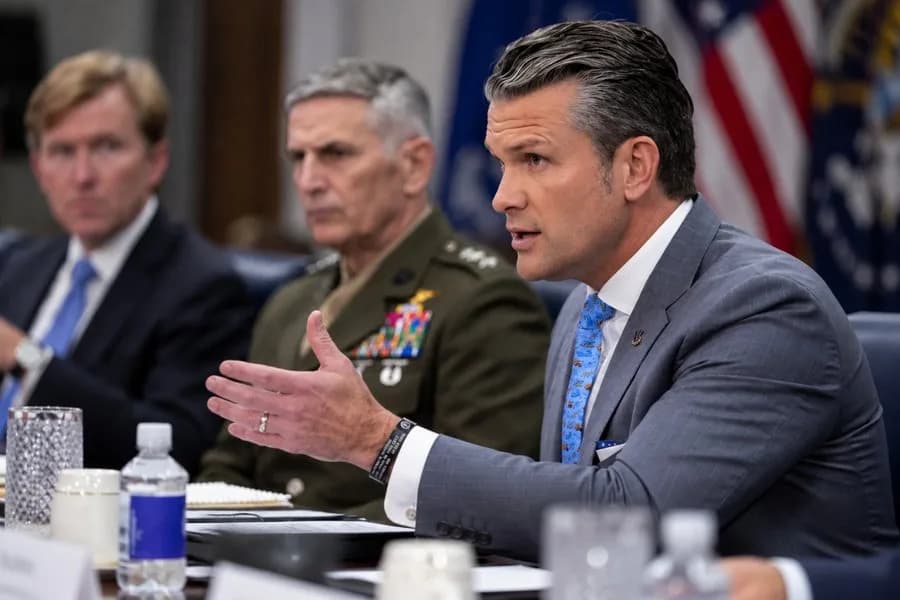
On September 30, Defense Secretary Pete Hegseth announced FORTRESS America, a major initiative intended to strengthen the military's ability to function even if civilian infrastructure is disabled.
The program includes independent electricity generation, strategic reserves of fuel and medical supplies, stronger domestic manufacturing, cybersecurity, and backup systems for critical military operations.
Then came a particularly striking development.
On October 25, Fox News reported that internal Pentagon planning documents describe a goal of enabling major U.S. military installations to sustain essential operations independently for at least 90 days.
The reported objective is ambitious. It has not been implemented across all military installations, and officials have acknowledged that fully modernizing hundreds of bases could take years.
Nevertheless, the strategy reveals what military planners consider a serious potential vulnerability.
Imagine an attack that does not begin with missiles falling on American cities.
Imagine instead that electricity stops flowing, communications fail, water treatment plants lose power, financial transactions become difficult, and transportation systems begin shutting down.
This is precisely the type of disruption national-security officials have spent years studying.
In 2024, American intelligence and cybersecurity agencies warned that Chinese state-sponsored hackers associated with Volt Typhoon had compromised networks connected to critical U.S. infrastructure.
The concern was that hostile actors could position themselves to disrupt essential services during a future confrontation.
The Pentagon is not announcing that America will lose electricity next week. It is acknowledging that national defense cannot depend entirely on vulnerable civilian systems.
That is a significant distinction.
Why Is Britain Telling Families to Prepare?
On October 22, the British government launched its Be Ready campaign.
The message encourages households to prepare for approximately three days of disruption involving electricity, water, communications, or access to ordinary services.
The official recommendations include drinking water, nonperishable food, flashlights, batteries, essential medication, portable phone chargers, radios, and some emergency cash.
The government recommends approximately three liters of drinking water per person per day.
British officials say the campaign addresses multiple risks, including severe weather, infrastructure failures, and other emergencies. It is the beginning of a three-year preparedness initiative, building on guidance the country has published since 2024.
There is no verified evidence that Britain and the Pentagon coordinated these announcements because an imminent war is expected.
But the underlying security concerns deserve attention.
Russia's war against Ukraine, the unresolved confrontation involving Iran, and repeated warnings about cyber operations against Western infrastructure all illustrate how vulnerable interconnected societies can become.
When modern life depends on electricity, telecommunications, fuel, and computerized systems, national preparedness becomes a question of economic and civilian survival—not simply military readiness.
Why Now, Just Before the American Elections?
This is the question I find particularly important.
FORTRESS America was announced on September 30. Britain's latest household preparedness campaign began October 22. The detailed reporting about the Pentagon's 90-day objective appeared October 25.
America votes November 3.
The timing does not establish that these initiatives were designed around the election.
But it presents an opportunity to ask something much larger.
What kind of national infrastructure do we want? How secure are our energy networks? Can American factories supply what the military needs during an extended crisis? And are our elected representatives taking these vulnerabilities seriously?
We frequently discuss national security as though it were only about military strength overseas.
Yet America's security also begins with our electric grid, domestic energy production, water supplies, telecommunications, transportation networks, and ability to manufacture essential goods at home.
A country that cannot sustain those systems cannot fully protect its families or defend its national interests.
And that should matter when Americans evaluate the people seeking political power.
Faith Does Not Mean We Should Ignore Preparedness
I believe Christians should approach these developments with confidence in God's sovereignty and a clear understanding of our earthly responsibilities.
Proverbs 22:3 teaches that the prudent recognize danger and take appropriate precautions.
There is wisdom in that principle.
You do not need to empty supermarket shelves or spend thousands of dollars preparing for a catastrophe nobody has established is coming.
Start with the ordinary things.
Make sure your household has several days of drinking water, food that does not require refrigeration, essential prescriptions, flashlights, spare batteries, a first-aid kit, and a way to receive information without internet access.
FEMA recommends at least one gallon of water per person per day for three days, including drinking and sanitation needs.
Consider children, older relatives, neighbors who live alone, and anyone dependent on medical equipment.
Preparedness is not panic. It is an expression of responsibility toward the people we love.
And perhaps this is the moment to ask whether our families are spiritually prepared as well.
Our faith must be stronger than frightening headlines. Our confidence must rest on Christ rather than the apparent stability of our circumstances.
The Other Responsibility: Understand What You Are Voting For
There is another reason I believe this story matters so close to Election Day.
We are not telling you whom to vote for.
But we are asking you to understand what each candidate and political platform actually represents.
Do not simply memorize party slogans. Examine proposed laws, recorded votes, executive actions, and the responsibilities of the offices being contested.
I believe several questions deserve particular attention.
Does a candidate defend the Constitution, freedom of worship, and the right of Christian families to express their convictions without government coercion?
Will that candidate protect the authority of American constitutional law against any effort to replace it with an authoritarian religious legal system, while respecting the religious freedom of every law-abiding American?
What policies does the candidate support concerning parental rights, medical decisions involving minors, women's athletic opportunities, and military readiness?
How would that candidate approach border security, citizenship verification, voter identification, taxation, and public spending?
And perhaps most importantly in light of the Pentagon's announcement: What is the actual plan to make America more resilient, more economically independent, and better prepared for a major national emergency?
Those questions require more than campaign advertisements.
They require examining the evidence and recognizing that different candidates may offer very different answers.
A presidential executive order, a congressional appropriation, and a state education law do not have identical legal powers. Understanding those differences is part of responsible citizenship.
We Must Not Allow Fear to Make Our Decisions
There is an important spiritual lesson running through this entire story.
Gene and Teri Bailey address that struggle in their book Destroy Fear, which offers a biblical framework for confronting fear, renewing the mind, and living with courage through uncertain circumstances.
For readers who want to explore that message more deeply, the book is available through the official FlashPoint Store.
If you do not have your copy, consider getting it today. Because preparing our homes matters, but strengthening our faith matters too.
The challenges facing America are serious. The need for military readiness is real. The risks to critical infrastructure are documented.
But none of these facts requires us to live in fear.
Our responsibility is to remain informed, prepare wisely, care for our families, and participate conscientiously in the decisions shaping our country.
The November 3 elections will influence federal legislation, public spending, national-security oversight, and the direction of American policy.
We should not treat those responsibilities casually.
If the Pentagon is preparing for a future it cannot predict, shouldn't American families also take reasonable precautions?
And if our leaders are making decisions that could shape the next generation, shouldn't we understand those decisions before casting our ballots?
The answer begins with informed citizens, prepared households, and communities willing to care for one another.
Put your faith in Jesus Christ. Prepare your household with wisdom. Examine the facts. And make your voice heard through the democratic process.
Because preparedness is not surrendering to fear.
It is refusing to let uncertainty decide our future for us.