


 2 min read
 1

 Linkedin
 Threads
 Facebook
 X

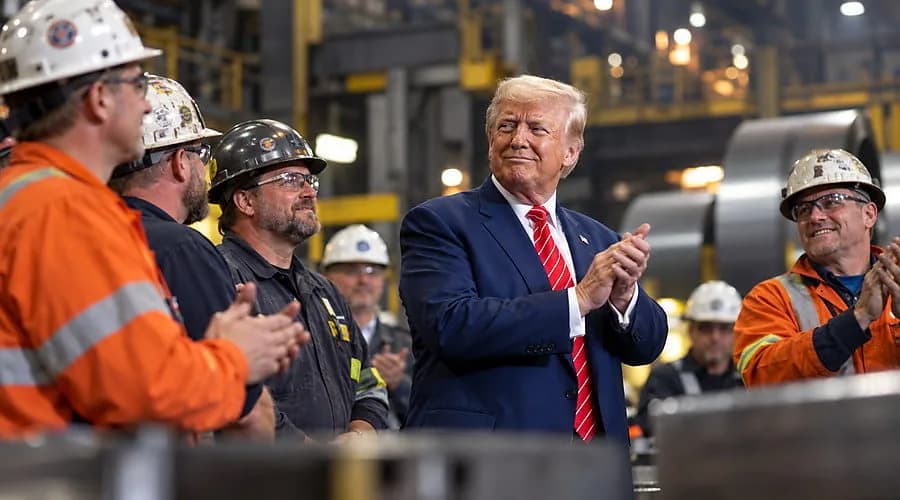
President Donald Trump returned to Georgia on October 16 with an economic message centered on billions of dollars in private investment, new manufacturing opportunities, and policies designed to put more money into American households.
The White House highlighted major commitments from companies including Pirelli, Siemens, UCB, and Pratt & Whitney, alongside tax relief, rural healthcare funding, agricultural assistance, and electricity savings.
Together, these initiatives connect several priorities of the administration's economic agenda: expanding domestic production, attracting investment, supporting American workers, and strengthening communities.
For Georgia, the opportunity extends far beyond constructing new factories.
Billions in Investment, Thousands of Career Opportunities
One of the largest announcements involves Pirelli, which plans to invest $1.2 billion expanding its tire manufacturing facility in Rome, Georgia.
According to the Georgia Department of Economic Development, the expansion is expected to create approximately 1,000 jobs over several years.
Siemens is planning a $185 million advanced manufacturing facility in Pendergrass, with 1,400 projected positions.
In Gwinnett County, pharmaceutical company UCB announced a $2 billion investment to establish its first American biologics manufacturing facility.
Pratt & Whitney is also investing $200 million to expand its operations in Muscogee County.
These projects represent opportunities across several strategically important industries: transportation, electrical equipment, pharmaceuticals, and aerospace.
A factory creates demand for more than production workers. Construction contractors, engineers, transportation companies, equipment suppliers, maintenance businesses, and local retailers can all participate in the surrounding economic activity.
For Georgia families, that can mean additional career paths, stronger local business networks, and opportunities for younger generations to build their futures closer to home.
Tax Relief That Supports Georgia Households
The administration is also highlighting provisions of the Working Families Tax Cuts that directly affect household finances.
According to the White House, approximately 1.8 million Georgia seniors could benefit from the enhanced federal deduction for qualifying taxpayers aged 65 and older.
Under IRS rules, eligible individuals may deduct up to $6,000, with up to $12,000 available to qualifying married couples when both spouses meet the requirements. Income limits apply.
The deduction can reduce federal income taxes, giving eligible retirees greater flexibility when managing groceries, medications, housing, and utility expenses.
The White House also cites National Association of Manufacturers estimates that the tax legislation supports approximately 198,000 Georgia jobs and protects billions in economic output and wages. Those figures are economic model estimates, illustrating the potential importance of business investment incentives.
Lower Electricity Costs as Georgia Grows
Georgia's expanding technology and manufacturing industries require reliable electricity.
The encouraging development is that industrial growth can also create opportunities to protect household budgets.
Georgia Power has frozen base electricity rates through at least 2028 and projects approximately $180 in annual savings beginning in 2029 for a typical residential customer, supported by additional revenue from large electricity users.
The utility's customer-protection framework requires major new users, including data centers, to bear costs associated with serving their demand.
This connects advanced computing, infrastructure investment, and household affordability.
As Georgia attracts energy-intensive businesses, the state is working to ensure families can share in the economic benefits of that growth.
Farmers, Healthcare, and Communities Matter Too
Georgia's economic strength also depends on agriculture and access to essential services.
The White House reports more than $177 million delivered to over 4,300 Georgia farmers through the Emergency Commodity Assistance Program, alongside more than $171 million for over 4,000 producers through additional assistance.
These payments support agricultural businesses managing production costs and market pressures.
Georgia also secured approximately $219 million in first-year funding through the Rural Health Transformation Program.
For families living far from major medical centers, investments in rural healthcare can support access to essential services and strengthen the communities that sustain Georgia's agricultural economy.
Georgia's Growth Is Part of America's Future
President Trump's Georgia visit highlights how manufacturing investment, tax policy, energy infrastructure, agriculture, and healthcare intersect.
The broader strategy connects private investment with domestic industrial capacity and opportunities for American workers.
A new factory can support an entire network of suppliers. Tax relief can help household budgets. Reliable electricity supports both families and businesses. Stronger rural services help communities remain economically viable.
Georgia's continued development also depends on cooperation among employers, educators, communities, and policymakers who support long-term infrastructure and workforce growth.
The significance of these investments reaches beyond billions of dollars. It lies in the opportunity to build stronger American industries, create lasting careers, and give Georgia families greater confidence in the future they are building.